
Sunday, February 06, 2022

More Certain than Seeing


2 Peter 1:16-21

For we did not follow cleverly devised tales when we made known to you the power and coming of our Lord Jesus Christ, but we were eyewitnesses of His majesty. For when He received honor and glory from God the Father, such an utterance as this was made to Him by the Majestic Glory, "This is My beloved Son with whom I am well-pleased" – and we ourselves heard this utterance made from heaven when we were with Him on the holy mountain. And we have the more sure prophetic word, to which you do well to pay attention as to a lamp shining in a dark place, until the day dawns and the morning star arises in your hearts. But know this first of all, that no prophecy of Scripture is a matter of one's own interpretation, for no prophecy was ever made by an act of human will, but men moved by the Holy Spirit spoke from God.

Sermon for Transfiguration Sunday 2/06/22

More Certain than Seeing

My Brothers and Sisters in Christ:

There is the old proverb that says "Seeing is believing." The Bible, however, teaches us that ‘seeing' is knowing, and believing is quite another thing, and it rests on something more certain. When we see something, we aren't believing it. In fact, seeing it removes the need for and risk of simply believing.

Our text speaks of something more certain than seeing it yourself. What, you may ask, could be more certain? Well, a great deal actually, when we consider the problems of human perception, but we know that the Word of God is more sure – it is utterly dependable. So, I invite you to take a fresh look at an old passage and discover something that is more certain than seeing.

Peter's words never fit so well as they do today. Okay, maybe they always fit as well – but today people are referring to the Bible as "myth". They tell us that the Bible stories are just that, stories. They are not true, in the sense that they actually happened. They call them "myths," stories of the interaction of humanity and deities for the purpose of teaching some overarching lesson – or to support some less-than-credible religious teachings.

Now, compare that to Peter's words. What our English translations call "cleverly devised tales," Peter in the Greek actually called "sesofishmevnoi muvqoi" or, simply transliterated into English, "Sophisticated Myths." It is almost as if God was listening to the popular unbelieving critics of our day, and chose His words to directly address their words.

Peter challenges the unbelief of his day – and of ours – with a clear assertion, ". . . we did not follow cleverly devised tales when we made known to you the power and coming of our Lord Jesus Christ, but we were eyewitnesses of His majesty."

Peter was seeking to assure the Christians of his day in the face of the scoffers and unbelief that confronted them. Just as is it for us today, they were being told how this new religion was an old religion "re-upholstered," as it were. I was told at a Missouri Synod college that the stories of the Bible were common re-workings of old religious myths – the mystery religions of ancient Rome, the Gnosticism of that day. But Peter answered those attacks back then with the forthright statement that he was not following some cleverly devised tale – rather, he was there.

God intended those words for us, as well. He inspired Peter to write them so that we would have his eyewitness testimony today to refute those "scholars" who take to the airwaves with one network news program or another to ridicule and deny our religion, and who publish those remarkable pieces of blasphemy each Christmas and Easter in the major metropolitan newspapers. Peter was there. He saw it all. It really happened. These are not myths or tales, but historical accounts of God stepping into human history, taking on human nature and flesh and blood and doing the amazing things the Bible tells us that He did.

I don't think the false teachers understand what they are selling. If the accounts of Scripture were merely myths and tales, there would be no reason for the religion and no need for them and their jobs. The truth, which the devil and all unbelievers understand, is that either the whole thing is fact and truth, or none of it is. Likely none of it can be if any of it is mere myth and fable. Their theology would leave us no Savior, only moralism and law, and guilt and sin – and death and hell.

We need the Jesus that the Bible portrays to us. We need Him to be human so that He can take our place, earn life, and die for us. We need Jesus to be true God so that His death is sufficient for all of us, not just for one of us. We need the death to be real, the resurrection to be factual history, the events of Scripture to be just as they present themselves, or the promises of God would be uncertain, if not simply untrue.

But God has stepped in by inspiring Peter to pen these words for us. Peter was there. He was there. He saw it. He heard the voice from the cloud. He saw Moses and Elijah and heard them speaking with Jesus about the death which lay ahead of Him in a just few days in Jerusalem. He not only claimed that these events were true, as opposed to "cleverly devised tales," but he died in the confession of these truths.

Remarkably, Peter is not saying, "You can take my word for it." He is saying that God's Word is all that we need -- if we believe! And then He tells us that we do well to pay close attention to it, as we might to a lamp burning in a very dark place. It is the light of God's Word, showing us the way we should go. It reminds one of Psalm 119:105, "Thy Word is a lamp unto my feet and a light unto my path."

Peter says something really remarkable! I know that our modern translations say something like, "and so we have the prophetic word made more sure." What Peter was saying is not that his seeing the transfiguration made the Word of God more certain, but that the Word of God is more certain than seeing it with his own eyes! He said what I read at the beginning of the sermon, "And we have the more sure prophetic word, to which you do well to pay attention as to a lamp shining in a dark place, until the day dawns and the morning star arises in your hearts."

We have the more sure prophetic Word. An eyewitness can err. We can think we saw something we did not see, but God's Word is clear and plain, and reliable. We can go back to it time and time again, and it will be the same. It is patient and consistent and always the same Word of God.

How can the Bible be more certain than seeing? well, we begin with the truth that We walk by faith, not by sight – 2 Cor. 5:7. Nothing in our lives is to be ruled by our judgment alone. We judge every situation according to the Word of God, not simply our sense, for what feels good and seems desirable is often quite the opposite.

The application of this truth, that we walk by faith and not by sight, to our topic this morning is this; we believe Scripture is the Word of God, therefore we trust it. When it reports to us the love of God, we take that report as truthful by faith. When it tells us of our sins forgiven, paid for by the suffering and death of Jesus on the Cross for us, we believe that good news and rejoice in it! When we face trials and pain and sorrow, we have the promise of God that He will work all things together for our good, and so we find strength and comfort there and keep going and praising God in spite of what our feelings tell us because we walk by faith, not on the basis of sense or reason alone, but guided by God's promises and His love.

Now, the message of the Transfiguration is significant. We need to know that it happened. It is the testimony of God, as Jesus is about to enter the last days of His life, to be tried and executed for our sins, that Jesus is still qualified for the mission of being our Savior. It tells us that He is still the beloved Son of God and is as well-pleasing to His heavenly Father as He was at His baptism three years before, as He began His public ministry. That is important to know. But even greater than that is the testimony of Peter that the naked Word of God is even more reliable than an eyewitness account. It is more certain than having seen it himself.

Why is that important? Because, frankly, that Word of God is all that we have today. We are not eyewitnesses. We have his testimony, and that of the other eyewitnesses, and of the prophets of old. And we have God, speaking through His Apostle, telling us that the written Word which we have is more certain and reliable than seeing it for ourselves. For a scientist, seeing is the evidence. For faith, the sure Word of God is the foundation that we need – and faith is, as Hebrews says, "the evidence of things not seen".

God has answered His critics in the newspapers in advance. He has asserted that His Word is true, and theirs is the suspect account. 
 
The Bible is the Word of God. Because God has spoken to us and for us, we pay attention! He knows what we need. He knows how we can best live and what is going to be most helpful and healthful. We do well to pay attention to that word - like a light shining in a dark place, just as Peter tells us. It is God's Word, spoken to accomplish God's Will for us. And what is the will of God for us? [Our Salvation.]

Peter reminds us that no prophecy was made by an act of human will. None of the Scriptures are an accident or a human invention. Nor are they meant to be twisted and taken to say things that they do not say – . . . no prophecy of Scripture is a matter of one's own interpretation. No, God's Word means what it says, not what we may want it to say, or try to twist it to say.

That is important for us to remember because God's Word tells us that our sins are forgiven for Christ's sake. Men, even in the church, are always trying to interpret that away. "You can be forgiven," they say. "You can earn forgiveness," they say. "You must be holy enough first, you must do something to receive it, you must merit it, or claim it, or something." Then you have to walk the "Christian Walk" (whatever that means) or you can lose it, or so they say.

God says that Jesus took care of it all. He has done everything we needed done because we could not be relied upon to do it – we are simply not capable of doing the holiness that we need, or bearing the price of our own sins, and yet continuing to live. So God sent Jesus to do it for us on the cross. He lived the holiness we need and bore the wrath of God against our sins in our place, He died the death that God's justice demands for our sins, and now He pours out forgiveness for all, resurrection from our graves, and eternal life – all of which is received by grace, through faith.

A final thought: Luther taught that either we believe God's Word because it is God's Word, or we make ourselves out to be God. It doesn't even matter whether we believe other doctrines of the faith, confess some version of Christ and live pious and exemplary lives. If we reject any portion of the Word of God and deny anything that it clearly teaches, we set ourselves up as the judges of truth and the source of what is to be believed. We stand as masters over God's Word, and anything else we might believe is believed only because we choose to, and because it agrees with us, or because it pleases us to believe it -- not because it is from God or His Word.

The Word of God is more sure than seeing for yourself because the One from whom the Word comes is more reliable than we are. We may count the Bible as more certain than seeing.

In the Name of the Father, and of the Son, and of the Holy Ghost.
(Let the people say Amen)

Sunday, January 30, 2022

It's Bigger Than You Think

Romans 8:18-23

For I consider that the sufferings of this present time are not worthy to be compared with the glory that is to be revealed to us. For the anxious longing of the creation waits eagerly for the revealing of the sons of God. For the creation was subjected to futility, not of its own will, but because of Him who subjected it, in hope that the creation itself also will be set free from its slavery to corruption into the freedom of the glory of the children of God. For we know that the whole creation groans and suffers the pains of childbirth together until now. And not only this, but also we ourselves, having the first fruits of the Spirit, even we ourselves groan within ourselves, waiting eagerly for our adoption as sons, the redemption of our body.

Sermon for the Fourth Sunday after Epiphany 1/30/22

It's Bigger than You Think

My Brothers and Sisters in Christ:

C.S. Lewis wrote a "space trilogy" because he noted that science fiction was becoming so popular. As he had in his "fable," "The Narnian Tales", he deliberately made his space trilogy theological. Once he had been converted, everything he did was an expression of his faith. His space trilogy was "Out of the Silent Planet" about a trip to Mars, "Perelandra" about a trip to Venus, and "That Hideous Strength" a story about the spiritual battle on Earth, involving the same hero as was in the first two books.

In the first book, the hero encountered intelligent, talking plants and animals of every description. Not every plant or animal was intelligent or could speak, but there were many that could. The intelligent plants were mobile and lived in plant communities, as the animals lived in animal communities. Everyone on Mars - called "Thalcandra" in the book - worshiped God and knew Him. There was no sin on Mars before the arrival of man.

At some point in the story, which I do not recall right now, Ransom, the hero, learns that the talking plants and animals are the last of their kind, in terms of God's creative activity, and God no longer creates intelligence in such forms. Ransom expresses amazement and asks "why?". The answer, from a Hrossa - a walrus-type creature of remarkable intelligence - is that once God had chosen to take on human nature and human form in Jesus Christ, in what other form could one imagine intelligence would be found? Ransom was surprised - and as an avid Science Fiction reader, I was deeply moved. It had never occurred to me that the incarnation of Jesus would have such far-reaching effects.

Of course, that was fiction. Nonetheless, it opened my mind to the thought of just how radical and transforming the substance of the Gospel really is. We tend to think of it as merely forgiveness, and life, and salvation, as though the word "merely" could be applied to things so vitally important and utterly significant and urgently needed. Our text reminds us of the true enormity of what God has done for us. Our theme is "It's Bigger than You Think."

Paul was in a better position to judge the glory that is to be revealed to us than we are. He had been brought to the "third heaven" and seen things that no other man on earth has seen and heard things that it is not even permitted for a man to speak, according to Second Corinthians 12. He would know something of the realities of heaven that you and I can just fantasize about. He tells us that, in his estimation, nothing we can endure in this world is capable of being so bad as to be worth comparing to the good that God intends for us. Now, if this were merely his opinion, we could debate his conclusions, but this is also the inspired Word of God.

Whatever you may have to face, when you get to heaven, you will discover that it is so worth whatever you endured that you might well be willing to come back for seconds – you know, "If I had known that eternal life and glory was going to be this wonderful, I would have gladly endured much more - and worked much harder!" It's bigger than you think!

The whole of creation anxiously longs for the day of the revelation of the sons of God. The way Paul puts it makes it sound like the entire creation is standing on tippy-toe trying to peek over the fence and see which of us are God's people and which of us are not! There is cosmic excitement over the anticipation of the Day of Resurrection when we shall stand revealed, and men will either find praise from God for their steadfastness or be condemned for calling Him a liar and refusing His gift of salvation and grace.

There is a good reason for that, too. All of creation was subjected to futility for our sake. It was because of the sin of mankind that God cursed all things with corruption. Could you imagine a world where the only thing to grow old, to fail and die was the people in it? It has been suggested that such an existence would have driven mankind irredeemably mad. Imagine a world where even mosquitoes don't die - and you can't kill them. The family dog or cat is passed down through the generations because it cannot die. You are stuck with the same shirt forever because it doesn't wear out, it has no curse of corruption attached to it. Even the flowers in your garden are more permanent than you. It could well be maddening!

God knew that since we are but dust, and we will grow old and die and decay, so must the world around us. Sometimes it decays too quickly for our taste, but that, then, is part of the curse upon our sin. And the whole of creation is waiting eagerly for that day when the curse is lifted, and it is no longer subject to the futility old age and death, but freed from corruption and decay, it can live out the glories God created it to show forth. When I visited Maui, I got a sense of what the difference might be like. I walked through a forest where plants we call ‘house plants' and keep in six-inch pots were growing up the trunks of trees fifty and sixty feet tall, with leaves the size of meat platters! Creation groans under its burdens due to our sins - and yet it longs not just for its freedom, but for bearing witness to the revealing of who the true sons of God among us are!

Our sin is bigger than we tend to think - because we don't consider our gossip, and rudeness, and indifference towards the troubles of others, to be all that bad. We even like some of it. But these things are sin, and our sin is of such cosmic significance that God has condemned us to die for it, and has shackled nature with pain and death and decay on our behalf because of it. Every sin, every hatred, every lust is much more serious than we like to imagine. Each one alone makes us worthy of death and hell, and we spend our lives in sin, even as Christians, and pretend that it is no big deal. Well, it's bigger than you think!

The price paid for our salvation was a cosmic price. It wasn't just the life of one man, however significant He was. The price was Life itself dying for us. He suffered both in time and in eternity for you. He did not bear simply the torments of the passion and the cross - as grisly as we know them to be because we saw the movie - He bore the wrath of God, and He who is God from eternity was forsaken by God, as incomprehensible as that is for us. He endured the torments of hell of us.

And by His death in your place, your sins have been atoned for and you have been redeemed. By His resurrection from the grave, you have been absolved, and your sins are forgiven! You now stand before God as righteous and holy in Jesus Christ, and as beloved as Jesus was and is in the eyes of His heavenly Father. Heaven is open to you, and to everyone who believes this grace of God. You don't have to measure up. You don't have to earn your way. Jesus has done it all for you and pours in out on you in abundance.

You are now the focus of the world. The world belongs to you, as God tells us in His Word, "All things belong to you." All of creation is standing on tippy-toes to see you revealed and to see you honored, and to be set free from its bondage to pain and corruption by your final resurrection to everlasting life and glory.

You can feel it yourself. The Holy Spirit in you works that longing for heaven and perfection and full and eternal life. We see a bit of the goodness of it in the fruits of the Spirit in one another. We get a hint of how wonderful life with Christ will be by how wonderful life together as the people of God here at Immanuel Lutheran Church of Bartlett Township is.

The pains of life and the troubles of growing old remind us all that we look forward to the resurrection. That resurrection is the real beginning for us of the good which cannot end. There will be no more sorrow. When life is good we can forget sorrow for a moment - but this will be a forgetting about sorrow forever. There will be no more sickness. No colds. No fevers. No Covid. There will be no more pain - arthritis and the slipped disks will be gone. The glasses will be a thing gone by, and hearing aids unnecessary. Cuts and scrapes and rashes and headaches will be banished. And there will be no more dying. The good will simply get better, and we will never have to worry about the end of vacation and returning to the pain and monotony and the grind of sin. It's bigger than you can imagine!

The final step in completing the whole of our salvation is the resurrection of our body. The child of God groans and yearns for it. And it is our task here to encourage one another so that we do not lose hope as we wait for the fulfillment of our hope and faith. It is also our privilege to share this wonderful good news with those who don't seem to know and surely cannot imagine even the wee bit we know of it! One of the reasons that we don't do either more and better may be that we forget to look at the thing, and consider our salvation for what it really is. It is genuinely delightful and glorious beyond our imaginings, and more important and more valuable than anything we know. It is so good that even our agonies here are not worthy to be compared to it. It's that good. And it's that big! It is God's gift to us and to all who take Him at His Word and trust Him to do all that He has promised to do, through Jesus Christ. Trust me, it's bigger than you think!

In the Name of the Father, and of the Son, and of the Holy Ghost.
(Let the people say Amen)


Sunday, January 02, 2022

Do Not Be Surprised!


1 Peter 4:12-19

Beloved, do not be surprised at the fiery ordeal among you, which comes upon you for your testing, as though some strange thing were happening to you; but to the degree that you share the sufferings of Christ, keep on rejoicing; so that also at the revelation of His glory, you may rejoice with exultation. If you are reviled for the name of Christ, you are blessed, because the Spirit of glory and of God rests upon you. By no means let any of you suffer as a murderer, or thief, or evildoer, or a troublesome meddler; but if anyone suffers as a Christian, let him not feel ashamed, but in that name let him glorify God. For it is time for judgment to begin with the household of God; and if it begins with us first, what will be the outcome for those who do not obey the gospel of God? AND IF IT IS WITH DIFFICULTY THAT THE RIGHTEOUS IS SAVED, WHAT WILL BECOME OF THE GODLESS MAN AND THE SINNER? Therefore, let those also who suffer according to the will of God entrust their souls to a faithful Creator in doing what is right.

Sermon for the 2nd Sunday after Christmas 1/02/22

Do Not Be Surprised

My Brothers and Sisters in Christ:

Many people think that their religion ought to be insulated from the attacks of others. That is part of the American dream. We dreamed, as a nation, of the freedom of religion, where you could be any religion you wanted and practice any faith freely, and no one could or would do anything about it. You are free!

That is a dream. It has never been quite true. Sadly, there are also many who would use that precise freedom to destroy that freedom for others – such as those who practice Islam - although they are not unique in this regard. The right to practice whatever religion you wish is a goal, but it is not one we are likely to actually achieve, because some people use that liberty as a tool to attack others and to undermine our liberties. Besides, the devil does not want us to practice our religion, freely or otherwise, and his agents, which is pretty much the whole world, will work to make sure that it cannot happen. Jesus promised us that while He walked among us, so we should not be surprised. And that is the theme of our sermon this morning: Do Not Be Surprised.

Jesus promised that if we faithfully followed Him, the world would hate us and we would be persecuted. World history has demonstrated the accuracy of that prophecy. Christians of every age, and in every corner of the world have been hated and persecuted for their faith. Even here, in America, it is considered narrow-minded and rude, not to mention hopelessly backward, to stand firmly on one's faith and not go along with the socially approved ecumenical spirit of our times. Anything is Christian, in the opinion of our culture, and anything is okay, except, of course, standing firm on the faith once delivered to the saints, and refusing to recognize the validity and worth of the random thoughts of others on the topic of religion. If you stand firm in the true Christian faith you are ridiculed, mocked, verbally assaulted now and again, and sometimes even physically assaulted even here in the United States. In other places in the world, people are dying for simply calling themselves "Christian".

Peter says, do not be surprised! He was talking about "the fiery ordeal among you, which comes upon you for your testing." That was the persecution of the earliest Christians. They, too, had thought that if they were God's chosen and favorites, that life ought to be good, and the pains and troubles of life ought to flee from them, and blessings should be the order of the day. That is how the human mind works – patronage and favoritism and that sort of thing, which we see so commonly in politics. After all, what good is position and favor if it doesn't work out to feather your bed, so to speak?

Well, things didn't work out the way they thought that they should. They had persecution, and poverty, and pains. They could not make sense of it, just like you cannot make sense of some of the things that happen in your life. Peter was reminding them that being the child of God in the devil's kingdom was not going to be easy, or fun, necessarily.

Our nation has a different way of persecuting the truth, and the faithful of God. We don't face physical violence so much as we face ridicule and disapproval and dismissal, today they call it being "canceled." You should not be so narrow-minded and you should not hold yourself and your religion up as something special. We face the disdain of others, and the dismissal of our values and of our confidence, and of our truths. Everyone knows that you cannot be right and all those others wrong. Everyone knows that holding too tightly to your truths and your values is radical, and fundamentalistic, and terroristic, and, well, just wrong! Our culture is prepared to embrace a deliberate and well and publicly identified lie as true, but if you stand on your religion as true and theirs as in error, well, that is judgmental and discriminatory and unacceptable - and can be legally actionable.

Our persecution is peer pressure, which we are all trained to be sensitive to. And we all hate pain. So, we just naturally tend to bend away from suffering. I know that I do! But when it comes to suffering on account of your faith, you should not be surprised. You should rather expect it.

That doesn't mean that you will enjoy it. You won't. Pain hurts. Ridicule is difficult to bear. The unexpected attack for nothing, in particular, that seems worthy of attack is hard to handle. But when it happens, we are to learn to say, "Ahhh! Here it is. I knew this was going to happen at some point."

There are things you can do, of course, to make people attack you. Doing bad things, for example. That is why Peter writes, "By no means let any of you suffer as a murderer, or thief, or evildoer, or a troublesome meddler; but if anyone suffers as a Christian, let him not feel ashamed, but in that name let him glorify God." Christians are not always above crimes or bad behavior. They should be, but they are not. There is no glory and no benefit in suffering that you bring on yourself by evil conduct or stupidity. But if you are hated, spoken evil of, or attacked on account of being a Christian or making a faithful and clear confession, there is no shame in that, only glory - and you should give the glory to God!

There were times in the history of the church where people deliberately sought out pain and trouble, believing it was a mark of blessing and a good thing to be a Christian who suffers. The monks in the monasteries would deny themselves, beat themselves, torture themselves, believing it was a holy thing to do. That was wrong. It is not a good thing to suffer. Suffering is only a good thing if the suffering is occasioned by your clear and faithful identification with Christ and with the Gospel. Early in the history of the church, some believers would attack Roman Soldiers in order to be martyred. They were thinking that suffering and death as a Christian was blessed - without any notice of its cause. Peter says, don't let it happen to you on account of your bad behavior. It is only filled with glory if it comes as an attack on Christ in you.

And it will, if you stand firm in your faith, and confess Christ. Family members will tell you to get off your high horse. Friends will tell you to keep your religion to yourself - and will distance themselves from you if you don't. Employers may tell you that your faith - and its symbols - are not welcome around the workplace. People will find things to criticize and nit-pick in you because you are supposed to be something special, better, without any flaws, real or imagined. Perhaps bigger things will happen among us as persecution in time – we cannot tell. One thing we do know, our faith is not welcome out in the world, and not really even among others who style themselves as "Christian."

But when this sort of thing happens, even though it hurts and irritates, count yourself blessed. First, it means that someone can see that you are really a Christian. That is a good thing.

Second, imagine how it will be for those who do not believe, when they face the wrath of God, if being a faithful child of God, and one of His favorite people, can be so irritating and painful. Peter wrote: "For it is time for judgment to begin with the household of God; and if it begins with us first, what will be the outcome for those who do not obey the gospel of God? AND IF IT IS WITH DIFFICULTY THAT THE RIGHTEOUS IS SAVED, WHAT WILL BECOME OF THE GODLESS MAN AND THE SINNER?" Imagine how disquieting and uncomfortable it will be to have never stood up for Christ, and have never confessed Him. If this suffering in this present age is part of heaven, what must the agony of hell really be?

"Therefore, let those also who suffer according to the will of God entrust their souls to a faithful Creator in doing what is right." The answer in any suffering is prayer, and entrusting yourself to God. He has promised to keep you and not permit you to have to endure more than you are able. So you do what is right. You do what God lays before you to do.

How can you do that? By remembering what Jesus did and endured for you. You do it by keeping the love of God for you before your eyes. You do it by constant prayer, faithful attention to His Word, regular participation in the fellowship of the saints, by eating and drinking of this holy meal, set before you for your forgiveness and strengthening.

Jesus died for you, and your sins have been forgiven. We remember as life becomes difficult, particularly when it becomes difficult on account of your faith, that God loves you, and nothing is for nothing. God will bless you for your troubles, and He will return the pain and difficulty given to you upon the heads of those who cause such trouble. They may not be able to connect the dots right away, but their troubles are part and parcel of the troubles they cause the children of God, and if we suffer as God's elect, what will it be for them on that great and terrible day?

So, let us be clear. When your faith and your confession bring ridicule or any other pain on you from the world around you, do not be surprised. It is likely to happen, and Jesus predicted it. Don't do anything deliberately to bring it on yourself. It will find you of its own accord. Remember that this is part of the plan of God, and remember that they will ultimately bear the fruits of their evil unless they repent. Remembering the pain of ridicule and persecution, we should be eager to spare our attackers the pains they are bringing on themselves by bringing them the good news of Christ and forgiveness. And finally, when trouble and pain do come, pray and entrust your soul to God, and just keep on doing what you know you should, what God has given you to do. He will tell you when it is time to stop.

And do not be surprised – suffering is to be expected when you are God's child living in the devil's kingdom.

In the Name of the Father, and of the Son, and of the Holy Ghost.
(Let the people say Amen)
Sunday, December 26, 2021

God Has Spoken to Us


Hebrews 1:1-6

God, after He spoke long ago to the fathers in the prophets in many portions and in many ways, in these last days has spoken to us in His Son, whom He appointed heir of all things, through whom also He made the world.  And He is the radiance of His glory and the exact representation of His nature, and upholds all things by the word of His power.  When He had made purification of sins, He sat down at the right hand of the Majesty on high; having become as much better than the angels, as He has inherited a more excellent name than they.  For to which of the angels did He ever say, "THOU ART MY SON, TODAY I HAVE BEGOTTEN THEE"?  And again, "I WILL BE A FATHER TO HIM AND HE SHALL BE A SON TO ME"?  And when He again brings the first-born into the world, He says, "AND LET ALL THE ANGELS OF GOD WORSHIP HIM."

Sermon for Christmas                                                              12/25/21

God Has Spoken to Us

My Brothers and Sisters in Christ:

Talk to me.  You've heard people say that before.  Talk to me.  And if you do, how would you do it?  Silly question, right?  You would use words.  That is how we talk.  Well, Jesus is the Word of God.  That is from the Gospel of John.  "In the beginning was the Word, and the Word was with God, and the Word was God.  He was in the beginning with God.  All things came into being by Him, and apart from Him nothing came into being that has come into being."  And then verse 14: "And the Word became flesh, and dwelt among us, and we beheld His glory, glory as of the only begotten from the Father, full of grace and truth."

 
This Christmas morning our epistle lesson tells us that God has spoken to us – and He has spoken to us in the person of His Word – His Son Jesus Christ.  Our Christmas message – the one that give us such joy on this morning is that God has spoken to us!

Hebrews is the most intellectual of the epistles.  There are parts of Hebrews that, frankly, baffle us.  Even the simplest parts require careful reading and careful thought.  But the opening verses of the entire epistle to the Hebrews is pretty simple.  It tells us that Jesus is God's communication, His Word to us.
God has always been talking to man.  He walked personally and talked with Adam and Eve in the garden.  After they had sinned, they could not bear His presence.  They were too frightened.  So God began dealing through intermediaries with us.  He sent prophets.  He spoke to them in visions, usually, or dreams.  He communicated with them without actually talking out loud.  Moses seems to be the last one that God talked out loud to.  After that, it was in visions and dreams and such – or he sent an angel.  He always stayed in touch, giving guidance and revealing more about Himself through His prophets.

In Jesus, we have God returning to direct communication.  That is what we celebrate in our Christmas celebration.  God was in Jesus Christ, and Jesus Christ is God, the Second Person of the Trinity.  Christmas is the festival of the Incarnation.  Isaiah 7:14, which prophesies the Virgin Birth, also prophesies that the name of the child will be Immanuel.  The meaning of the prophecy is not that He will have that name, but that He will be God, with us – among us.  Jesus fulfilled that Word of God by putting on human nature and human flesh and blood in the womb of the Virgin Mary, and being born at just the right time – Scripture calls it "the fulness of time," and Luke says "the days were accomplished that she should be delivered."

The manger in Bethlehem is precious to us because God was born there.  He was not born according to His divinity, but according to His human nature – but God was born as a man there.  And having taken on human flesh and blood, God spoke directly to us.  There was no "middle man".  There is no mediator, except the man God chose to be, Jesus Christ.  So, at Christmas, we celebrate the truth that God has spoken to us!

Jesus often said that the words He spoke were not His, but that they had been given to Him by His heavenly Father.  Jesus wanted us to know that God was speaking to us in Him.  He always pointed back to God as He taught.  God was speaking to us and teaching us in Jesus, and He took great care to let us know precisely what it was that He was doing.  He knew that men would disbelieve and deny Him and His Word in time, but He wanted to be as clear as possible so that those who would believe would have utter certainty and clear evidence that God has spoken to us in Jesus Christ.  That is why every sermon has a text, and often quotes Scripture.  When the Word is spoken faithfully, God is still speaking to us through Jesus.

But that isn't all that the writer of the epistle to the Hebrews meant to say.  He meant that Jesus was God's communication.  Who Jesus was, and what Jesus did, and the fact that He was here to do it, is as significant as the Words He spoke – and it says as much or more than Jesus did with His mouth.  God spoke to us by sending His Son.

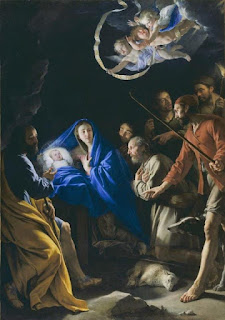
Jesus spoke of the love of God for us.  Of course He also preached about it, but just the fact of the Incarnation spoke to us about how far God would go – how deep His love is for us.  Think of the manger scene.  Could you imagine having your child in a barn, and using a hayrack for a crib?  Would you send your daughter or daughter-in-Law to give birth in filthy conditions on a cold night in an open-air stable like that?  Yet God chose to be born there for us.  He chose a teen-aged girl and a humble and poor carpenter as parents.  He chose to be born on a trip, in a stable where the young parents were housed for the night because the town was so crowded.  We celebrate Christmas every year without pausing very often to consider the absurdity of it, or what fantastic love it was that required God to humble Himself to become human, and then a poor human in a poor nation at a time and place in history so crude and violent and backwards.  The simple fact that Jesus is who He is reveals God speaking of His great love for us.  God has spoken to us!

And why did God do this?  It was our sins.  Because of our sin, we deserve to die.  We come from polluted stock and we behave as though we never knew God.  We hate, we covet, we lust, we gossip.  Many times we act as though God will not take care of us.  We behave as though God were less important than our next outing, our next purchase.  Even we, who know God and His goodness many times will behave as though we did not, or that we simply do not believe or care.

God did the Bethlehem thing for us.  He did it to save us from our own sins.  He was born in a stable so that He could die on a cross in our place, and redeem us from His own justice.  He had to keep His own bargains – He had to punish sin with death.  He had to be just and fair and righteous.  And yet He desired to save us.  Jesus coming, and His attention to fulfilling every prophecy – right down to the virgin mother and the place of His birth – speaks to us of the desire of God to save us.  There was no way to rescue us from the just consequences of sin, except to take them on Himself.  So Jesus was born of a woman, born under the law, to redeem those that were under the law.  He, who had no sin of His own, became sin for us – took our sin upon Himself – that we might be made the righteousness of God in Him and through Him and on account of Him.  That is how much God wanted to save us – God has spoken to us!

Jesus Christ –  the fact of His birth and life and death and resurrection and ascension – spoke of God's plans for us beyond the grave.  Now I know that all of what we are looking at is not Christmas.  But we cannot celebrate Christmas two thousand years after Christ's life and pretend that the manger and the shepherds are all that there is about the holiday.  Jesus demonstrated what God has in store for us.  He told us plainly that He would come again for us.  He told us that because He lives, we too shall live, and because He rose from the grave, we too shall rise from our graves.

And we celebrate that truth as much as any, in Christmas celebrations.  The birth and life and death of Jesus speak to us about God's plans for us which go far beyond the short time we spend here in this world. But if the Spirit of Him who raised Jesus from the dead dwells in you, He who raised Christ Jesus from the dead will also give life to your mortal bodies through His Spirit who indwells you.  And when the time comes, and God raises us from the grave, then death will be defeated, and we will cry out with all the children of God, Death is swallowed up in victory!  O death where is your sting?  O Grave where is your victory!  And we will share in and delight in that reunion with all those who have gone before us, whom we miss so today – parents, grandparents, children, and spouses.  We will be there and we will do that and we will delight in God with all of our being – and Jesus, His existence and His life is God telling us all of these things.   God has spoken to us!

  And that is what we celebrate today.    God, after He spoke long ago to the fathers in the prophets in many portions and in many ways, in these last days has spoken to us in His Son, whom He appointed heir of all things, through whom also He made the world.  And He is the radiance of His glory and the exact representation of His nature, and upholds all things by the word of His power.  When He had made purification of sins, He sat down at the right hand of the Majesty on high.

Jesus tells us many things – but He reveals even more.  He is God, and He reveals God to us – His love, His nature, His compassion, His power, and His will.  And what is the will of God for us?

And you know that because God has spoken to us through the person of His Son.  And that is what we celebrate in Christmas – and it is truly merry!  So let us sing and laugh and feast and celebrate with all our might.  God has spoken to us and the first word He said was a little baby, born in Bethlehem, sung about by angels, and worshiped by shepherds.  

A merry and a blessed Christmas to you all!

In the Name of the Father, and of the Son, and of the Holy Ghost.
(Let the people say Amen)

Monday, December 20, 2021

A Life of Faith


Philippians 4:4-7

Rejoice in the Lord always; again I will say, rejoice! Let your forbearing spirit be known to all men. The Lord is near. Be anxious for nothing, but in everything by prayer and supplication with thanksgiving let your requests be made known to God. And the peace of God, which surpasses all comprehension, shall guard your hearts and your minds in Christ Jesus.

Sermon for the Fourth Sunday in Advent 12/19/21

A Life of Faith

My Brothers and Sisters in Christ:

Do you believe in God?

That sounds like an odd question for a sermon, eh? The thing is, believing about God and believing in God are two different things. Most everyone who comes to church anywhere believes about God. Christians all believe about God. The problem is that many who believe about God take that for "faith" in the sense of "being a Christian" – and it is not. Christians, who are truly Christians and not simply deceiving themselves, also believe in God. They trust God.

So, the question I began with is really, "Do you trust God". I want you to note the difference between "trusting in God" and "trusting God". Trusting "in" God is a generic sort of thing. It is sometimes half-hearted, and other times, at arm's length. We trust in God to do His part, or we trust in God to be a certain way or do specific duties, and the like. It has the sense of a list of responsibilities that God is to assume, and we trust in Him to do them and to do them passably well.

Trusting God is actually and deliberately – or at least consciously – depending on Him. Trusting God is facing life with the certainty within yourself that God is watching, and blessing and caring for you. My month of Covid and the near brush with death impressed this on me. You are safe because God loves you. You will have what you need because God loves you. You will make it through whatever challenge faces you, because God loves you if it is in accord with His holy will. And that is what our text is addressing this morning. Our theme is a Life of Faith.

The focus of the season of Advent is the coming again of our Lord Jesus Christ. It is His return that will mark the end of all of our pains and sorrows and the beginning of eternal life in glory. That life in glory is the cause for our rejoicing, mentioned in our text. We know the love of God for us, which we celebrate in the Christmas season, as we celebrate the first Advent of Jesus long ago in Bethlehem. The Spirit-wrought certainty of the love of God for us finds its first evidence in the gift of His Son. It is that confidence in God that produces the rejoicing Paul addresses in the first verse of our text, "Rejoice in the Lord always; and again I will say, rejoice!"

Our cause for rejoicing is not found in our circumstances. The first Christians and every generation since have faced the hostility of the world and the normal troubles of life. Being a Christian does not change the external conditions of our lives, except that under the hatred of the world, our troubles may be multiplied. Our rejoicing is due to the gift of God in salvation, and our confidence in Him and His love for us, and His ever-present concern for our welfare. We do not judge the love of God or His ‘favor' by checking out our external well-being. Our certainty of the love of God for us and His will to bless us flows out of the knowledge of what He already has given for us, and our trust in the promises of blessing, protection, and salvation which He has made to us which are rooted in Jesus Christ, and His death for our sins and His resurrection for our justification.

Because we believe that, we can rejoice – even in circumstances that seem less than joyful. What is happening in our daily lives is not the final word of God to us or about us. Jesus Christ, resurrection from our graves, and everlasting life beyond pain and sorrow, sickness, and death are the final word of God. In many ways, this life is a prelude to the one to come. That life is where and when the full blessedness of the believer will be seen. Now, just as you can face the difficulties of life because you look forward to the cessation of pain and the comfort and well-being to follow, God's people can look forward to the joy to be received and continue to rejoice in that promised joy even in the midst of present trouble and pain. It is the final and enduring state that gives us the courage to live in and live through the intermediate stuff.

We can be so moved by our confidence that the hope of the life to come affects our conduct in the present time. That hope, and the knowledge of who we are in the eyes of God, builds in us patience - forbearance in the face of the sorrows and difficulties of life. That is reflected in the words of our text, "Let your forbearing spirit be known to all men."

Paul isn't suggesting here that we go about telling people about how patient and forbearing we are. He intends that we let people know by being forbearing, by exercising patience. The patience of which he speaks is the patience we evidence in times of trouble, pain, or sorrow. Let's face it, life will present us with situations and conditions over which we will chafe. We just don't give up on God. We continue to rejoice. We behave as God's people even when those with whom we must deal do not. Our God has forgiven us great sins, both in quality and quantity. As our relationship to Him is marked by forgiveness, our relationship with others is to be marked by forgiveness – by patience and forbearance – as well. We are the people of forgiveness.

We are a people formed by forgiveness, and we are a people whose conduct toward the world is shaped by our forgiveness and forbearance with their thoughtless and evil ways. We don't forbear by taking part in the evil, but by being Christ-like, by forgiving those who haven't asked and dealing honorably and decently with everyone, even the rotters!

That doesn't mean that they will reciprocate. They will likely continue to hate us and try to abuse us or take advantage of us. But, in Christ Jesus, what do we have to lose? We already have eternal life. Resurrection is not merely guaranteed, it is a foregone conclusion. Jesus rose, and we are tied to Him, so, just as we share in His righteousness, and in His life, we must share in His resurrection! In fact, He has promised that everyone will rise from their graves. The difference between us and the others is that we will rise the everlasting life in glory, and those who reject Christ will rise to eternal death, shame, and torment - what we have learned to refer to as "hell".

It is the reality of life, the pains and irritations of normal life, and the hostility of the world, that Paul has in mind when he says, "Be anxious for nothing, but in everything by prayer and supplication with thanksgiving let your requests be made known to God." The world will not reciprocate our patience and forgiveness. They will be looking for, and sometimes just making up, a cause to attack us and hurt us. Plus, our lives are not set aside from all of the troubles that normally afflict people. We will get sick. We will get injured. Sorrow and troubles will find us. We bear witness to our confidence in God, and His utter reality and love, by how we bear all these things faithfully and patiently and in a manner that reflects clearly that we are the people of God in Jesus Christ.

So we are not anxious about anything. That means we set aside worry. Some of you may be worried about how you are going to manage in your senior years. Some of you are worried about things I cannot imagine. Paul says, "Don't worry about anything", "Be anxious for nothing." Trust God.

Now, this isn't a Pollyanna, pie-in-the-sky kind of thing. It is a life of faith. It is confidence in God. We believe the love which He has for us and we trust His promises. He said, "Call upon me in the day of trouble, and I will deliver thee." Okay, we do. Just been there and done that. We pray. He has promised to hear our every prayer and answer each one. He has promised to "cause all things to work together for good for those who love God, for those who are called according to His purposes." That's us!
Do you trust God?

Then pray. But as you pray, pray in faith. Speak to God about your confidence in Him and remind yourself that your hope is about something far better than this life and that you know with the full confidence of faith that God has already won it for you, and promised it to you, and has begun giving it to you even in this life. That is how and why your prayers are filled with thanksgiving. Do you need things, blessings, help? Of course! Yes! But you also know that God loves you. You know the gift of life which is already yours. You have a firm expectation of future bliss and glory. So you don't just say, "Thank God!" You actually thank Him. Your prayers are not the childish and demanding prayers of the unbelieving and immature. They are prayers of faith, of people who have seen God in action, who have heard of His love and know His promises, and believe. They are prayers for faith, for strength of faith, for greater patience and perseverance, for a heart a thanksgiving in the midst of whatever struggle you may be in.

And the result, which God alone works, is the peace of God. It is the peace of knowing that, no matter what, God is with you. It is the peace that works in times of danger, times of sorrow, and times of trouble of any sort. It is understandable, to some extent. It is founded on faith and does not worry. It is built with thanksgiving, and so it cannot be mixed with feeling sorry for one's self, but has to be aware of the goodness and grace of God. It has the confidence that God is listening when we pray and blessing us according to what we know to be a good and gracious will, so it is peaceful, unafraid, confident - not of one's self, or of life, but of God and His love.

The text describes the love as surpassing all comprehension. That doesn't mean it makes NO sense to us. It is just so much more and so much more powerful than it seems like it should be. It is incomprehensibly durable, powerful, lasting. The circumstances in which we find ourselves are not those that determine this peace - and so it "surpasses all comprehension". It is not worked by our thoughts, or by our faith, although it is grounded in it. It is worked by God. The peace which God gives through faith is so much better, more durable, and broader than anything we can work up in ourselves, that it catches even those who possess it by surprise - although pleasantly so.

I don't mean to suggest that you will not or should not feel those fears, worries, angers and such. Your flesh will challenge you daily with such things. I know mine does. I mean that you fall back on God, on prayer, on your faith, on His Word and His promises, and on His love for you. You fight the good fight of faith, even within yourself. Especially within yourself.

And that is a life of faith. God creates this peace and strengthens us to live as His children. When we do it, the world sees it, and we witness just by being God's people. It was the biggest evangelistic tool of the first century of the Christian Church. People saw the peace and joy of Christians who were facing life as hard or harder than themselves. They wanted some of that peace. They wanted whatever it was that gave the Christians the power to face death singing. They wanted to know something so worth living for that it was easily worth dying for. Nothing in their world of unbelief and despair matched it. Nothing even came close. And so they sought out the Christians and asked them what it was. And Christians told them. And they believed the Word of God, and the Church grew. That is still God's great evangelism program today. It will work just the way God has planned for it to work, because it doesn't depend on us. And, it is a life of faith!

In the Name of the Father, and of the Son, and of the Holy Ghost.
(Let the people say Amen)