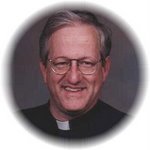

The Lutheran Church-Missouri Synod has taken a new direction, sort of. When he became the new president of the Synod, Matthew Harrison brought in the three-fold emphasis of Witness and Mercy and Life Together (Service). A quick check of the Synod Website shows a significant emphasis on the mercy aspect, with mercy works reflecting by far the longest list of programs in the Synod today. Recent publications have focused on the Christian duty of mercy, and on the rising tide of human care works in the church. The Seminary publication, Concordia Journal, recently dedicated an issue to the topic, in connection with Valparaiso University, printing articles from a Symposium dealing with the issue theologically. The LWF publications are suddenly appearing with regularity in my mailbox. It is a new emphasis for the LC-MS as a Synod.
These developments are not surprising, considering the history of our president. Both as a pastor of an urban parish deeply involved in neighborhood Mercy works, and as a synodical administrator in charge of the Human Care Ministries for over ten years, Matthew Harrison has demonstrated a laudable commitment to human care and works of mercy. Nevertheless, the change in direction for the Synod raises a question. The whole world of the church (and the ethical centers of the secular world) around us is heading in the direction of social service to suffering humanity. The Humanist Manifestoes stated that the church would have to make that change, if it were to remain relevant in our modern age. Of course, their assertion was based on an absolute rejection of God and of any savior or salvation coming for us. The Synod doesn’t have that motivation, but we are following their script nonetheless.
Please do not misunderstand what follows: mercy works are good things for the children of God to do. But as a church body with hundreds of pastors displaced from their parishes, forced out of the work they trained to do in service to the synod, and with no help from that Synod, the current emphasis on mercy is, in my opinion, somewhat misplaced. It focuses on care for the stranger and neglects care for our brothers. These pastors struggle with debt for their education, and the simple task of surviving economically with the career they chose closed to them, often due to no fault of their own. The Synod at convention was tasked by resolution with forming a task force to look into the issues of those on the roster without calls, including returning missionaries and chaplains. This is a good start, but hardly sufficient in the face of the need – which exceeds the numbers reported in the convention materials.
The administrative divisions of the synod, known as districts, are often hostile to these men who have lost their ministry and their livelihood. CRM is often viewed as a “death-sentence” for a career in parish ministry. There seems to be no mercy for such men. They are out of office, and often offered no assistance with life, and no opportunity to serve a parish. When they seek assistance, they frequently encounter a cold shoulder and a deaf ear from those who are supposed to be their ecclesiastical supervisors. Sometimes they encounter open hostility.
Mercy is most appropriate to the people of God. Jesus said, “A new commandment I give you, that you love one another, . . . By this all men will know that you are my disciples, if you have love for one another.” The Apostle Paul wrote, “So then, while we have opportunity, let us do good to all men, but especially to those who are of the household of the faith.” Somehow, mercy appears to have come to be understood in our Synod as to be directed primarily to others rather than to “those who are of the household of the faith”.
These men took years of their lives and spent their fortunes to prepare for service to the Synod and to their Lord. Many left school with significant debt, a debt which they reasonably expected to amortize during fruitful years of service in their ministries. Suddenly, they find themselves on the outside. Many of these pastors have been removed from their parishes by very questionable procedures that seemed to be most unchristian and unloving. They long to serve, in a church body that needs their service, and yet they are excluded most often for the “crime” of being a faithful Lutheran Pastor. They are ignored, in want, and suffering. Still, we, the Synod, serve the world and ignore our brothers and our neighbors.
We serve those in foreign lands, those afflicted with malaria, those who speak a different language and live in a different culture, and we should! That is a godly thing to do. We work to meet their needs – medical, food, shelter, – and these things are also very good. It appears at times that these needs are addressed with only an occasional connection to the Gospel of Jesus Christ, and that limited connection is defended as good and necessary and appropriate to the work. We do some of this service in concert with church bodies whose theological confessions many times fall short of being Christian. We are presented a “theological” justification for this also – cooperation in externals, which we are assured is acceptable, and in certain circumstances may be so. Although it doesn’t always seem sufficient. The situation puts one in mind of what Jesus said, when He chastised the Pharisees for their outward, formal piety, “Woe to you, scribes and Pharisees, hypocrites! For you tithe mint and dill and cummin, and have neglected the weightier provisions of the law: justice and mercy and faithfulness; but these are the things you should have done without neglecting the others.” We have ignored justice and mercy and faithfulness toward those who are our brothers.
Our church body has millions of dollars to pursue works of mercy in the world around us, but we ignore those for whom we have the command of our Lord to care. “Love one another” appears 13 times in the New Testament and 3 of those times from the lips of Jesus, according to John. Paul reminds us in Galatians 6:2, “Bear one another’s burdens, and thus fulfil the law of Christ.” We have the resources to help in physical disasters around us, but our brothers who have been removed, often through no genuine fault of their own, must bear their burdens alone. I can attest by personal experience that the training required to be a pastor is not valued as preparation for many other tasks by the world around us.
The Word of God exhorts us, “Through love serve one another.” - Gal. 5:13. I teach my congregation that love for one’s neighbor does not always mean love for the stranger in a distant land, although that is a good thing to do if we have the resources. Love for the neighbor is first about loving those near you, family, friends, actual neighbors, the people you can see and touch and directly serve and affect. It is in serving our neighbor that we serve God. You cannot love God, whom you have not seen, if you do not love your brother, whom you have seen. Serving the stranger in a far-away land and the distant alien is not serving God if we are, at the same time, ignoring our neighbors and our brothers. It is, instead, the avoidance of the command of God as regards our neighbor, and, in effect, tithing mint and dill and cummin while neglecting the weightier provisions of the law.
That is not the part of the people of God. Tertullian, in describing how outsiders saw the Christians in his day, wrote the following: "Look," they say, "how they love one another" (for they themselves hate one another); "and how they are ready to die for each other" (for they themselves are readier to kill each other). One has to wonder if we would be seen in the same way. The outright abandonment of pastors who have been removed or forced to resign, without Scriptural cause, is a synodical scandal of long-standing. If we are going to talk about and pursue works of mercy and compassion, it is only right that we begin close to home.
Mercy works mean nothing if ignore those who are our brothers. The standard excuse often given is that somehow the pastor enduring such treatment brought it on himself. This is simply holding those who have been wronged as guilty and excusing those who did them wrong and supporting them. It is sin, plain and simple.
So, Missouri, are you serious about serving God by serving your neighbor and loving one another, or are you merely clamoring for the approval of the ungodly world around you? Let us take care of those who are truly our brothers before we pretend to care for others!
Sunday, May 18, 2014

April Showers
Spring is slowly creeping into Missouri. The winter has been long and cold, for Missouri, and the welcome warmth of Spring is finally being felt more often. The changing season put me in mind of the old rhyme, “April showers bring May flowers”. I don’t know that I have ever lived anywhere where it worked just like that, but Missouri comes closest. Between the weather and the changes spreading across our society, the poem caused me to think of Luther’s comments about the Gospel being like a shower, moving from place to place. To save my describing it more fully, I have included a section (edited slightly for length) from Volume 23 of Luther’s Works, starting on page 261.
“[T]he Gospel will tarry in your midst but a short time, especially after we who are now proclaiming it have closed our eyes in death. It will not remain after our departure.” The Gospel has its day and takes its course from one city to another. Today it is here; tomorrow, there. It is like a heavy shower which passes from place to place, soaking and enriching the soil. Christ says (Matt. 10:23): “If they drive you from one city, go to another. When all the cities have been visited, then I shall come with the Day of Judgment.” Even if a certain place accepts the Gospel today, it will not stay there long. People hate it; they view it with envy; they curse it; yes, they starve it out. Therefore Christ declares: “I will not remain with you long. You need not persecute and condemn the Gospel so. I shall soon quit the field and make room for you. As it is, a darkness will soon descend upon you, leaving you in utter ignorance.” What will happen then?
You will seek Me, and you will not find Me.
These are horrible words. . . . When the Gospel vanishes, then the light, the proper understanding and knowledge of faith in Christ, also disappears. Then you will find one undertaking this, another that. Then they will all go in search of Christ, of forgiveness of sins, and of grace; but their search will be in vain. . . . One will pray and fast, wear cowl and tonsure; another will do something else. Then men will search for Christ. Thus it happened in the papacy. Christ was lost, and people went hither and yon. They sought Christ, but they did not find Him.
Christ remained with the Jews in person for three years, preaching to them. Later they were deprived of Him. After His departure He had the apostles preach to them for forty years. But the Gospel did not remain with them for a longer time. They lost Christ, and now they have been looking for Him in vain for over 1,400 years. They torture themselves severely; they lead an austere life. There is no more miserable and wretched nation under the sun than they. They claim that all their misfortune stems from the fact that the Messiah has not yet come to visit them. But that is an empty thought. Oh, it is a terrible word that Christ pronounces here: “You will seek Me, and you will not find Me.” Christ means to say: “You will fret and spend yourselves, devote yourselves to a spiritual life, carry on services, plague yourselves to death, castigate yourselves, pray and fast much, but all in vain; for you will not find Me.”
This also happened in the papacy. There the whole world was full of monks and nuns. Yes, many thousands of sects and factions arose. How many orders the barefoot friars had, each one boasting that he was better than others! There was not a Christian who did not embark on something special with which to serve God. The world was full of searching. People expended earthly goods and suffered endless physical hardships in the search; but they did not find Christ. All was vain and useless.
Therefore Paul, quoting from the prophet Isaiah (55:6: “Seek the Lord while He may be found, call upon Him while He is near”), says very correctly in 2 Cor. 6:1–2: “We entreat you not to accept the grace of God in vain. For he says: ‘At the acceptable time I have listened to you, and helped you on the day of salvation.’ Behold, now is the acceptable time; behold, now is the day of salvation.” As though he were to say: “Believe, respect the Word, and live in accordance with the Word while you have it. See to it that you do not neglect it; do not sleep your opportunity away. For it will not remain forever; it will not tarry long.” Therefore this advice is best of all: We should not suppose that the Gospel, which we now have, will stay with us forever. Wait, and see what the situation will be in twenty years. Then tell me about it again. After the death of the present pious and sincere pastors, others will appear who will preach and act according to the pleasure of the devil. Alas, just behold how many . . . have already forfeited the Gospel. . . . And that will happen everywhere.
The people become weary of the Word and suppose that it will endure forever. When a good beer is available at a certain place, everybody runs there without delay, knowing that the supply will not last long. This commodity is not to be had every day; therefore people get it while it is to be had. If it could be obtained for a long period of time, our appetite would become surfeited, and the beer would not be prized. But here we assume that the Word will remain with us always, although, in fact, it stays and endures but a short time before it is gone. If you do not accept it gratefully and reverently, you will soon be without it. And once the Word is gone, the time will come when you would fain be pious and be saved; you will want to obtain God’s grace, forgiveness of sin, and heaven. But all will prove futile. You will not find grace, forgiveness of sin, life, and righteousness. All will be under condemnation, even your best works.
The nobility, the imperial cities, the Sacramentarians, and other fanatics have already lost it. And now they prescribe rules by which everybody can become pious. At the same time they are not aware that this is all for nothing. They will wear themselves out, run around like mad dogs, and lose life and limb over it; and yet they will not find true help, for now they reject it. Well, we have been warned sufficiently. Our great ingratitude makes it impossible for the Word to tarry with us long. Our contempt of the Word and our satiety, which God cannot long overlook, drive it away.
Christ says: “I shall be with you a little longer. You will seek Me, and you will not find Me. Where I am you cannot come.” This involves two points: “It means, in the first place, that you will burden yourselves with many wearying tasks. For when faith is gone, people will undertake great spiritual endeavors; but these do not achieve forgiveness of sin. Secondly, heaven will be closed to you and your zeal and your holy works and activity.”
Christ told the Jews this, but to no avail. That will be the lot of all the work-righteous after faith has vanished. The fate of the Jews will overtake us also. The world cannot be helped; it will not believe this. I am weary of trying, but I must continue to preach for the sake of myself and a few godly people. Apart from this, it is useless. People will not believe; they persist in finding out for themselves. That is the story of the Jews. Christ Himself, God’s Son, came, and then the apostles appeared to warn them; but they would not believe. Thus [our land], too, must go its way and bear the consequences. The same fate will befall us. It is inevitable. We are insisting on it.”
So far, Luther.
A long quote, I know. But Luther says it so well. We are witnessing the moving of the shower in our day and age. This shower, however, does not produce flowers once it is gone. More and more congregations are shrinking dramatically. Many that seem to be holding their own are doing so by allowing names to sit on their rolls of men and women who have stopped worshipping and no longer participate regularly in the fellowship of the saints. When these are challenged about that absence, they talk of rights and how they have not really changed even if their attendance has.
Christians do not talk of rights, at least not in religion. Politics perhaps, but before the Lord we are not free men and women with rights. That is a political condition – one which is also swiftly changing in our day. In matters of faith and religion, we Christians are slaves of Christ and the recipients of great gifts of grace. On the other hand, the missing brethren may be correct when they say that nothing has really changed with them. They may never have believed, never have trusted the grace of God, never have felt that they stood in need of the work of the Holy Spirit in them. Now their absence simply correctly reflects how they have always stood in their own minds before the goodness and grace of God.
We who remain need to recognize what is happening around us and live in the bright light of reality. We are the truly blessed. God has poured out on us His grace and love and taught us to know Him and to believe His will for us is salvation. He has bestowed on us the clear understanding of His Word, and provided us with that light of which Psalm 119 verse 105 spoke, Thy word is a lamp to my feet, And a light to my path.
Of course, a light is of absolutely no use if you do not use it. That was Luther’s concern. The pressure of the world and the tendencies of our own flesh is to take the Word for granted and dismiss any need to attend to it. We don’t feel the need of Bible Study. Life is pressing on us too heavily to take that time. Midweek services are not all that important, as is reflected by the diminishing attendance at them. It is too late, and too inconvenient, to attend. Besides, we have Sunday services, most of the time. Anyhow, we know what the pastor is going to say, more or less. We can make up for our absences by reading the sermons on line and doing our daily devotions, right?
The problem is that while we might be able to do those things, most people do not. It is like the man who moved to the lake for fishing. Once he was there, everything else consumed his time. He could always go fishing, so he always put it off until tomorrow in favor of something that seemed more immediate at the moment. One day he discovered that he had not put his boat into the water for years. Fishing is of no ultimate importance, of course, but the behavior of the fisherman is an ordinary human behavior. It works that way with more important things too, like church and the Word of God.
Just because we believe today does not mean we can take God and His Word for granted. Luke 11:28 says, “Blessed are they that hear the Word of God and keep it.” Jesus also said, “If you abide in My word, then you are truly disciples of Mine; and you shall know the truth, and the truth shall make you free.” It is not our wisdom, strength, or choosing that makes us Christian. It is God at work in us that accomplishes that, and He works in us through His Word, heard and received in the Sacrament, the absolution, and the fellowship of the Saints – which only occurs around Word and Sacrament in what we call “worship”. If we take it, and ourselves, for granted, we can fall away. Jesus said that no one could snatch you out of His hand, but He did not say that you could not jump out on your own. Many have.
The point of all of this is that we are presently still enjoying that “shower” of the Gospel, but you may have noticed that it is getting lighter. The Gospel is harder to find. That shower seems to be moving on. It will prove to be a great blessing for those upon whom it next begins to pour, but it will be a great loss for those left behind when it moves. After all, what happens when it stops raining? Things dry out pretty quickly. If it stays dry, we have a drought – as we have experienced in Missouri the past few years. When there is a drought, things don’t grow and food can become scarce.
The prophets warn of a famine of the Word of God. That famine was what Luther was describing. He predicted it would come to Germany, and his homeland later was formerly part of East Germany, an atheistic communist state. All of Europe is only nominally Christian today, with serious Christian congregations few and far between, and usually very small. That is the famine that Luther foresaw.
Our nation is drying out, in terms of the Gospel. There are lots of churches that teach works and decisions coupled with personal piety. There are some that teach some bizarre form of personal self-approval, but very few who teach the forgiveness of sins by grace alone, through faith alone, even among what calls itself “Lutheran” these days. We need to fight for the Gospel and cling to it earnestly before it vanishes. We need it for ourselves. We need it for our children and grandchildren. We need it for our friends and neighbors who obviously have very little awareness of their own need. Each and every one of those we know needs the Gospel, and faith in it.
When the Gospel fades away, there may be small outposts of it here and there in America, but I would not want to depend on being able to locate one nearby. Even today, I hear reports of people driving an hour or more one way to go to a church where they hear the Word of God clearly and honestly proclaimed. Denominational labels mean very little in this circumstance, except that it is most probable that you will find the Gospel clearly proclaimed only in a church that boldly identifies itself as Lutheran, but even the name “Lutheran” is no longer a guarantee. The congregation and her pastor actually needs to be truly Lutheran.
As Luther pointed out, you don’t find forgiveness in those places that teach that it is by your own works or piety or decisions that you will be saved. They must preach Christ and Him crucified. Only there is that shower still pouring down.
Yours in the Lord,
Pastor Fish
“[T]he Gospel will tarry in your midst but a short time, especially after we who are now proclaiming it have closed our eyes in death. It will not remain after our departure.” The Gospel has its day and takes its course from one city to another. Today it is here; tomorrow, there. It is like a heavy shower which passes from place to place, soaking and enriching the soil. Christ says (Matt. 10:23): “If they drive you from one city, go to another. When all the cities have been visited, then I shall come with the Day of Judgment.” Even if a certain place accepts the Gospel today, it will not stay there long. People hate it; they view it with envy; they curse it; yes, they starve it out. Therefore Christ declares: “I will not remain with you long. You need not persecute and condemn the Gospel so. I shall soon quit the field and make room for you. As it is, a darkness will soon descend upon you, leaving you in utter ignorance.” What will happen then?
You will seek Me, and you will not find Me.
These are horrible words. . . . When the Gospel vanishes, then the light, the proper understanding and knowledge of faith in Christ, also disappears. Then you will find one undertaking this, another that. Then they will all go in search of Christ, of forgiveness of sins, and of grace; but their search will be in vain. . . . One will pray and fast, wear cowl and tonsure; another will do something else. Then men will search for Christ. Thus it happened in the papacy. Christ was lost, and people went hither and yon. They sought Christ, but they did not find Him.
Christ remained with the Jews in person for three years, preaching to them. Later they were deprived of Him. After His departure He had the apostles preach to them for forty years. But the Gospel did not remain with them for a longer time. They lost Christ, and now they have been looking for Him in vain for over 1,400 years. They torture themselves severely; they lead an austere life. There is no more miserable and wretched nation under the sun than they. They claim that all their misfortune stems from the fact that the Messiah has not yet come to visit them. But that is an empty thought. Oh, it is a terrible word that Christ pronounces here: “You will seek Me, and you will not find Me.” Christ means to say: “You will fret and spend yourselves, devote yourselves to a spiritual life, carry on services, plague yourselves to death, castigate yourselves, pray and fast much, but all in vain; for you will not find Me.”
This also happened in the papacy. There the whole world was full of monks and nuns. Yes, many thousands of sects and factions arose. How many orders the barefoot friars had, each one boasting that he was better than others! There was not a Christian who did not embark on something special with which to serve God. The world was full of searching. People expended earthly goods and suffered endless physical hardships in the search; but they did not find Christ. All was vain and useless.
Therefore Paul, quoting from the prophet Isaiah (55:6: “Seek the Lord while He may be found, call upon Him while He is near”), says very correctly in 2 Cor. 6:1–2: “We entreat you not to accept the grace of God in vain. For he says: ‘At the acceptable time I have listened to you, and helped you on the day of salvation.’ Behold, now is the acceptable time; behold, now is the day of salvation.” As though he were to say: “Believe, respect the Word, and live in accordance with the Word while you have it. See to it that you do not neglect it; do not sleep your opportunity away. For it will not remain forever; it will not tarry long.” Therefore this advice is best of all: We should not suppose that the Gospel, which we now have, will stay with us forever. Wait, and see what the situation will be in twenty years. Then tell me about it again. After the death of the present pious and sincere pastors, others will appear who will preach and act according to the pleasure of the devil. Alas, just behold how many . . . have already forfeited the Gospel. . . . And that will happen everywhere.
The people become weary of the Word and suppose that it will endure forever. When a good beer is available at a certain place, everybody runs there without delay, knowing that the supply will not last long. This commodity is not to be had every day; therefore people get it while it is to be had. If it could be obtained for a long period of time, our appetite would become surfeited, and the beer would not be prized. But here we assume that the Word will remain with us always, although, in fact, it stays and endures but a short time before it is gone. If you do not accept it gratefully and reverently, you will soon be without it. And once the Word is gone, the time will come when you would fain be pious and be saved; you will want to obtain God’s grace, forgiveness of sin, and heaven. But all will prove futile. You will not find grace, forgiveness of sin, life, and righteousness. All will be under condemnation, even your best works.
The nobility, the imperial cities, the Sacramentarians, and other fanatics have already lost it. And now they prescribe rules by which everybody can become pious. At the same time they are not aware that this is all for nothing. They will wear themselves out, run around like mad dogs, and lose life and limb over it; and yet they will not find true help, for now they reject it. Well, we have been warned sufficiently. Our great ingratitude makes it impossible for the Word to tarry with us long. Our contempt of the Word and our satiety, which God cannot long overlook, drive it away.
Christ says: “I shall be with you a little longer. You will seek Me, and you will not find Me. Where I am you cannot come.” This involves two points: “It means, in the first place, that you will burden yourselves with many wearying tasks. For when faith is gone, people will undertake great spiritual endeavors; but these do not achieve forgiveness of sin. Secondly, heaven will be closed to you and your zeal and your holy works and activity.”
Christ told the Jews this, but to no avail. That will be the lot of all the work-righteous after faith has vanished. The fate of the Jews will overtake us also. The world cannot be helped; it will not believe this. I am weary of trying, but I must continue to preach for the sake of myself and a few godly people. Apart from this, it is useless. People will not believe; they persist in finding out for themselves. That is the story of the Jews. Christ Himself, God’s Son, came, and then the apostles appeared to warn them; but they would not believe. Thus [our land], too, must go its way and bear the consequences. The same fate will befall us. It is inevitable. We are insisting on it.”
So far, Luther.
A long quote, I know. But Luther says it so well. We are witnessing the moving of the shower in our day and age. This shower, however, does not produce flowers once it is gone. More and more congregations are shrinking dramatically. Many that seem to be holding their own are doing so by allowing names to sit on their rolls of men and women who have stopped worshipping and no longer participate regularly in the fellowship of the saints. When these are challenged about that absence, they talk of rights and how they have not really changed even if their attendance has.
Christians do not talk of rights, at least not in religion. Politics perhaps, but before the Lord we are not free men and women with rights. That is a political condition – one which is also swiftly changing in our day. In matters of faith and religion, we Christians are slaves of Christ and the recipients of great gifts of grace. On the other hand, the missing brethren may be correct when they say that nothing has really changed with them. They may never have believed, never have trusted the grace of God, never have felt that they stood in need of the work of the Holy Spirit in them. Now their absence simply correctly reflects how they have always stood in their own minds before the goodness and grace of God.
We who remain need to recognize what is happening around us and live in the bright light of reality. We are the truly blessed. God has poured out on us His grace and love and taught us to know Him and to believe His will for us is salvation. He has bestowed on us the clear understanding of His Word, and provided us with that light of which Psalm 119 verse 105 spoke, Thy word is a lamp to my feet, And a light to my path.
Of course, a light is of absolutely no use if you do not use it. That was Luther’s concern. The pressure of the world and the tendencies of our own flesh is to take the Word for granted and dismiss any need to attend to it. We don’t feel the need of Bible Study. Life is pressing on us too heavily to take that time. Midweek services are not all that important, as is reflected by the diminishing attendance at them. It is too late, and too inconvenient, to attend. Besides, we have Sunday services, most of the time. Anyhow, we know what the pastor is going to say, more or less. We can make up for our absences by reading the sermons on line and doing our daily devotions, right?
The problem is that while we might be able to do those things, most people do not. It is like the man who moved to the lake for fishing. Once he was there, everything else consumed his time. He could always go fishing, so he always put it off until tomorrow in favor of something that seemed more immediate at the moment. One day he discovered that he had not put his boat into the water for years. Fishing is of no ultimate importance, of course, but the behavior of the fisherman is an ordinary human behavior. It works that way with more important things too, like church and the Word of God.
Just because we believe today does not mean we can take God and His Word for granted. Luke 11:28 says, “Blessed are they that hear the Word of God and keep it.” Jesus also said, “If you abide in My word, then you are truly disciples of Mine; and you shall know the truth, and the truth shall make you free.” It is not our wisdom, strength, or choosing that makes us Christian. It is God at work in us that accomplishes that, and He works in us through His Word, heard and received in the Sacrament, the absolution, and the fellowship of the Saints – which only occurs around Word and Sacrament in what we call “worship”. If we take it, and ourselves, for granted, we can fall away. Jesus said that no one could snatch you out of His hand, but He did not say that you could not jump out on your own. Many have.
The point of all of this is that we are presently still enjoying that “shower” of the Gospel, but you may have noticed that it is getting lighter. The Gospel is harder to find. That shower seems to be moving on. It will prove to be a great blessing for those upon whom it next begins to pour, but it will be a great loss for those left behind when it moves. After all, what happens when it stops raining? Things dry out pretty quickly. If it stays dry, we have a drought – as we have experienced in Missouri the past few years. When there is a drought, things don’t grow and food can become scarce.
The prophets warn of a famine of the Word of God. That famine was what Luther was describing. He predicted it would come to Germany, and his homeland later was formerly part of East Germany, an atheistic communist state. All of Europe is only nominally Christian today, with serious Christian congregations few and far between, and usually very small. That is the famine that Luther foresaw.
Our nation is drying out, in terms of the Gospel. There are lots of churches that teach works and decisions coupled with personal piety. There are some that teach some bizarre form of personal self-approval, but very few who teach the forgiveness of sins by grace alone, through faith alone, even among what calls itself “Lutheran” these days. We need to fight for the Gospel and cling to it earnestly before it vanishes. We need it for ourselves. We need it for our children and grandchildren. We need it for our friends and neighbors who obviously have very little awareness of their own need. Each and every one of those we know needs the Gospel, and faith in it.
When the Gospel fades away, there may be small outposts of it here and there in America, but I would not want to depend on being able to locate one nearby. Even today, I hear reports of people driving an hour or more one way to go to a church where they hear the Word of God clearly and honestly proclaimed. Denominational labels mean very little in this circumstance, except that it is most probable that you will find the Gospel clearly proclaimed only in a church that boldly identifies itself as Lutheran, but even the name “Lutheran” is no longer a guarantee. The congregation and her pastor actually needs to be truly Lutheran.
As Luther pointed out, you don’t find forgiveness in those places that teach that it is by your own works or piety or decisions that you will be saved. They must preach Christ and Him crucified. Only there is that shower still pouring down.
Yours in the Lord,
Pastor Fish
Sunday, March 02, 2014
Good Old Saint Pat

What Patrick is really known for is missions. Born in England, he was captured by some Irish pirates and made a slave in Ireland for about six years before he escaped and worked his way home. He then became a priest, and felt drawn back to Ireland (reported to have had a vision calling him back to Ireland) to teach the pagans there the Christian faith. He was Bishop of Ireland and a general missionary there for over thirty years, until his death. Although he did not have the most successful mission to Ireland (according to the internet), he did capture the hearts and imagination of Ireland and has become the patron saint of the Emerald Isle.
If we want to celebrate St. Patrick, we can do no better than to celebrate Missions. He may not have had any real effect on the snake population, since no one knows of any history of snakes in Ireland, but Patrick did spend a good portion of his life sharing the Gospel with people who did not want to hear it. He wasn't numerically the most successful missionary, but he was faithful and persistent, and is credited with planting three hundred churches and baptizing thousands. He credited his ability to work among the Irish to his captivity and slavery in his youth, where he learned to speak the native language, showing how God can use even our misfortunes to good effect.
He also demonstrated that one does not need to be visibly, outwardly successful or effective, as our world measure such things, to accomplish significant things for the Church. After all, we are not the power in the church. God and His Word is. God grants success, and He alone determines what is effective for the spread of the Gospel. The best we can do is be willing to confess Christ, and be steadfast in that confession. God doesn't ask us to win great victories or be outwardly successful in our endeavors, He only asks us to be faithful and to do what He gives us to do - and say what He gives us to say.
We modern Americans live in a time not so very different from the times of St. Patrick. Oh, the technology is different, and we are far more prosperous in the things of this world. But people are still the same, and our culture is rapidly becoming every bit as pagan as the world of St. Patrick. The biggest difference between his world and our is that many in his world had not yet heard the Gospel and the world around him was on the 'upswing', if you will, toward Christianity. Our culture has heard the Gospel, and a couple of horrendous distortions of it, and our society is on the 'down-swing' away from the Christian faith and into a profound paganism.
The comforts of our age, and our culture's long encounter with and battle against the Gospel, have silenced any sense of sin or consciousness of the brutality of the godless world around us. We can often watch horrifying conflict in other places on earth and not even recognize that there is real pain and real human suffering going on. It seems to far too many of us, many times, as though the troubles of the world distant from us is a movie. Our comfort continues. Our food remains. We can flip off the TV and it is as though nothing is really happening, and if it is, it is happening to someone else and seems oh-so-much-less than real.
We have often placed death in a hospital or nursing home, or a hospice facility. Severe sickness is hidden in a hospital. Pain is muted and medicated into a stupor. Until it comes calling for us personally, many people can turn a blind eye to the grim reaper and so when someone talks of sin and its consequences, it is far too easy to pretend that any concern over it is overblown and hysterical. Confessing Christ and proclaiming Law and Gospel in such a world is a difficult task. Speaking, of course, is not the challenge. The challenge lies in getting the world around us to listen and to care about something that seems so unreal and distant to them.
That is where the example of St. Patrick can be of help. He went where he was not particularly wanted - at least not as a Christian. The Irish pirates that kidnapped him wanted a slave, but they had no apparent desire for a missionary. Patrick also had to have some personal issues with going back to the place where he had been a slave. He felt called to do so, none the less, so he went. He went and he preached and he endured beatings and abuse, and slowly his work prospered. He was not as famous, or as appreciated, during his life as he was after his death. God did what He wanted to do, and at his own pace. Patrick was charged with being faithful, and, to a large extent, it appears that he was faithful to what he believed.
Part of the problem that the church has in our society today is that the spirit of humble faithfulness is not all that common. We crave success, with all the trimmings we have come to identify with success. People seem oh-so-impressed with the fancy, wealthy-looking preachers on TV. Some of them even preach about how their success is a sign from God, and try to tell others how to emulate them. It should be clear that what they are proclaiming is not Christ, but themselves and outward, worldly success. They say, "If God loves you, He will abundantly bless you!" If that were true, one would have to wonder about Jesus Himself. He did not have the trappings of worldly success. He had scorn and persecution during His life, and false imprisonment, torture, and an ignominious death at the end. He had no fancy suit, no expensive wrist-watch, no stadium thronging with adoring fans, except when He was feeding them a free meal, and that outdoors!
Our schools seek men of academic respectability, and certification by the world rather than men of faithfulness. Sometimes the two can and do go together, but not as often as our leaders like to suggest. We simply like to look good to the world around us based on standards that have nothing to do with what the Church is about. Similarly, congregations sometimes seek to hide their identity and mask their confession to keep from offending people who are responding to God's Word from the flesh just as the Bible teaches us the flesh will respond. They don't want to hear about sin, so we stop making confession of sin - and the absolution - part of the public worship. People don't understand what "Lutheran" is, so some churches drop the name to avoid offending.
On the other hand, our leaders are sometimes quite willing to step into the public limelight and do things that deny our doctrine and mute our confession because it makes them look good in the eyes of the world around them and dresses them up in the appearance of compassion and what-not. Joining with non-Christian religious leaders in a community service during a time of crisis may look good and feel all compassionate, but at the precise moment that people need the clear comfort of the Gospel, such leaders are proclaiming by their actions - and sometimes their words - that the Gospel is nothing unique and has nothing to offer them that the pagan religions cannot give them.
The problem seems to be that for many, the concern is for how we look to the world around us and not for the welfare and salvation of others in that world. The so-called great commission in Matthew does not command us to go, as so many quotations of it make it sound, it commands us to make disciples by Baptizing and teaching once we have gone - that is, wherever we may find ourselves! It says, literally, "having gone, make disciples".
Nowhere are we commanded to come up to the expectations of society in accomplishment or prosperity, or to look good to our neighbor - except that we be decent and honorable in the sight of all men, as far as it depends on us. The modern desire to look successful or respectable in any way other than being moral and godly is just one of the desires of the flesh that actually works against the Spirit and the spirit-worked desire to confess Christ and the Gospel. The Gospel is the power of God to the salvation of all men - the Jews first (as Paul says it in Romans 1:16) and then the Gentile - everybody else. We will not make the difference, if the Word of God is being used and confessed. The Word of God will.
Our part is to confess that Gospel both in what we do and in what we say. We need to live lives that reflect the Gospel - and set us apart from the world around us. If we try too hard to 'fit in' with the world around us, they will not see any difference. They will not see Christ or what difference being a Christian makes, because, as we try so hard to look like the world around us and win their respect by being what they want us to be, being a Christian will make no difference in us. We have no call to be deliberately strange, as snake-handlers are, for example, but we do have the call to live as God's holy people, and in a way that reflects what we believe, that is to say, the hope that is in us.
St. Patrick demonstrates the power of a consistent, faithful confession of both life and lip. While we are not all called to become missionaries in a foreign land, we are all called to live out our confidence in God, to show what forgiveness means and what difference it makes in life, and to be the sort of people that we know by the Word of God that we ought to be - patient, kind, decent, compassionate, forgiving, and so forth. Just run through the lists that appear in the New Testament of the gifts of the Spirit or the characteristics of the Spirit as opposed to the flesh and you will see that the same sorts of things pop up in each list, "love, joy peace, patience, kindness, gentleness, self-control".
The need here is not a legal need for salvation, the sort of thing you must do in order to get into heaven, but the need of the world around us to be able to see Christ through us and distinguish us from the unbelieving, pagans around us. We can talk endlessly about the joy of salvation, but if we reflect no joy ourselves, the talk doesn't make much sense to anyone. We can speak about peace, but if we are never at peace ourselves, we won't be very credible. Forgiveness as the gift of God makes no sense if it is proclaimed by someone who never has any for anyone else in their life. If you don't appear to enjoy being God's child or have any happiness that you are a Christian, what about your conduct would make anyone who sees you want to be a Christian, or to share in that Gospel you confess?
The power of Easter is tremendous. It is the power of resurrection from the grave. It is the power of the knowledge of the love of God for us - and we can all use that knowledge when times get difficult. It is the ultimate answer to every fear - particularly to the greatest fear of mankind - the fear of death. If God is for us, who can possibly be against us? Oh, we know who the enemy is, but the victory is already won, and has been given to us. That is the power of Easter.
And, like St. Patrick, we have the charge of God to share the news of that victory both by how we live and then by what we proclaim and confess. The grace of God is one of the few things that you cannot diminish your possession of by giving it away. Now, don't misunderstand me. Patrick was a Roman Catholic - although very long ago, before many of the errors and abuses that Luther tried to set right had been developed - and I am not endorsing Rome's myths about him or every Roman doctrine, but one thing he surely did right was set the example of sharing the Gospel and confessing Christ. So, if you want to celebrate St. Patrick's Day, have some Corned Beef and Cabbage, and maybe a little green beer, and think about sharing the Gospel. Do missions right where you live, among the people you live among.
Yours in the Lord,
Pastor Fish
Wednesday, February 26, 2014
Important Truth
This was in my daily devotion today. It just struck me as too good to be lost between the pages of a book. Every Christian should be confronted by this trusth regularly.
"At the beginning of the fourth century, the church historian Nicephorus informs us, the entire Christian congregation at Nicomedia in Asia Minor was suddenly attacked on the orders of the emperor Maximian. They had been instructed to sacrifice to the gods, but instead were celebrating the joyous Christmas festival. Their attackers quickly surrounded and burned the church, killing more than a thousand worshipers,
These were indeed hard, sad times. It is still a sad situation when a Christian is unable to gather with his brothers in his church without the threat of persecution. Yet it is incomparably sadder — and more dangerous — when Christians possess a beautiful church where they are free to gather peaceably and unhindered and they either abandon or falsify God’s Word. A church in which man’s delusion and wit are proclaimed instead of Holy Scripture is nothing but and open gate to hell, a butchering table of Satan, a house of plagues to the soul. Whoever enters such a church of unbelievers and enemies of Christ would have done better to come into a den of robbers and murderers, for there only his mortal body would have been killed, In a church of unbelievers, it is his immortal soul that is slain. There are also churches in which the Word of God is indeed read aloud, but it is either taught only in part or interpreted falsely. Here soul are led on dangerous detours and Satan sows handfuls of poisonous weeds next to the good seed of the Scriptures, tempting the hearts of the hearers, Christ Himself said of such churches, “‘My house shall be called a house of prayer,’ but you make it a den of robbers” (Matthew 21:13). A person would be better advised to read the Word of God alone at home, even in tears of loneliness, that to attend such a church."
God Grant It, Daily Devotions from C.F.W. Walther, Trans. By Gerhard P. Grabenhofer, Concordia Publishing House, St. Louis, 2006, p. 218-219.
"At the beginning of the fourth century, the church historian Nicephorus informs us, the entire Christian congregation at Nicomedia in Asia Minor was suddenly attacked on the orders of the emperor Maximian. They had been instructed to sacrifice to the gods, but instead were celebrating the joyous Christmas festival. Their attackers quickly surrounded and burned the church, killing more than a thousand worshipers,
These were indeed hard, sad times. It is still a sad situation when a Christian is unable to gather with his brothers in his church without the threat of persecution. Yet it is incomparably sadder — and more dangerous — when Christians possess a beautiful church where they are free to gather peaceably and unhindered and they either abandon or falsify God’s Word. A church in which man’s delusion and wit are proclaimed instead of Holy Scripture is nothing but and open gate to hell, a butchering table of Satan, a house of plagues to the soul. Whoever enters such a church of unbelievers and enemies of Christ would have done better to come into a den of robbers and murderers, for there only his mortal body would have been killed, In a church of unbelievers, it is his immortal soul that is slain. There are also churches in which the Word of God is indeed read aloud, but it is either taught only in part or interpreted falsely. Here soul are led on dangerous detours and Satan sows handfuls of poisonous weeds next to the good seed of the Scriptures, tempting the hearts of the hearers, Christ Himself said of such churches, “‘My house shall be called a house of prayer,’ but you make it a den of robbers” (Matthew 21:13). A person would be better advised to read the Word of God alone at home, even in tears of loneliness, that to attend such a church."
God Grant It, Daily Devotions from C.F.W. Walther, Trans. By Gerhard P. Grabenhofer, Concordia Publishing House, St. Louis, 2006, p. 218-219.
Friday, August 16, 2013
+ Paul A. Bartz +
 Paul Bartz was born on May 1, 1948. The Lord called him home to glory on August 15, 2013 after an extended battle with cancer of the tongue and jaw.
I met Paul while I was a student at Concordia College in St. Paul Minnesota. I can no longer recall if it was my first year or my second year there. There are too many memories and it was too long ago, back in 1969, I believe. We met because his dormitory roommate at the time was struck by how our senses of humor were so alike. We were introduced at the campus coffee shop's informal "Laugh-In" evening of improvisational humor. We went on to make quite a hit of our improvised skits and jokes. We were fast friends ever after, discovering that we shared the same love for theology as well. I met Paul the day after he had met the woman who became the love of his life, and eventually his wife, Bonnie Bruhn. I was always a third wheel for that first year.
Paul loved Luther. He was the first person I knew who subscribed to the Luther's Works subscription program, buying every volume of the American Edition as soon as it came out. His other great interest was the Creation/Evolution debate. When it came time to write his Master's Thesis, it included those two interests. It was entitled, "Luther on Evolution". It was great stuff.
This is not an authorized obituary, but a remembrance of a friend. We saw each other through very difficult times. He was my friend when my first wife chose another man and divorced me. I was his friend, and hopefully of some comfort, when he was driven out of his parish in Garrison, Minnesota, by the sort of unjustified abuse and unconscionable attacks that have become all too common in the Lutheran Church today.
We were there for one another in good times too. He was best man when I married my second (and still) wife, some twenty-seven years ago, and he is God-father to my first-born son. I was his close friend when the Lord surprised Paul and Bonnie with a daughter in their mid-forties, and he honored me by asking my wife and me to be god-parents for their only child, a daughter, now 17 years old.
Paul was an amazing man in so many ways. He was the editor of the Bible Science Newsletter for many years. He created the one minute radio spots called "Creation Moments" that continue yet today. He spoke widely on Creation and the issues surrounding the debate in our society, and not just in Lutheran circles. It is little known that Paul was, briefly, an independent publisher, co-founder of Onesimus Publishing, which published several tracks and pamphlets and one good book. Paul served faithfully as a pastor in the Lutheran Church-Missouri Synod, a vacancy pastor for different congregations, and did pulpit supply after he left the parish ministry many years ago. He was a member of the ministerium of the LC-MS to the day of his death. He was also a sinner, one that rejoiced in the forgiveness Christ poured out on Him in Word and Sacrament. That, too, was part of what marked Paul as special.
One character trait that struck me as marking Paul was consistency. He was a faithful Christian. He was a consistent and thorough theologian. He was a meticulous researcher and and excellent teacher. When Paul settled on something, he did not change. For example, I knew Paul before he had a mustache. I always liked to grow a beard every winter and cut it off in the spring. Paul asked me about it and I suggested that he should try it. He did. He grew a beard and then he wore it for it for years. Eventually he shaved the beard, but after that day, I never saw Paul without his mustache.
Mostly, to me he was a good and faithful friend. In our final conversation just a couple of weeks before his passing, he reaffirmed his friendship, confessed his faith, and joked about having Martin Luther pour a beer for me, too, to be ready for the day I would be joining him at the heavenly table for that meeting with brother Martin we have been waiting for anxiously for so long. His sense of humor was the primary impetus in our meeting, and it was still active in our final conversation, during which we spoke of death. I said it was weird for me to be talking to him about his death as such an immanent thing, and he said, "Yeah, it's kind of weird for me, too."
Now He has finished the race, passed through that dread door, and is with the Lord he served for most of his life. I thank God for Paul. My life would have been much poorer, and certainly a great deal different without Bartz in it. It is at times precisely like this that the message of Christ and the salvation He has wrought for us is so precious. I shall see him again, because of Jesus Christ and His great grace. I take comfort there, and pray for Paul's family, that God will strengthen and comfort them through the Gospel. Meanwhile, the tears are appropriate. Paul Bartz is man to be missed.
Friday, August 02, 2013
Humanism is a Fraud
While searching for specific information about the court stating that Secular Humanism is a religion (Torcaso v. Watkins – 1961) for another topic, I came across the following, numbered “1" at the top of the webpage:
“Humanism is the approach to life based on rational thinking and includes ethics based on our shared human values and on human compassion. If you live life without religion and strive to do good within society just for the sake of doing good, then, you are a natural humanist. Humanism’s core belief is that everything has a natural cause rather than a supernatural cause, therefore it falls under the banner of philosophical naturalism and the vast majority of humanists are atheists although there are some agnostics too. Science and reason continue to be major positive influences on Humanism. Humanist activists typically battle for human rights and for secular politics. Secularism, promoted by secularists, is the belief that religion should be a private, personal, voluntary affair that does not impose upon other people. Public spaces and officialdom should therefore be religion-neutral. Secularism ensures that religions are treated fairly and that no bias exists for a particular religion, and also that non-religious folk such as Humanists are treated with equal respect.” (http://www.humanreligions.info/humanism.html)
The webpage goes on to assert that humanism is no religion – as other humanist pages also assert. They decry the abuse of the footnote reference in the Supreme Court decision that lumps secular humanism in with other religions that do not hold to the existence of a deity (such as Buddhism and Taoism). It is not right or fair to lump them together, or to use this footnote as any sort of indication that, before the law, secular humanism is a religion.
Okay, let us look at what humanists assert and go from there. A caveat: in the course of the article, “humanism” is used to refer not to the general philosophical category, but to the political and religious movement, whether formal or informal. The Humanist Manifestoes (one and two) both make assertions of a clearly religious nature, denying explicitly the existence of a God, rejecting as unreal and irrational any talk of a savior or salvation coming from outside of ourselves, and decrying specific religious texts. The original Humanist Manifesto referred, in point of fact, to the humanism it espoused as “religious humanism”. Their goal was, “To establish such a religion”.
The second Humanist Manifesto reflected the forty years of experience following the writing of the first, and attempted to shed the explicitly religious image of the original, but failed. The opening assertions were boldly religious, and they identified themselves again in religious terms. “We believe, however, that traditional dogmatic or authoritarian religions that place revelation, God, ritual, or creed above human needs and experience do a disservice to the human species.” A statement of belief, making theological points, does not mark one as non-religious. They even take a position that must be marked as religious: “As nontheists, we begin with humans not God, nature not deity.”
I quote these ancient resources to make the point simply that modern humanism is distinctively religious from its foundations. The courts acknowledgment of that fact does not establish humanism as a religion, it simply acknowledges the obvious. So, our modern resource, above, is being disingenuous when it asserts that humanists are non-religious, “non-religious folk such as Humanists”. In number 2 on the same website, the authors say, “Humanism as a religion in its own right, rather than a philosophy or outlook, has been proposed occasionally, although it has never gained much support.”
The truth is that humanism may not be identified with any single specific religious organization, (although the recent news of the establishment of “the Atheist Church” challenges that notion) but that does not exempt it from being a religion. If that were the identifying feature of something not being a religion, Christianity would fail the same test. There are hundreds of bodies that claim Christian doctrines, but distance themselves in their teachings from others. Humanism is a religion, with very specific doctrines, which the Humanist Manifestoes go to great lengths to detail.
The vast majority of humanists are atheists, according to the author of this web-article. Others could make counter-claims, I am sure, although many humanist sites would agree with this author’s assessment, and, as pointed out previously, doctrinal variety does not remove one from the sphere of religion. The notion offered above that “Secularists” are a separate and autonomous group fighting to create a religion neutral space is simply another fraud of humanism. When one makes it necessary to ignore the existence of a deity, in specific or in general, they are making a theological statement, and establishing (in the sense of the Constitution) a religious viewpoint or doctrine in public policy. Such a policy is contrary to the Constitution, and making atheism the standard of public discourse is a distinctively religious action.
Even the now common restriction on naming a specific God is an unconstitutional infringement on the rights of anyone praying in public. That is true even if the Courts might rule otherwise. The Courts have erred egregiously before! Just as certainly as one might invoke the right not to hear another deity appealed to in prayer, it would be as rightly said that the rights of the offended not to hear another’s prayer extend only as far as the right of the next man to freely exercise his religion. You may have the right not to listen to my prayers, but your right not to listen does not extend so far as to limit my right to pray. Surely the religious garb of a Muslim forces the confession of his or her faith upon everyone who can see them. The yarmulke of the observant Jew confesses his faith. The cross or prayer of the Christian is no more offensive.
Banning, restricting, or limiting any of these observances is wrong. Restricting one particular confession while ignoring the others is to establish their faith in preference to the discriminated-against one. Barring them all from public would be tantamount to establishing those faiths which do not acknowledge a god, and suppressing and abusing those who would otherwise mark their faith by sign, attire, or audible prayer. Regulating prayer, as in the case of forbidding a public prayer before a football game, violates the free exercise clause of the first amendment, and gives priority (thereby establishing, in the reasoning of the court in recent years) the faith of those who would plead offense. They have the right to not listen. They do not have the right to regulate the rights of others to pray.
Humanists have stated the goal of establishing a world free from religions which contradict theirs. They are surely free to set such goals and pursue them. The rest of us do not need, and dare not attempt, to pretend that those goals are religiously neutral. They advance the religion of Humanism. These are not morally or ethically neutral activities. They are the establishment and advancement, by the courts and any participating legislatures, of a specific creed. The rest of us have no duty to respect that activity. We have our rights, too. The plea of the humanist for our sensitivity is, like the rest of Humanism (as a political and religious movement) a fraud.
“Humanism is the approach to life based on rational thinking and includes ethics based on our shared human values and on human compassion. If you live life without religion and strive to do good within society just for the sake of doing good, then, you are a natural humanist. Humanism’s core belief is that everything has a natural cause rather than a supernatural cause, therefore it falls under the banner of philosophical naturalism and the vast majority of humanists are atheists although there are some agnostics too. Science and reason continue to be major positive influences on Humanism. Humanist activists typically battle for human rights and for secular politics. Secularism, promoted by secularists, is the belief that religion should be a private, personal, voluntary affair that does not impose upon other people. Public spaces and officialdom should therefore be religion-neutral. Secularism ensures that religions are treated fairly and that no bias exists for a particular religion, and also that non-religious folk such as Humanists are treated with equal respect.” (http://www.humanreligions.info/humanism.html)
The webpage goes on to assert that humanism is no religion – as other humanist pages also assert. They decry the abuse of the footnote reference in the Supreme Court decision that lumps secular humanism in with other religions that do not hold to the existence of a deity (such as Buddhism and Taoism). It is not right or fair to lump them together, or to use this footnote as any sort of indication that, before the law, secular humanism is a religion.
Okay, let us look at what humanists assert and go from there. A caveat: in the course of the article, “humanism” is used to refer not to the general philosophical category, but to the political and religious movement, whether formal or informal. The Humanist Manifestoes (one and two) both make assertions of a clearly religious nature, denying explicitly the existence of a God, rejecting as unreal and irrational any talk of a savior or salvation coming from outside of ourselves, and decrying specific religious texts. The original Humanist Manifesto referred, in point of fact, to the humanism it espoused as “religious humanism”. Their goal was, “To establish such a religion”.
The second Humanist Manifesto reflected the forty years of experience following the writing of the first, and attempted to shed the explicitly religious image of the original, but failed. The opening assertions were boldly religious, and they identified themselves again in religious terms. “We believe, however, that traditional dogmatic or authoritarian religions that place revelation, God, ritual, or creed above human needs and experience do a disservice to the human species.” A statement of belief, making theological points, does not mark one as non-religious. They even take a position that must be marked as religious: “As nontheists, we begin with humans not God, nature not deity.”
I quote these ancient resources to make the point simply that modern humanism is distinctively religious from its foundations. The courts acknowledgment of that fact does not establish humanism as a religion, it simply acknowledges the obvious. So, our modern resource, above, is being disingenuous when it asserts that humanists are non-religious, “non-religious folk such as Humanists”. In number 2 on the same website, the authors say, “Humanism as a religion in its own right, rather than a philosophy or outlook, has been proposed occasionally, although it has never gained much support.”
The truth is that humanism may not be identified with any single specific religious organization, (although the recent news of the establishment of “the Atheist Church” challenges that notion) but that does not exempt it from being a religion. If that were the identifying feature of something not being a religion, Christianity would fail the same test. There are hundreds of bodies that claim Christian doctrines, but distance themselves in their teachings from others. Humanism is a religion, with very specific doctrines, which the Humanist Manifestoes go to great lengths to detail.
The vast majority of humanists are atheists, according to the author of this web-article. Others could make counter-claims, I am sure, although many humanist sites would agree with this author’s assessment, and, as pointed out previously, doctrinal variety does not remove one from the sphere of religion. The notion offered above that “Secularists” are a separate and autonomous group fighting to create a religion neutral space is simply another fraud of humanism. When one makes it necessary to ignore the existence of a deity, in specific or in general, they are making a theological statement, and establishing (in the sense of the Constitution) a religious viewpoint or doctrine in public policy. Such a policy is contrary to the Constitution, and making atheism the standard of public discourse is a distinctively religious action.
Even the now common restriction on naming a specific God is an unconstitutional infringement on the rights of anyone praying in public. That is true even if the Courts might rule otherwise. The Courts have erred egregiously before! Just as certainly as one might invoke the right not to hear another deity appealed to in prayer, it would be as rightly said that the rights of the offended not to hear another’s prayer extend only as far as the right of the next man to freely exercise his religion. You may have the right not to listen to my prayers, but your right not to listen does not extend so far as to limit my right to pray. Surely the religious garb of a Muslim forces the confession of his or her faith upon everyone who can see them. The yarmulke of the observant Jew confesses his faith. The cross or prayer of the Christian is no more offensive.
Banning, restricting, or limiting any of these observances is wrong. Restricting one particular confession while ignoring the others is to establish their faith in preference to the discriminated-against one. Barring them all from public would be tantamount to establishing those faiths which do not acknowledge a god, and suppressing and abusing those who would otherwise mark their faith by sign, attire, or audible prayer. Regulating prayer, as in the case of forbidding a public prayer before a football game, violates the free exercise clause of the first amendment, and gives priority (thereby establishing, in the reasoning of the court in recent years) the faith of those who would plead offense. They have the right to not listen. They do not have the right to regulate the rights of others to pray.
Humanists have stated the goal of establishing a world free from religions which contradict theirs. They are surely free to set such goals and pursue them. The rest of us do not need, and dare not attempt, to pretend that those goals are religiously neutral. They advance the religion of Humanism. These are not morally or ethically neutral activities. They are the establishment and advancement, by the courts and any participating legislatures, of a specific creed. The rest of us have no duty to respect that activity. We have our rights, too. The plea of the humanist for our sensitivity is, like the rest of Humanism (as a political and religious movement) a fraud.
Sunday, July 28, 2013
Post-Stupid
A chaplain of the US Military has been censured for expressing his faith (http://www.breitbart.com/Big-Peace/2013/07/24/Military-Censors-Christian-Chaplain-Atheists-Call-for-Punishment). If that isn't military oxy-moronic. Chaplains are there to express faith!
The MRFF is to be censured for hate speech. The fact that it is hate speech aimed at Christians should make absolutely no difference. To quote the MRFF, “Faith based hate, is hate all the same.” His hate should not be tolerated either. His assault on a military chaplain doing his duty is an act of “spiritual rape”and must be stopped immediately!
The Atheist faith -- or lack thereof -- is no less religious, and having it imposed on us in this nation is every bit as obnoxious as any other public establishment of religion!
It must stop.
The MRFF is to be censured for hate speech. The fact that it is hate speech aimed at Christians should make absolutely no difference. To quote the MRFF, “Faith based hate, is hate all the same.” His hate should not be tolerated either. His assault on a military chaplain doing his duty is an act of “spiritual rape”and must be stopped immediately!
The Atheist faith -- or lack thereof -- is no less religious, and having it imposed on us in this nation is every bit as obnoxious as any other public establishment of religion!
It must stop.
Wednesday, July 24, 2013
Continuing Education
Pastors rise at convention to encourage the requirement of continuing education for all pastors. I would like to know why.
"This is the only profession that does not require continuing education."
Okay. There is nothing new about the Gospel. Jesus has not come and updated and revised the good news. Preaching and teaching has no necessary new stuff to it.
Mind you, I have regularly participated in continuing education, attending at least one theological conference of substance every year (a three day conference!) for the past twenty-four years, plus numerous seminars on counseling, family, ethics, pastoral conduct, and the like, presented by the Synod, districts, and various Lutheran organizations, often Recognized Service Organizations. I don't object to continuing to study and learn. I insist on it.
I object to being compelled to do so because the compulsion to do so is surely followed by the compulsion to do specific study, which amounts to indoctrination to the modern thought.
I left the Seminary persuaded that I knew what I needed to know to begin my ministry, and that I knew how to learn and find the stuff I discovered along the way that I still needed to know. I was proven correct in that persuasion. I don't want somebody else telling me that I need to study what they choose in order to continue to serve the Lord and the parish to which He has called me.
If you want to continue your education, by all means, do so! I have. But don't make it a law that I should have to do what someone else chooses.
"This is the only profession that does not require continuing education."
Okay. There is nothing new about the Gospel. Jesus has not come and updated and revised the good news. Preaching and teaching has no necessary new stuff to it.
Mind you, I have regularly participated in continuing education, attending at least one theological conference of substance every year (a three day conference!) for the past twenty-four years, plus numerous seminars on counseling, family, ethics, pastoral conduct, and the like, presented by the Synod, districts, and various Lutheran organizations, often Recognized Service Organizations. I don't object to continuing to study and learn. I insist on it.
I object to being compelled to do so because the compulsion to do so is surely followed by the compulsion to do specific study, which amounts to indoctrination to the modern thought.
I left the Seminary persuaded that I knew what I needed to know to begin my ministry, and that I knew how to learn and find the stuff I discovered along the way that I still needed to know. I was proven correct in that persuasion. I don't want somebody else telling me that I need to study what they choose in order to continue to serve the Lord and the parish to which He has called me.
If you want to continue your education, by all means, do so! I have. But don't make it a law that I should have to do what someone else chooses.
Monday, July 22, 2013
Stupid Politics
I am watching the convention of the Missouri Synod on computer. It makes me happy that I am not actually there as a delegate. Once again, the stupid politics of our Synod is standing in the way of listening to voice of the Synod. Points of Order are being called every few minutes -- which generally are not points of order -- taking time from discussion and deliberation. The discussions reveal that there is an expectation among an element of the convention delegates of sinister intent. Every step of the business of the convention is being fought and hobbled by parliamentary procedures. Something as simple as changing the name of the circuit counselor to its historic name of circuit visitor is debated for twenty minutes, with attempts to amend and to refer it back to committee. The single point of the resolution is to change a job title. It was finally adopted by a significant majority, which points out that all of the parliamentary maneuvering was simply to slow or stop the business of the Synod and to obstruct the peaceful work of the convention.
I have been to many conventions -- several as a delegate. Each convention has the same bizarre behavior. All that this obstructionist behavior accomplishes and stopping the Synod from working together and expressing their will -- leaving us in the hands of bureaucrats to make the decisions about who we are and what we can and will do.
The people of our Synod have been denied a voice in so many ways. Nominations from the floor now must come from a pool of names already having been nominated. Then the convention has to vote on each nomination individually just to get them on the ballot. There is very little voice left, and the points of order and the calling of the question, and the motions to re-commit to the committee, just robs the people of the Synod of a voice.
I have been to many conventions -- several as a delegate. Each convention has the same bizarre behavior. All that this obstructionist behavior accomplishes and stopping the Synod from working together and expressing their will -- leaving us in the hands of bureaucrats to make the decisions about who we are and what we can and will do.
The people of our Synod have been denied a voice in so many ways. Nominations from the floor now must come from a pool of names already having been nominated. Then the convention has to vote on each nomination individually just to get them on the ballot. There is very little voice left, and the points of order and the calling of the question, and the motions to re-commit to the committee, just robs the people of the Synod of a voice.
Tuesday, July 02, 2013
A Dog's Life
I was walking my dog the other day when it struck me that the dog is a good illustration for man''s sinful nature.
 My dog always wants to go outside of the permitted area. If he is on a leash, he is pulling it to the end and straining to go just a little father. If he is walking free around the yard, he is always wanting to go outside of the yard. It doesn't matter how large or small the yard is, he wants to be just a little father out than I want him to go. He is well trained to voice commands, but he is always testing the limits.
If I call him, he will ignore me as if he is deaf until I get close enough to grab him, or he will comply for a moment, and, when he thinks I am not paying attention, he will head right off in the direction I just called him from. I know that he is not deaf -- he can hear me open a bag of dog-treats (or animal crackers - his favorite!) from three rooms away! But if I call him for something he would rather not do, like a bath or a haircut, he feigns deafness almost perfectly.
He likes to dawdle to sniff and what-not for no apparent reason. If I am in a hurry, this dawdling is more important than otherwise. The dog is just contrary at times.
I asked him (yeah, like the animal can understand everything I say) why he always wants to go where I have made clear he is not supposed to go, and it struck me that all of his behaviors are like those of any person facing the law of God. We want to go where we are told not to go. We always want to test the limits. If nothing is permitted, we push to get away with something. If nothing seems to be forbidden, we go to outrageous lengths to find some way to offend or transgress. And we humans seem to be almost perfectly deaf to the Word of God, until we get into trouble, or we want something from Him very badly.
Seeing his behavior as an object lesson on human sin and contrariness has made it no easier to put with, it just makes me laugh at myself, and thank God that He is more patient and forgiving than I am often minded to be. In some ways, the situation reminds me of that poem, To a Louse, by Robert Burns - "O wad some Power the giftie gie us To see oursels as ithers see us! "
Sometimes I think that is why God gave me a dog.
 My dog always wants to go outside of the permitted area. If he is on a leash, he is pulling it to the end and straining to go just a little father. If he is walking free around the yard, he is always wanting to go outside of the yard. It doesn't matter how large or small the yard is, he wants to be just a little father out than I want him to go. He is well trained to voice commands, but he is always testing the limits.
If I call him, he will ignore me as if he is deaf until I get close enough to grab him, or he will comply for a moment, and, when he thinks I am not paying attention, he will head right off in the direction I just called him from. I know that he is not deaf -- he can hear me open a bag of dog-treats (or animal crackers - his favorite!) from three rooms away! But if I call him for something he would rather not do, like a bath or a haircut, he feigns deafness almost perfectly.
He likes to dawdle to sniff and what-not for no apparent reason. If I am in a hurry, this dawdling is more important than otherwise. The dog is just contrary at times.
I asked him (yeah, like the animal can understand everything I say) why he always wants to go where I have made clear he is not supposed to go, and it struck me that all of his behaviors are like those of any person facing the law of God. We want to go where we are told not to go. We always want to test the limits. If nothing is permitted, we push to get away with something. If nothing seems to be forbidden, we go to outrageous lengths to find some way to offend or transgress. And we humans seem to be almost perfectly deaf to the Word of God, until we get into trouble, or we want something from Him very badly.
Seeing his behavior as an object lesson on human sin and contrariness has made it no easier to put with, it just makes me laugh at myself, and thank God that He is more patient and forgiving than I am often minded to be. In some ways, the situation reminds me of that poem, To a Louse, by Robert Burns - "O wad some Power the giftie gie us To see oursels as ithers see us! "
Sometimes I think that is why God gave me a dog.
The Natural Knowledge of God
 The CTCR recently released the report on the Natural Knowledge of God called for by the Synod in Convention in 2007. It took six years of study and writing to assemble what might just as well have accomplished by directing the Synod to read Mere Christianity by C.S. Lewis, cited copiously by the report.
I have no argument with the report’s content or conclusions. It is well written, if somewhat dense linguistically. Your average layman will give up long before they get to the application of the sixty-some page report, but for those who make it all the way through, the ‘application’ section is written like a theological paper, as well. The weakness of the report is that it is not easily accessible to the average reader, laity or clergy. It should have ended with a short arch-books type of summary for the less cerebral reader.
The report not a fun read, even for one interested in the topic. It held a treasury of quotes and analysis, and in that sense was a joy to behold. Of course, there were issues and arguments that were missing, some old favorite chestnuts that one might wish to have seen, but in a report of this brevity, it is perfectly clear why some editorial choices had to made. After reading the report, however, the first question to come to mind was “Now, what do I do with all of this in terms of witness?”. Since that was the point of the report, one must wonder why it was entrusted to a body of the nature of the CTCR, and not assigned instead to a group of pastors who have to make what they present palatable and comprehensible to the common man in the pew.
Frankly, four pages ought to have accomplished what the entire report says – not in detail, but in substance. Those four pages would have answered the original question of the Synod in convention more clearly and to greater profit, I suspect. The discursus on the theological debates over the natural knowledge of God was informative, but did not really serve the question of how one might apply the natural knowledge of God to witnessing endeavors. The short excepts (or so they seemed, although unattributed in the footnotes) from other writings seemed most to-the-point, as examples of using the ideas discussed in the report. One could devoutly wish that there were more of them and less of the dense and stilted prose that made of the body of the document.
Wednesday, June 26, 2013
The End of the World
(Post originally written in early January)
Is the end of the world coming? of course. Is it coming soon? I hope so. But there is no sure way to tell. I see the natural disasters, the fires and floods and such as God taking blessings away by the handful. He does it because the nation which He has so abundantly blessed has taken their wealth and blessings as something they have earned an deserved and used them in ungodly ways. The popularity of divorce (not ones that are needed like yours, but those where they just get tired of one another after a year or two), open sexual immorality, the promotion of homosexuality, the openness of porn, the popularity of violence, the "me-first" of our culture and the abandonment of the church and of faith and worship - these things are being addressed, I believe, by the withdrawal of blessings.
It doesn't happen all at once, but God does some here and some there, calling us to repentance. The troubles will fall on everyone, in general, but those that trust in the Lord will have their comfort in Him, and will show the way back to the Lord. Whether society will follow or not is another question. Finally, the nation will fall because of the corruption of society. How few are not participating in the corruption! You don't need to be a prostitute to share in or at least tacitly approve of general immorality. Look at the abortion issue! We have a candidate for office who supports infanticide! He is running neck and neck in the polls with the other candidate. Wouldn't you think that believing it was a fundamental right to murder babies would disqualify someone from office? I am not just talking about abortion, but putting to death a baby that survives the first attempt on his or her life.
It doesn't happen all at once, but God does some here and some there, calling us to repentance. The troubles will fall on everyone, in general, but those that trust in the Lord will have their comfort in Him, and will show the way back to the Lord. Whether society will follow or not is another question. Finally, the nation will fall because of the corruption of society. How few are not participating in the corruption! You don't need to be a prostitute to share in or at least tacitly approve of general immorality. Look at the abortion issue! We have a candidate for office who supports infanticide! He is running neck and neck in the polls with the other candidate. Wouldn't you think that believing it was a fundamental right to murder babies would disqualify someone from office? I am not just talking about abortion, but putting to death a baby that survives the first attempt on his or her life.
Church after church drives their pastor out for not being fun enough, or for holding faithfully to the teachings of the Scripture. Okay, so none of those people may have murdered their neighbor in his sleep. But they told God to take His truth and shove it, and demanded to be entertained instead of hearing the Word of God and worshiping. In their unfaithfulness, they close the door to those who have not yet heard the Word, no longer allowing the truth to be proclaimed in all its power, so that they might be saved -- thereby murdering souls. They spend a fortune on their clothing and toys and entertainments, and allow their pastors to live below society's standards, their churches to fall into disrepair, and the mission to the unbelieving to die a slow death of underfunding. They sing "Take My Life and Let It Be", but they don't mean a word of it. "Take my silver and my gold, not a mite would I withhold." Yeah, right!
When the church members had only two sets of clothes - church clothes and work clothes - and did not even need closets, just a nail on the bedroom door, the church built hospitals and orphanages, and wonderful church buildings, and schools for their children. Now we are rich, and cannot afford the school, and the pastor's support is too much, and no one has time for bell choir or church activities. We don't do hospitals or Orphanages any more. We leave that for Uncle Sam. The church may be struggling, but Walmart is doing great business, and new restaurants open every week or two, and every child seems to have a cell-phone and an I-pod. Who is innocent?
The crap on TV is there because people will watch it. I am as guilty as the next guy, there, but if I could watch The old shows - Lucy, Beaver, Sgt. Bilko, Uncle Milty, Crusader Rabbit, I would. I am so tired of seeing women in their underclothes in commercials, and hearing about feminine hygiene products, I could scream. And who gives a rip whether some guy has E.D.? Then there are lawyers advertising for people to authorize them to sue someone. They don't tell you that as a member of a class you might get a buck forty-nine, while the lawyer gets ten or twelve million dollars. Open, stupid, hateful greed! Where is the innocent person?
Could someone as shallow and dangerous as Obama be a symptom of the wrath of God against a society gone terribly wrong, and all the evil in our country? Yeah, it is possible.
The Official Publication
One of the most telling and troubling signs on the horizon for the LC-MS is the Lutheran Witness letters. People write in, and editors choose to print false doctrine and broadsides aimed at our confession without a word of correction. It presents the false ideas of those who are clearly not solidly grounded in Lutheran doctrine (that is to say, the Scriptures) alongside sound doctrine as though both are equally valid and acceptable.
It is true that writers can write in to correct the false teacher, but their letter appears a month later -- ineffective for making the point that what was written was error, because it appears not as an official correction, but as an expression of another, equally valid idea. Fancy re-design of the publication and even sound articles published in the magazine will not work to promote or preserve sound doctrine when the apparent policy is to publish truth and error side by side as equally valid positions. Someone needs to review their Krauth.
I append the Krauth quote for the novice to his works:
The Conservative Reformation and Its Theology, by Dr. Charles Porterfield Krauth, original copyright 1871, reprinted by permission of Fortress Press by Augsburg Publishing House, Minneapolis, Minnesota, 1963.
Pages 195-196
A human body may not only live, but be healthy, in which one lobe of the lungs is gone; another may be sickly and die in which the lungs are perfect. Nevertheless, the complete lungs are an essential part of a perfect human body. We still truly call a man a man, though he may have lost arms and legs; we still call a hand a hand, though it may have lost a finger, or be distorted. While, therefore, we freely call systems and men Christian, though they lack a sound sacramental doctrine, we none the less consider that doctrine essential to a complete Christian system, and to the perfect faith of a Christian man. The man who has lost an arm, we love none the less. If he lost it by carelessness, we pity his misfortune, yet we do not hold him free from censure. But, when he insists, that, to have two arms, is a blemish, and proposes to cut off one of ours, then we resist him. Somewhere on earth, if the gates of hell have not prevailed against the Church, there is a Communion whose fellowship involves no departure form a solitary article of Christian faith -- and no man should be willing to be united with any other Communion. The man who is sure that there is no such Communion is bound to put forth the effort to originate it. He who knows of no Creed which is true to the Rule of Faith, in all its articles, should at once prepare one that is. Every Christian is bound either to find a Church on Earth, pure in its whole faith, or to make one. On the other hand, he who says that the Church is wrong, confesses in that very assertion, that if the Church be right, he is an errorist; and that in asking to share her communion while he yet denies her doctrine, he asks her to adopt the principle that error is to be admitted to her bosom, for as an errorist and only as an errorist can she admit him.
But the practical result of this principle is one on which there is no need of speculating; it works in one unvarying way. When error is admitted into the Church, it will be found that the stages of its progress are always three. It begins by asking toleration. Its friends say to the majority: You need not be afraid of us; we are few, and weak; only let us alone; we shall not disturb the faith of others. The Church has her standards of doctrine; of course we shall never interfere with them; we only ask for ourselves to be spared interference with our private opinions. Indulged in this for a time, error goes on to assert equal rights. Truth and error are two balancing forces. The Church shall do nothing which looks like deciding between them; that would be partiality. It is bigotry to assert any superior right for the truth. We are to agree to differ, and any favoring of the truth, because it is truth, is partisanship. What the friends of truth and error hold in common is fundamental. Anything on which they differ is ipso facto non-essential. Anybody who makes account of such a thing is a disturber of the peace of the church. Truth and error are two co-ordinate powers, and the great secret of church-statesmanship is to preserve the balance between them. From this point error soon goes on to its natural end, which is to assert supremacy. Truth started with tolerating; it comes to be merely tolerated, and that only for a time. Error claims a preference for its judgment in all disputed points. It puts men into positions, not as at first in spite of their departure from the Church's faith, but in consequence of it. Their recommendation is that they repudiate that faith, and position is given to them that teach others to repudiate it, and to make them skillful in combating it.
It is true that writers can write in to correct the false teacher, but their letter appears a month later -- ineffective for making the point that what was written was error, because it appears not as an official correction, but as an expression of another, equally valid idea. Fancy re-design of the publication and even sound articles published in the magazine will not work to promote or preserve sound doctrine when the apparent policy is to publish truth and error side by side as equally valid positions. Someone needs to review their Krauth.
I append the Krauth quote for the novice to his works:
The Conservative Reformation and Its Theology, by Dr. Charles Porterfield Krauth, original copyright 1871, reprinted by permission of Fortress Press by Augsburg Publishing House, Minneapolis, Minnesota, 1963.
Pages 195-196
A human body may not only live, but be healthy, in which one lobe of the lungs is gone; another may be sickly and die in which the lungs are perfect. Nevertheless, the complete lungs are an essential part of a perfect human body. We still truly call a man a man, though he may have lost arms and legs; we still call a hand a hand, though it may have lost a finger, or be distorted. While, therefore, we freely call systems and men Christian, though they lack a sound sacramental doctrine, we none the less consider that doctrine essential to a complete Christian system, and to the perfect faith of a Christian man. The man who has lost an arm, we love none the less. If he lost it by carelessness, we pity his misfortune, yet we do not hold him free from censure. But, when he insists, that, to have two arms, is a blemish, and proposes to cut off one of ours, then we resist him. Somewhere on earth, if the gates of hell have not prevailed against the Church, there is a Communion whose fellowship involves no departure form a solitary article of Christian faith -- and no man should be willing to be united with any other Communion. The man who is sure that there is no such Communion is bound to put forth the effort to originate it. He who knows of no Creed which is true to the Rule of Faith, in all its articles, should at once prepare one that is. Every Christian is bound either to find a Church on Earth, pure in its whole faith, or to make one. On the other hand, he who says that the Church is wrong, confesses in that very assertion, that if the Church be right, he is an errorist; and that in asking to share her communion while he yet denies her doctrine, he asks her to adopt the principle that error is to be admitted to her bosom, for as an errorist and only as an errorist can she admit him.
But the practical result of this principle is one on which there is no need of speculating; it works in one unvarying way. When error is admitted into the Church, it will be found that the stages of its progress are always three. It begins by asking toleration. Its friends say to the majority: You need not be afraid of us; we are few, and weak; only let us alone; we shall not disturb the faith of others. The Church has her standards of doctrine; of course we shall never interfere with them; we only ask for ourselves to be spared interference with our private opinions. Indulged in this for a time, error goes on to assert equal rights. Truth and error are two balancing forces. The Church shall do nothing which looks like deciding between them; that would be partiality. It is bigotry to assert any superior right for the truth. We are to agree to differ, and any favoring of the truth, because it is truth, is partisanship. What the friends of truth and error hold in common is fundamental. Anything on which they differ is ipso facto non-essential. Anybody who makes account of such a thing is a disturber of the peace of the church. Truth and error are two co-ordinate powers, and the great secret of church-statesmanship is to preserve the balance between them. From this point error soon goes on to its natural end, which is to assert supremacy. Truth started with tolerating; it comes to be merely tolerated, and that only for a time. Error claims a preference for its judgment in all disputed points. It puts men into positions, not as at first in spite of their departure from the Church's faith, but in consequence of it. Their recommendation is that they repudiate that faith, and position is given to them that teach others to repudiate it, and to make them skillful in combating it.
A Little Here, A Little There . . .
"As was laid out above, the office of pastor is Word-based, not ritual-based. To distinguish one pastor from another on the basis of education, so that the non-M.Div. pastor cannot “consecrate the elements” makes an unacceptable distinction between the means of grace, as if consecrating the elements is the chief task of the pastoral office. This has never been the Lutheran position. Furthermore, the Lutheran Confessions do not regard “ordination” as that which qualifies one for the office; rather, it is that the candidate be “rightly called,” of which ordination may be viewed as a recognition by the wider church of this man’s training and call. However, by no means is ordination a necessary element." -- from the St. Louis Seminary statement about the SMP Program.
This is what results when a church body abandons its confession. Someone got the strange idea that it was okay to let those who were not pastors preach from the pulpit. At first it was just the odd "special" occasion. The Augsburg Confession surely never meant to restrict anyone from speaking the Word of God, and, after all, a pulpit is just a place. It has no specific New Testament sanction. AC XIV did not intend to stifle such free speech, so they said.
Men of good intention then marked the distinction of the office with the administration of the Sacrament. A retreat from Augsburg, for sure, but intended to maintain the distinction.
Now the seminary can see no distinction in ordination -- or no need for it, So, the unordained can preach AND administer the Sacrament. We don't really need trained pastors, after all, we no longer have any confession to maintain. Welcome to the Lutheran Church - Missouri Synod - Baptist Association. If you feel the call, get up and start preaching. If you can gather a crowd, you are a minister. If your "congregation" gives money to the Synod, through the District, you will have their hearty support.
The only thing required in reality to be a Missouri Synod pastor is the permission of the District office. And if you don't have their support, training and ordination is not of much use to you. They will even help your critics remove you - and see to it that you do not get called again.
This is what results when a church body abandons its confession. Someone got the strange idea that it was okay to let those who were not pastors preach from the pulpit. At first it was just the odd "special" occasion. The Augsburg Confession surely never meant to restrict anyone from speaking the Word of God, and, after all, a pulpit is just a place. It has no specific New Testament sanction. AC XIV did not intend to stifle such free speech, so they said.
Men of good intention then marked the distinction of the office with the administration of the Sacrament. A retreat from Augsburg, for sure, but intended to maintain the distinction.
Now the seminary can see no distinction in ordination -- or no need for it, So, the unordained can preach AND administer the Sacrament. We don't really need trained pastors, after all, we no longer have any confession to maintain. Welcome to the Lutheran Church - Missouri Synod - Baptist Association. If you feel the call, get up and start preaching. If you can gather a crowd, you are a minister. If your "congregation" gives money to the Synod, through the District, you will have their hearty support.
The only thing required in reality to be a Missouri Synod pastor is the permission of the District office. And if you don't have their support, training and ordination is not of much use to you. They will even help your critics remove you - and see to it that you do not get called again.
Wednesday, June 12, 2013
What Is Missing?
 We hear of a new scandal every day. Our government is going all 1984 on us. Persecution for the Christian faith is undoubtedly not far behind.
Have you noticed what is missing?
There is a ridiculously obvious absence of outrage or even real concern by our elected representatives. They passed the laws that enable this totalitarian shift, and they have no concern for us. They apparently see themselves as insulated from the effects of this change in policy.
I recognize the few voices of concern, and that the Pravda-esque Media immediately dives into the effort to marginalize those who speak out, but there are too few speaking. Apparently, free-enteprise and a representative republic (for the people, or the people and by the people) is only for small countries and pre-industrialized civilizations. Once you get too big or too prosperous, shameless socialism and oppression is required.
The Democrats have taken the lead in finally bringing us to a state-controlled, socialist society. The Republicans are taking us there too, but first they have to run against the way things are before they acquiesce to the need to put us serfs back in our place. Thank-you congress for undoing the Revolutionary war and bringing us back to the monarchy.
It does get a little tiring now and then to watch those we elect to preserve our liberties betraying us.
Saturday, February 16, 2013
Mendacity as a Virtue
Here is another sign that our society is collapsing: Mendacity is now proclaimed as a virtue. Mendacity is defined as the tendency to lie, or lying itself. People have always lied, throughout history. For much of this nation’s history, deliberate deceit has been considered a bad thing. In modern America, it is now considered a virtue. Oh, not by everyone, just by the leaders and shapers of public opinion (such as the media) and such. Mendacity is a good thing.
It was probably growing for a long time unnoticed. Every politician knows that a little deceit is a powerful campaign tool. It began to flower when Bill Clinton was president. When he boldly lied about his relations with that female intern, the media gushed over how well he lied and how useful a lie could be. Articles even appeared in various publications about how lying was good, useful, profitable, and healthy at times.
Today, politicians, particularly the president, can openly and boldly say things that are easily demonstrable as lies not only without being challenged on the deceit, but being applauded for saying that which is false as though it were true. Advocates for various political agendas can, if the goal is “politically correct”, openly say things that are false to advance their agenda without fear of being challenged. Their patent lies will be cited, quoted, and rehearsed by the media and others who would endorse their cause. Challenging the veracity of such obvious deception is attacked as an assault on the speaker, or adherence to outdated ideas, or *gasp!* fundamentalism of some sort.
Public policy is now being formulated on the basis of mendacity. The ten percent of the population that pays eighty percent of the taxes paid in this country are still not paying their “fair share”. The fifty percent of the population who pay less than five percent of the taxes are overburdened. The mentally ill individual that misuses a firearm tragically is evidence that the average, law-abiding citizen should have his or her second amendment rights curtailed. The cooling of the earth over the last two decades is proof of “global warming”. The dramatic increase in the world population of polar bears is evidence that they are endangered. The erosion of our economy, with higher unemployment, fewer (by millions) in the workforce, and a deep decline in average incomes in our nation is cited as evidence of nearly robust recovery from a recession even though marked by failures of businesses and banks on a scale not seen in America in over fifty years. And the massive increase in the deficit of this nation is proof that we are not spending too much, . . . somehow.
Politicians lie to get elected and then lie to explain their nearly inexplicable actions. Media personalities misrepresent the positions of politicians and other public figures – and their own statements of the past – depending on whether they wish to advance or hinder the work of those public figures about which they report. What is a virtue for one is a sin for another. The double standard is breath-taking. Criminal activity by some hardly merits mention, but taking a sip of water during a speech is proof of some cosmic failure in another. Even when they acknowledge a lie, they may often marvel at how effective it has been, without correcting it or decrying the deceit. For such people, mendacity is a virtue to be admired rather than a failure or character flaw.
I could expand this post by a discussion of false doctrine and unfaithful church practices that are being advanced, but it would make this post much longer. Suffice it to say that those who are charged with defending the truth often do not, and those who should know better follow the crowd rather than the Lord in their teachings. There are some faithful, but far too few. This is the one place where deceit is to be expected. The Lord promised us that it would be so. It is not a good thing, but it is a mark of the times and of the truth of the prophecies that such things (and such people) would happen.
No society can stand for long without reality as its foundation. No political system can endure the embrace of the lie for long. The Church alone can stand in such an environment, and that only because God is control and will not allow His Church to disappear completely. The gates of hell shall not prevail against it. Deceit will inevitably destroy such a society, however, because no one will know what to stand for, or where true value lies. Perhaps that is the reason for the adoption of mendacity as a virtue. The goal may well be the dissolution of our nation as it exists and the establishment of something other. If things don’t change, I suspect the great American experiment with freedom and democratic ideals is over, and although it was a great success, it has been manipulated into failure in the end.
May God have mercy on us all.
It was probably growing for a long time unnoticed. Every politician knows that a little deceit is a powerful campaign tool. It began to flower when Bill Clinton was president. When he boldly lied about his relations with that female intern, the media gushed over how well he lied and how useful a lie could be. Articles even appeared in various publications about how lying was good, useful, profitable, and healthy at times.
Today, politicians, particularly the president, can openly and boldly say things that are easily demonstrable as lies not only without being challenged on the deceit, but being applauded for saying that which is false as though it were true. Advocates for various political agendas can, if the goal is “politically correct”, openly say things that are false to advance their agenda without fear of being challenged. Their patent lies will be cited, quoted, and rehearsed by the media and others who would endorse their cause. Challenging the veracity of such obvious deception is attacked as an assault on the speaker, or adherence to outdated ideas, or *gasp!* fundamentalism of some sort.
Public policy is now being formulated on the basis of mendacity. The ten percent of the population that pays eighty percent of the taxes paid in this country are still not paying their “fair share”. The fifty percent of the population who pay less than five percent of the taxes are overburdened. The mentally ill individual that misuses a firearm tragically is evidence that the average, law-abiding citizen should have his or her second amendment rights curtailed. The cooling of the earth over the last two decades is proof of “global warming”. The dramatic increase in the world population of polar bears is evidence that they are endangered. The erosion of our economy, with higher unemployment, fewer (by millions) in the workforce, and a deep decline in average incomes in our nation is cited as evidence of nearly robust recovery from a recession even though marked by failures of businesses and banks on a scale not seen in America in over fifty years. And the massive increase in the deficit of this nation is proof that we are not spending too much, . . . somehow.
Politicians lie to get elected and then lie to explain their nearly inexplicable actions. Media personalities misrepresent the positions of politicians and other public figures – and their own statements of the past – depending on whether they wish to advance or hinder the work of those public figures about which they report. What is a virtue for one is a sin for another. The double standard is breath-taking. Criminal activity by some hardly merits mention, but taking a sip of water during a speech is proof of some cosmic failure in another. Even when they acknowledge a lie, they may often marvel at how effective it has been, without correcting it or decrying the deceit. For such people, mendacity is a virtue to be admired rather than a failure or character flaw.
I could expand this post by a discussion of false doctrine and unfaithful church practices that are being advanced, but it would make this post much longer. Suffice it to say that those who are charged with defending the truth often do not, and those who should know better follow the crowd rather than the Lord in their teachings. There are some faithful, but far too few. This is the one place where deceit is to be expected. The Lord promised us that it would be so. It is not a good thing, but it is a mark of the times and of the truth of the prophecies that such things (and such people) would happen.
No society can stand for long without reality as its foundation. No political system can endure the embrace of the lie for long. The Church alone can stand in such an environment, and that only because God is control and will not allow His Church to disappear completely. The gates of hell shall not prevail against it. Deceit will inevitably destroy such a society, however, because no one will know what to stand for, or where true value lies. Perhaps that is the reason for the adoption of mendacity as a virtue. The goal may well be the dissolution of our nation as it exists and the establishment of something other. If things don’t change, I suspect the great American experiment with freedom and democratic ideals is over, and although it was a great success, it has been manipulated into failure in the end.
May God have mercy on us all.
Saturday, January 05, 2013
The Time Is Right
I am wrestling with a cold. I am too sick to do anything productive, so I was looking at various things that popped up in Google -- articles and blogs and the like. I saw nothing enormously good, so it was a reasonable sick-time activity.
I noticed a number of pieces, blogs and such, that focused on spiritual sounding topics from a non-spiritual perspective. One listed twelve rules of a personal philosophy about how to become a better you. Another observed the tendency of people in our modern world to invent things to be distressed about: Zombies, phony apocalypses, potential but unlikely disasters and the like. One writer saw the problem as boredom. Another saw it as a flaw in human nature. Many of the articles sounded like Christian writings of our era, only struggling to not sound Christian.
The sense I came away from the articles (as a group) with was how the world really needs what Christ has provided. One article actually used a progression of something like 'malady -repentance - redemption'. There was no mention of Christ or how this closely followed the sin-repentance-redemption of the Christian Gospel. But the world around us is trying to make sense of what only God can explain. They want a self-improvement program that echoes what the Gospel teaches us about our conduct as His people. They are bored with this decaying world and need something to focus them and lead them through to a salvation of some sort. They need the Law and the Gospel, they just don't know it, and they don't want the misrepresentations that so many religious bodies advance instead of the Gospel.
Jesus had it right, and it is still true today: The fields are white unto harvest. Pray the Lord of the harvest to send laborers into the fields.
I noticed a number of pieces, blogs and such, that focused on spiritual sounding topics from a non-spiritual perspective. One listed twelve rules of a personal philosophy about how to become a better you. Another observed the tendency of people in our modern world to invent things to be distressed about: Zombies, phony apocalypses, potential but unlikely disasters and the like. One writer saw the problem as boredom. Another saw it as a flaw in human nature. Many of the articles sounded like Christian writings of our era, only struggling to not sound Christian.
The sense I came away from the articles (as a group) with was how the world really needs what Christ has provided. One article actually used a progression of something like 'malady -repentance - redemption'. There was no mention of Christ or how this closely followed the sin-repentance-redemption of the Christian Gospel. But the world around us is trying to make sense of what only God can explain. They want a self-improvement program that echoes what the Gospel teaches us about our conduct as His people. They are bored with this decaying world and need something to focus them and lead them through to a salvation of some sort. They need the Law and the Gospel, they just don't know it, and they don't want the misrepresentations that so many religious bodies advance instead of the Gospel.
Jesus had it right, and it is still true today: The fields are white unto harvest. Pray the Lord of the harvest to send laborers into the fields.
Saturday, December 15, 2012
Without a thought
The events at the school are terrible. They are, however, no worse than the Benghazi murders, except in scale. They are no more of a tragedy (and no less!) than any of the murders that take place routinely in this country. The sad fact is that if the gunman had no access to firearms, he could still kill. The progress of this twisted soul was aided by the legal requirement that no law-abiding person in that place have a gun, unless he or she might be a police officer -- which apparently was not present at the school. There was no one who could have effectively responded to the evil-doer with the gun. That requirement is part of the agenda of those who now use these unfortunate deaths to promote further gun-control.
Scale doesn't actually justify calling this a tragedy. For each family involved, it is a horror and great sorrow, but for mankind, or even for this nation, hardly a tragedy. The events in Newton equal about ten minutes worth of our daily average of abortions; all children, all helpless, all murdered, deliberately, by a heartless killer. The only real difference is that the killer in abortion has the apparent complicity of the mother of the child. But the roughly 4,000 that die each day in abortion is surely a greater tragedy than those twenty murdered children.
Except, abortion is defended as a "right" and celebrated by many of the same people who now cry out for the disarming of the decent, law-abiding people who had nothing whatever to do with the murderous rampage of that sick man. One Democrat politician in New York, a member of Congress, was refreshingly honest about it, saying that we need to "exploit" these shootings to advance the gun-control agenda. Apparently, this is not a tragedy, it is an opportunity.
Do not misconstrue my remarks: I feel great compassion towards those who suffered a loss in this shooting. For the families involved it is a tragedy. We would only compound it if we were to withdraw from Americans yet more liberties as a response to this event, and disarm those who obey the law in the face of those, well-armed, who disregard the law and have evil intent toward the innocent.
Let us pray for those who suffered loss, and let us approach the issues before us rationally and not merely on the emotion of the moment.
Monday, November 12, 2012
No Wonder
The election board certifies the results of an election while admitting that the number of ballots cast was 141% of the registered voters. In another state, President Obama records 100% of the votes in 56 precincts -- a feat rarely accomplished by dictators. These are just two of the stories circulating on the internet news sites interested in reporting the truth.
It is clear that there is massive and repeated voter fraud, seemingly always in favor of the Democrat candidates, and there is hardly a peep. Democracies die of such injuries. What sorrow at seeing the deliberate destruction of our nation by our citizens, and overseen by those who were charged with preventing it and protecting us!
It is clear that there is massive and repeated voter fraud, seemingly always in favor of the Democrat candidates, and there is hardly a peep. Democracies die of such injuries. What sorrow at seeing the deliberate destruction of our nation by our citizens, and overseen by those who were charged with preventing it and protecting us!
Friday, November 09, 2012
The Election
The election has locked the United States into socialism. The newly re-elected president has already shut down oil drilling in the west. He appears to be set on a course of deconstructing the nation into a second-rate third-world country. The many groups that conspired to achieve this end will go down with the rest of us. That is the single consolation in this mess.
Democrats have proven themselves the successors to the communist party - as the communist party has already said publicly. They have no loyalty except to being elected and controlling power. That the route they have chosen will unravel the "great experiment" that once was America means nothing to them. They won the election. They manipulated the electorate - deceitfully but effectively. That is all that they care about.
The Republicans are already scrambling to surrender their convictions and go along with the flow, once again, to the detriment of the people, is one of the reasons I could never support them. They say one thing and do what ever the Democrats tell them to. Pathetic and miserable politicians. The sad thing is that there are few representatives of the people in Washington. Just rich people fighting over the scraps of power and wealth, while the rest of us go down the toilet.
By the time a change of power in Washington is possible, policies will be set in stone, and there will be only one opinion, shaded to be sure, but socialist and third-world. I am delighted that I got to live in America while it was America. I am saddened that I lived long enough to see it pass away. I imagine that there is a special place reserved in hell for the media. They betrayed us all and their own fundamental values to battle for the re-election of The President. That reservation in hell is probably not true, but it is a comforting thought to entertain as I weather the bitter disappointment of seeing capitalism rejected and socialism embraced by the majority of this nation, and their (the Media's) willing betrayal of us all to that end.
"Trust not in princes." That is what the Bible says. I place my hope and comfort in the Lord. The politics of man simply demonstrate his venality. Still, the world has lost a wonderful thing, and the date its demise may be marked is November 6, 2012.
I have come to really dislike politics. I cannot bring myself to vote for the "winning" side and voting for the losing ballot each election is really depressing.
Democrats have proven themselves the successors to the communist party - as the communist party has already said publicly. They have no loyalty except to being elected and controlling power. That the route they have chosen will unravel the "great experiment" that once was America means nothing to them. They won the election. They manipulated the electorate - deceitfully but effectively. That is all that they care about.
The Republicans are already scrambling to surrender their convictions and go along with the flow, once again, to the detriment of the people, is one of the reasons I could never support them. They say one thing and do what ever the Democrats tell them to. Pathetic and miserable politicians. The sad thing is that there are few representatives of the people in Washington. Just rich people fighting over the scraps of power and wealth, while the rest of us go down the toilet.
By the time a change of power in Washington is possible, policies will be set in stone, and there will be only one opinion, shaded to be sure, but socialist and third-world. I am delighted that I got to live in America while it was America. I am saddened that I lived long enough to see it pass away. I imagine that there is a special place reserved in hell for the media. They betrayed us all and their own fundamental values to battle for the re-election of The President. That reservation in hell is probably not true, but it is a comforting thought to entertain as I weather the bitter disappointment of seeing capitalism rejected and socialism embraced by the majority of this nation, and their (the Media's) willing betrayal of us all to that end.
"Trust not in princes." That is what the Bible says. I place my hope and comfort in the Lord. The politics of man simply demonstrate his venality. Still, the world has lost a wonderful thing, and the date its demise may be marked is November 6, 2012.
I have come to really dislike politics. I cannot bring myself to vote for the "winning" side and voting for the losing ballot each election is really depressing.
Saturday, October 06, 2012
Does Being Lutheran Matter Any Longer?
A number of fine posts have appeared addressing the question of whether being a Lutheran matters any longer or not. The answers, and the clarification sought by Pastor Wilken, are excellent. Still, the question is not fully addressed until one understands that the question is actually, "Does truth matter any longer?", or "Does it really matter if one is a Christian any longer?".
One senses a reluctance in certain quarters to identify the Lutheran confession with truth, or the Lutheran faith with the Christian faith. But what else is it? If our confession is not the truth, why do we stand on it? As one wise (and inspired) man once wrote, ". . . what partnership have righteousness and lawlessness, or what fellowship has light with darkness? Or what harmony has Christ with Belial, or what has a believer in common with an unbeliever? Or what agreement has the temple of God with idols?" And, if there is a difference between the Lutheran faith and the Christian faith, that the two may be distinguished as readily as many seem to do, why do we cling to that which is not fully or truly Christian?
No, Lutheran is Christian, and Christian is Lutheran, whether one bears the label or not. To the degree that one's faith departs from true Lutheranism, ones faith also departs from the Christian faith. Clever and sophistic evasions of this confession abound, but the truth of the matter is that if we cannot make that confession, we ought not to call ourselves Lutheran, and ought not to seek to cling to the Lutheran faith because the failure to be able to clearly confess this truth is to manifest that one is not really Lutheran, or one does not believe themselves and their faith to be fully and honestly Christian.
Now, this is not necessarily the approach to discussing the faith that I would recommend for outreach, but it surely a reasonable approach to teaching the faith to those who also call themselves "Lutheran". People need to learn first about the faith before they will be ready to confront the reality of the counterfeits of the faith and the distortions of it that abound in the world. But, if those who are charged with teaching the faith cannot readily confess the truth of what they teach, and say clearly that their faith IS the Christian faith and those confessions that disagree have disagreed with historic Christianity, who will? And, what does their refusal to say so say about them?
Are there Christians outside of what is called "The Lutheran Church"? I believe so, and surely hope so, but they hold a Lutheran confession to the extent that their confession is Christian. I will also admit that everyone who calls themselves a Lutheran may not truly be a Lutheran. That is sad, but it is also one of the logical conclusions of this post. Those believers who do not call themselves Lutheran may hate the name, "Lutheran", but if they believe in Jesus Christ, and trust in His grace and hope for the blessings of the Gospel - like forgiveness of sins, resurrection of the body, and life everlasting, all by grace - then they hold to the Lutheran, and therefore the Christian, faith.
There is no real distinction between Christian and Lutheran, except, perhaps, the labels one chooses to apply to oneself.
One senses a reluctance in certain quarters to identify the Lutheran confession with truth, or the Lutheran faith with the Christian faith. But what else is it? If our confession is not the truth, why do we stand on it? As one wise (and inspired) man once wrote, ". . . what partnership have righteousness and lawlessness, or what fellowship has light with darkness? Or what harmony has Christ with Belial, or what has a believer in common with an unbeliever? Or what agreement has the temple of God with idols?" And, if there is a difference between the Lutheran faith and the Christian faith, that the two may be distinguished as readily as many seem to do, why do we cling to that which is not fully or truly Christian?
No, Lutheran is Christian, and Christian is Lutheran, whether one bears the label or not. To the degree that one's faith departs from true Lutheranism, ones faith also departs from the Christian faith. Clever and sophistic evasions of this confession abound, but the truth of the matter is that if we cannot make that confession, we ought not to call ourselves Lutheran, and ought not to seek to cling to the Lutheran faith because the failure to be able to clearly confess this truth is to manifest that one is not really Lutheran, or one does not believe themselves and their faith to be fully and honestly Christian.
Now, this is not necessarily the approach to discussing the faith that I would recommend for outreach, but it surely a reasonable approach to teaching the faith to those who also call themselves "Lutheran". People need to learn first about the faith before they will be ready to confront the reality of the counterfeits of the faith and the distortions of it that abound in the world. But, if those who are charged with teaching the faith cannot readily confess the truth of what they teach, and say clearly that their faith IS the Christian faith and those confessions that disagree have disagreed with historic Christianity, who will? And, what does their refusal to say so say about them?
Are there Christians outside of what is called "The Lutheran Church"? I believe so, and surely hope so, but they hold a Lutheran confession to the extent that their confession is Christian. I will also admit that everyone who calls themselves a Lutheran may not truly be a Lutheran. That is sad, but it is also one of the logical conclusions of this post. Those believers who do not call themselves Lutheran may hate the name, "Lutheran", but if they believe in Jesus Christ, and trust in His grace and hope for the blessings of the Gospel - like forgiveness of sins, resurrection of the body, and life everlasting, all by grace - then they hold to the Lutheran, and therefore the Christian, faith.
There is no real distinction between Christian and Lutheran, except, perhaps, the labels one chooses to apply to oneself.
Saturday, September 22, 2012
VOTE!
I have been coming upon the meme in other blogs that people want to sit the election out because they do not like either candidate. There is nothing less intelligent. There are two men in position to be elected President. One is the incumbent and has demonstrated what his agenda is and will be. The other has staked out a position distinctly different from the current president.
Either Obama or Romney will be elected. A vote for anyone but Romney strengthens the position of Obama, since incumbency has its own natural advantage. Not voting also weakens the challenger and strengthens the incumbent.
Vote for Romney unless you want Obama as president and desire to see this nation slip into third world insolvency.
Choose. Either you want Obama, or you want someone else. Happily or sadly, only one man is in the position to be that someone else.
If you love Romney, vote Romney.
If you want Obama vote Obama.
If you honestly don't care, then vote anything but Romney, or don't bother voting. But trust me, you WILL care within just months of the election, should Obama win re-election.
If you want a change in the occupant of the White House, vote Romney.
It really is just that simple.
Vote. No matter what your political position is, VOTE! It is a gift from God that we have the right do do so. Use that gift.
Either Obama or Romney will be elected. A vote for anyone but Romney strengthens the position of Obama, since incumbency has its own natural advantage. Not voting also weakens the challenger and strengthens the incumbent.
Vote for Romney unless you want Obama as president and desire to see this nation slip into third world insolvency.
Choose. Either you want Obama, or you want someone else. Happily or sadly, only one man is in the position to be that someone else.
If you love Romney, vote Romney.
If you want Obama vote Obama.
If you honestly don't care, then vote anything but Romney, or don't bother voting. But trust me, you WILL care within just months of the election, should Obama win re-election.
If you want a change in the occupant of the White House, vote Romney.
It really is just that simple.
Vote. No matter what your political position is, VOTE! It is a gift from God that we have the right do do so. Use that gift.
Wednesday, August 22, 2012
Its Not Error.
The troubles in the church are always doctrinal. Someone is trying to introduce something alien. Usually it is called "something new", but as it says in Ecclesiastes 1:9, there is nothing new under the sun.
Typically such alien intrusions are referred to as "error". By that word, people tend to want to communicate that something is wrong. But the word carries with it a connotation of a mistake. When teachers in the modern church try to introduce something contrary to Scriptures and the Confessions, it is not a mistake, a misstep of reason, or a misunderstanding, it is deliberate evil.
 The conversation in Bible Study strayed to the discussion of "modern Biblical scholarship", which is to say, unbelieving Biblical scholarship. The question was posed, "How did the field of Biblical studies become the tool of unbelievers?" The answer involved the need, or desire, to make a name in the field for one's self, to establish credibility with others in the field, and to do or say something "new".
The problem is that the field is currently fixated on the idea that the Bible is a work of fiction. Many Bible "experts" would not say it so bluntly. They would talk about traditions, oral and written, about redactors and their work, and such, in a wondrously esoteric technical language, but when it comes down to the final sense, it means that the things the Bible reports probably never happened in real-world history, and that the best one can hope for from the Scriptures is a sense of the religious sensibilities of a previous and primitive people as they wrestled with life and questions of its meaning and purpose.
Even the New Testament is treated to this apriori assumption. Scholars do not believe the individual documents were actually penned by the authors traditionally held to have written them. The events, particularly the miraculous events, are assumed to have never occurred, Jesus is treated as basically unknown and unknowable, and therefore the Jesus of the Bible is a work of pious fiction. Observe the work or the Jesus Seminar as evidence of this attitude.
I hasten to note that there are believing Bible Scholars. They are simply in the minority and have little influence on the course of the discipline. The big thing is still to teach the documentary hypothesis, and the diversity of deities and theologies presented in the text as we have it today, and to deny and ignore rectilinear prophecy. The precise points of the dominant hypotheses being debated is always in flux, but the discipline begins today with the notion that the text is unclear, non-historical in what it reports, and unreliable.
The scholar who absorbs this attitude must fall from the faith, for the source of all of the knowledge and the foundation of their faith is demonstrated by the "science" of their discipline to be fiction, not real, not true in the sense of correlation with reality. To go anywhere in the field and do anything impressive and new, one must adopt the critical approach and attitudes of the discipline. One may know the content of the discipline while rejecting that it is true, but to really do something that moves the discipline, you gotta be a member of the club, a true believer -- not in God, but in the skepticism of the discipline.
The prime mover in this industry of unbelief is, of course, the devil, the father of lies. He would have everyone doubt and disbelieve. Human pride plays a part, for rather than laugh unbelief off the stage, the church cautiously tiptoes around it, tries to curry the favor of the proponents of unbelief, and tries to salvage scraps of truth and knowledge, so-called, from the work of the unbelievers who study the text of God's Word. Something in us yearns for the acceptance and validation of the "experts", even when they are clearly the enemies of our faith. We want to wear the mantle of being "intelligent" when we should be striving to wear the mantle of being faithful.
But the false teachings and the denial of clear truth is not an error, nor should we honor it by giving it that title, it is, more clearly now than ever before, deliberate and despicable evil. Let them stand up and say that they reject the faith, denounce the sounds words, those of our Lord Jesus Christ, and have a new path, and I will respect them as committed errorists, who champion their faith, which is clearly another (see Galatians 1:6-7). Until they do, however, they are quisling, fifth-column traitors, and deliberately and despicably evil, attempting to sneak in error to pollute the truth and lead the unwary to their destruction!
May God ever guard and keep His faithful people from such men and women. It is not error -- it is evil!
Typically such alien intrusions are referred to as "error". By that word, people tend to want to communicate that something is wrong. But the word carries with it a connotation of a mistake. When teachers in the modern church try to introduce something contrary to Scriptures and the Confessions, it is not a mistake, a misstep of reason, or a misunderstanding, it is deliberate evil.

The problem is that the field is currently fixated on the idea that the Bible is a work of fiction. Many Bible "experts" would not say it so bluntly. They would talk about traditions, oral and written, about redactors and their work, and such, in a wondrously esoteric technical language, but when it comes down to the final sense, it means that the things the Bible reports probably never happened in real-world history, and that the best one can hope for from the Scriptures is a sense of the religious sensibilities of a previous and primitive people as they wrestled with life and questions of its meaning and purpose.
Even the New Testament is treated to this apriori assumption. Scholars do not believe the individual documents were actually penned by the authors traditionally held to have written them. The events, particularly the miraculous events, are assumed to have never occurred, Jesus is treated as basically unknown and unknowable, and therefore the Jesus of the Bible is a work of pious fiction. Observe the work or the Jesus Seminar as evidence of this attitude.
I hasten to note that there are believing Bible Scholars. They are simply in the minority and have little influence on the course of the discipline. The big thing is still to teach the documentary hypothesis, and the diversity of deities and theologies presented in the text as we have it today, and to deny and ignore rectilinear prophecy. The precise points of the dominant hypotheses being debated is always in flux, but the discipline begins today with the notion that the text is unclear, non-historical in what it reports, and unreliable.
The scholar who absorbs this attitude must fall from the faith, for the source of all of the knowledge and the foundation of their faith is demonstrated by the "science" of their discipline to be fiction, not real, not true in the sense of correlation with reality. To go anywhere in the field and do anything impressive and new, one must adopt the critical approach and attitudes of the discipline. One may know the content of the discipline while rejecting that it is true, but to really do something that moves the discipline, you gotta be a member of the club, a true believer -- not in God, but in the skepticism of the discipline.
The prime mover in this industry of unbelief is, of course, the devil, the father of lies. He would have everyone doubt and disbelieve. Human pride plays a part, for rather than laugh unbelief off the stage, the church cautiously tiptoes around it, tries to curry the favor of the proponents of unbelief, and tries to salvage scraps of truth and knowledge, so-called, from the work of the unbelievers who study the text of God's Word. Something in us yearns for the acceptance and validation of the "experts", even when they are clearly the enemies of our faith. We want to wear the mantle of being "intelligent" when we should be striving to wear the mantle of being faithful.
But the false teachings and the denial of clear truth is not an error, nor should we honor it by giving it that title, it is, more clearly now than ever before, deliberate and despicable evil. Let them stand up and say that they reject the faith, denounce the sounds words, those of our Lord Jesus Christ, and have a new path, and I will respect them as committed errorists, who champion their faith, which is clearly another (see Galatians 1:6-7). Until they do, however, they are quisling, fifth-column traitors, and deliberately and despicably evil, attempting to sneak in error to pollute the truth and lead the unwary to their destruction!
May God ever guard and keep His faithful people from such men and women. It is not error -- it is evil!
Subscribe to:
Posts (Atom)