
Sunday, November 16, 2025

God is at Work In You and Through You

 Philippians 1:6, 9-11

For I am confident of this very thing, that He who began a good work in you will perfect it until the day of Christ Jesus.

And this I pray, that your love may abound still more and more in real knowledge and all discernment, so that you may approve the things that are excellent, in order to be sincere and blameless until the day of Christ; having been filled with the fruit of righteousness which comes through Jesus Christ, to the glory and praise of God.

Sermon for TSLSITCY     Final sermon here         11/16/25

God is at Work In and Through You

My Brothers and Sisters in Christ:

Well, here we are. This is the day we have all been looking forward to.  Suddenly, Immanuel will be without a pastor. Pastor Rickbeil will try to do his best, and we all know that it will be very good.  

I have looked forward to this day with a sense of dread and excitement and nervousness, with a complex of emotions that only the pastors and perhaps their wives among us can imagine.  They have been here before.  Really, the only thing I can say is the first line of our text: "I am confident of this very thing, that He who began a good work in you will perfect it until the day of Christ Jesus."  

If you are despairing, remember that God is in charge, and He loves you.  In other words, good thing or bad, God is at work, so we may have hope.  And sinful human beings are at work so we know how messed up things can get - but we always have hope in God.

God is at work in the Church - and He has always been.  He often has different goals than we do, and often different ways of accomplishing what He wills, so we must always walk by faith - not by our perceptions or understandings.  Our text this morning underlines that fact for us.  It tells us plainly that God is at work in us – and through us.  And that is our theme - God is at work in and through you.

First is the work - Paul calls it "the good work", which God is doing in you.  It is the work of faith.  He has begun that good work in you.  Paul reminds us that our faith is not our doing or our choosing, but the creation of God in us.  He began the good work in us, not we ourselves.  But Paul is saying more here.  He is also saying that God will continue that good work - Paul uses the Greek expression "He will perfect it."  That doesn't mean that He will make it flawless, but that He will bring it to completion or to the goal which He has for it - which is your salvation.

Paul is confident in God for this.  He is confident that God can do it, and that God wants to do it, and that God will do it.  Your persistence in the faith is God's doing - just as we confess in the Catechism - "I cannot by my own reason or strength believe in Jesus Christ, my Lord, or come to Him."  We confess that we cannot come to Jesus, nor remain in faith without God at work in us.  He will continue to do so until Jesus comes again.

The second point is that God is also at work through you.  It is by His working that your love will abound more and more.  That love is the love which you have for God - part and parcel of faith.  It is knowing and believing the love which God has for us that causes our love.  John writes in his first Epistle that "we love because He first loved us."

Paul speaks about his prayer that your love abounds in real knowledge and all discernment.  This is God working in you.  He works real knowledge in you as opposed to the so-called knowledge of the world around us.  We have that debate in our society all of the time.  The so-called knowledge is what everyone "knows" but simply isn't true.  It is about all of the lies of our culture.  Homosexuality being a normal "affectational preference," is an example of the so-called knowledge.  The right of a woman to choose to abort her baby is another example.  So-called knowledge hates Christ and Christianity and loves the pagan, or the eastern mysticism and "spirituality".  I received an email quoting an article from Time Magazine a while back - I mean, email, right? - which offered a quiz purporting to help you discover you how spiritual you are.  My responses rated me as "highly skeptical, resistant to developing spiritual awareness".  The thrust of the article was that Jews and Muslims were people who could use both science and religion, but Christians were just religious and superstitious.  So-called knowledge.

The real knowledge is what the Bible reveals to us, namely the truth, and He who is the Truth.  The world is frightened by the capriciousness of luck and life, but the Christian knows that God is with him or her, and loves them, so they have nothing to fear.  The world is confused about what is right and what is wrong and why – the Christian has God's Word to guide him.  The world is unsure of why we are here, and how intelligent life came to be – in fact a real evolutionist, like Behavioral Psychologist B.F. Skinner, will tell you that genuine intelligence doesn't exist, and can't exist.  We Christians know our origin, and we know also our purpose, and we understand the will of God for us.  And, again, what is the will of God?

The unbelievers have to wrestle with guilt and a gnawing fear about the possibility of a final accounting - a judgment day.  We have eternal life and salvation as God's people, and the full and free forgiveness of all of our sins.  We know about Jesus, about His death in our place on the cross, and about His resurrection, which proclaims and proves the forgiveness He proclaims to us is real and true, and valid.  Your sins are forgiven.  "Whoever believes in Him will not perish but have eternal life."

God also works in you all discernment.  He guides your mind and helps you discern true from false, holy from profane, and right from wrong.  Without the enlightenment of the Holy Spirit, people tend to be stupid.  "Professing to be wise they became fools," so says Romans 1:22.  You have probably witnessed it when people cannot figure out whether stealing little things is still stealing, or cheating on their taxes is still wrong, and they think they have a right to act out their twisted fantasies even though they would agree that someone else doing those things would be sick or evil, or both.  Faith enables you to see the black and white where your reason would tell you there are all sorts of subtle shades of grey.

The result is God working through you to love others, and to approve the things that are excellent, and be filled with the fruit of righteousness.  God keeps speaking to us through His Holy Word, but no one has to tell a Christian the importance of worship, or of prayer, or of compassion for someone else.  Those things just make sense to one who can see the shape of reality.  We need worship and the Word of God, and we know that our brothers and sisters in Christ need us there as much as we need them there, bearing witness to their faith, encouraging us, and supporting us in this fight against the devil, the world, and our own flesh.

God works concern for our fellow man because God loved the world.  He loved the world by sending His Son to live for them, too, and die in their place and redeem them.  We, as His children, share that love-agape love.

Of course, the selfish and the self-centered make sense to us too - we all carry the traitorous flesh which still serves sin.  But the Holy Ghost works that good work in us and teaches us to discipline ourselves and do what is holy and righteous in Jesus Christ by His power.  Paul says that we have been filled with the fruits of righteousness.  Even our good deeds and our holy lives, though they call for discipline and deliberation from us, are not our own.  They have been poured out in us by Jesus.  When we do what is holy, we do what God placed within us to do.  This echoes what Paul says in another place "It is no longer I who live, but Christ who lives in me, and the life which I now live in the flesh, I live by faith in the Son of God who loved me, and gave Himself for me."

Naturally, then, everything we do is to the glory and praise of God, as Paul says in our text.  It all flows out of the good work which God has begun in us, and continues to do in us–– and it flows through us to others.  That is why Christians are good neighbors and good citizens of their country.  What God works in us also works through us, benefiting our neighbors and our society.  Recent history shows us what happens when those who call themselves Christian abandon the Word of God by and large and begin to live their lives for themselves, rather than living for God and the neighbor, as God works in the hearts of those who are truly His.  See Antifa and BLM as recent illustrations of this truth.

Let's think for a moment; to whose glory is Oral Roberts University?  Who is glorified by the Crystal Cathedral?  Where does the praise seem to be focused when you consider a ministry (so-called) like the Bennie Hinn ministry?  Who makes all the money?  Then look at what standing faithful brings to the child of God.  There is little worldly glory, and it is not often immediately evident what God is doing through the humble circumstances of His faithful people.

But we know.  We know that He is working our salvation by bringing that good work of faith to its ultimate goal, which is our salvation.  He is perfecting it, in the sense of using that good work to accomplish His good and gracious will for us, and when we don't stubbornly resist Him, through us in the lives of others around us, and in the life of our community.

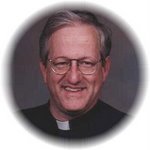
So, we come to the end of the ministry of Pastor Fish among the good, godly people of Immanuel of Bartlett Township.  I will leave behind friends, associations with my fellow pastors, and the congregation of people that I love, and for whom I pray every day, and will continue to pray for as I head to Montana. You think you have the difficult part, and I am skipping off happily into another life. You have no idea how difficult this is just to keep my voice under control. We each need one another's prayers. 

And it is my prayer along with the Apostle, this morning, that "that your love may abound still more and more in real knowledge and all discernment, so that you may approve the things that are excellent, in order to be sincere and blameless until the day of Christ; having been filled with the fruit of righteousness which comes through Jesus Christ, to the glory and praise of God."  Then we will know that we have God at work in us and through us.

In the Name of the Father, and of the Son, and of the Holy Ghost.

(Let the people say Amen)

Sunday, November 02, 2025

How Great a Love

 1 John 3:1-3

 See how great a love the Father has bestowed upon us, that we should be called children of God; and so we are. For this reason the world does not know us, because it did not know Him.  Beloved, now we are children of God, and it has not appeared as yet what we shall be. We know that, when He appears, we shall be like Him, because we shall see Him just as He is.  And everyone who has this hope fixed on Him purifies himself, just as He is pure.

 All Saints Day (Observed)            11/02/25

How Great a Love

My Brothers and Sisters in Christ:

If someone were to ask you what is the greatest love is, what would you tell them? Jesus once said, "A greater love has no Man than that he lay his life down for a friend."  

I find it hard to argue with Jesus. But Jesus was speaking about the love of one man for another. The love He was describing is also the love which God had for us in sending His Son to die for us. And that is the Gospel.  

Nevertheless, there is another love, one that is almost as great, if not as great, pouring out of the heart of God. That love is the love which our text this morning speaks about. Our theme this morning is, How great a love. 

The bloody and awful sacrifice of Jesus on the cross for us and in our place is truly a great love. Nonetheless, the love of which our text speaks is both prior and consequent to the cross It is the love of God for us. He calls us His children. I know it seems like it ought to be bigger when someone dies. Simply calling us his children is, in human estimation, merely words. But they are the Words of God.  

Keep in mind that God spoke, and everything that exists came into being. The world was framed by the Word of God. All the creatures of this world, both animal and vegetable, were created at the mere Word of God. Only humans were created by the direct work of God, more than words, but being formed by God in some fashion which we cannot put into clearer language because the Bible doesn't give us anything more direct than "He formed man of the dust of the ground." It sounds like pottery work, sort of. 

When God said let birds appear in the heavens, they appeared. He created the sun and the moon and the stars by saying they should be, and they were. So when our text tells us in no uncertain terms that God has called us children of God, He wasn't merely describing; He was making it so. We who believe, his children, are in fact children of God. 

That is something more, significantly more, than merely being "called" children of God, as humans might do it. That's one of the reasons we who believe do not like or easily tolerate unbelievers and hypocrites being called "Christians."  Our frustration with such things shows up in what we call "church discipline," which finally results in excommunication, sometimes. It is a process of addressing sin that God's Word prescribes. Of course, our judgment does not make it so. At least not every time. Jesus does give us the authority to retain sins, and Excommunication is certainly a retaining of sins. Our judgment is not final, however, God's is. Should the Church err in its judgment and excommunicate those who ought not to be excommunicated, the judgment of the Church does not stand.  That is not common, however.   

Church discipline exists to warn our brothers and sisters against sin and against what appears to be happening – leading them away from the faith. Excommunication itself is rare, as it should be. The steps of discipline before excommunication ought not to be rare, but sadly, they are.  

But enough about church discipline. We, the children of God, fight in this world to keep clear what God has called the children of God. Our text says that when Jesus appears again, all of those who are genuinely His children will appear with Him, and they will be just like Him. We will be just like him. The only thing we will not be that Jesus is, is divine. Other than that, we shall appear just like Him. The reason we will appear just like Him is that we shall see him just as He is. The reason we don't look that way now is that we look just like He was. We look just like He was, because He took on our nature and appearance, and became man, fully and truly human, to be just like us. So the promise of the text is, just as Jesus became true man for our salvation, we shall just like He is with everything except divinity. He is God, and we are not, but we will be something more than merely human by the grace of God.  

 That God calls us His children means that even in this life we are more. We simply cannot define that more, or feel that more, we are simply more, God's children. Our text takes two verses to say God called us His children, and so we are. And the next verse says , We are now "the children of God." It is frustrating for a preacher not to be able to describe what those words mean precisely, because the Bible doesn't say, but it is something wonderful that we we shall discover in the "Parousia," the return of Christ. 

All of those that we have wept for as they passed from this life, who clung to Christ with their heart and trusted in Him alone, are already more; they just don't have to carry around the sinful flesh any longer. The Saints who have passed from this life are in glory with Christ. Again, I cannot describe with too much detail what they are like or how they are doing, or where exactly they are geographically, because the Bible doesn't say. God wants us to look forward to something by faith, and tells us it is wonderful, No sin, no sorrow, no sickness, no more death, and that we shall be just like Jesus because we are going to see Him as He is. And just like He became one of us we shall become whatever He is – except, of course, He is God and we will not be.  

The result of this knowledge is that we should seek to purify ourselves. Our text says, "And everyone who has this hope fixed on Him purifies himself, just as He is pure. "OK, that means put sin behind you, at least as much as you are able. You should call upon God to strengthen you and help you. It's not a long-distance call; the Holy Spirit dwells in each believer. John says we seek to purify ourselves Just as Jesus is pure. We are children of God. We seek to be like God as much as possible in this life. 

We rejoice in the hope of everlasting life. The word "hope" Does not refer to that weak and powerless thing that we use the word to describe so often in this life. The Christian hope is an absolute certainty of which we are fully confident – but we haven't seen it yet. We do not hold it in our hands - we trust God and take Him at His Word and His promises.   

Saints are something special. You are Saints. That's not my opinion, God said so. So great a love God has for us, that He not only sent His Son to die for us, He named us and claimed us as His children, to be just like Jesus. 

Let us give thanks to God today and every day, and every Sunday especially, as the children of God, the people of God, people who are just like Jesus except we are still wearing this sinful flesh. But those who have gone before us in what we erroneously call "death" are no longer burdened by the flesh, but they are still alive, more alive than we who sit here inhaling and exhaling and dreaming about how alive we are. How great a love! 

In the Name of the Father, and of the Son, and of the Holy Ghost.

(Let the people say Amen)

Sunday, October 26, 2025

Is the Reformation Over?

 Revelation 14:6-7

 And I saw another angel flying in midheaven, having an eternal gospel to preach to those who live on the earth, and to every nation and tribe and tongue and people; and he said with a loud voice, "Fear God, and give Him glory, because the hour of His judgment has come; and worship Him who made the heaven and the earth and sea and springs of waters."

Sermon for Reformation Day 2025                                      10/26/25

Is the Reformation Over?

My Brothers and Sisters in Christ:

The Epistle lesson we have as our text has long been widely understood to be a clear reference to the Reformation and to Martin Luther.  He opened the eyes of the world to the Gospel once again.  The Reformation was the work of God, to be sure, but it was worked by God through Martin Luther.

Luther himself did not see himself as the reformer.  Christ is the Reformer of His Church.  Luther was merely a teacher, given to teaching very unpopular truths.  And teach them he did.  The teachings of the Lutheran Church which are the sweetest to us are the ones that drew the heaviest fire in Luther's time – and still draws the antipathy of the world, both religious and secular, today.

One of the topics that Luther spoke and wrote about on several occasions was the idea that the Gospel would not long endure in one place.  He likened it to a shower of rain which would be here for a time, and then move on to somewhere else.  The cause of this change, according to Luther, is the hostility of the world in the place where the Word is taught – the hostility of the world within the church, not merely outside of it.  Let me read you a couple of quotes of Luther on this topic.

This first quote is Luther writing about John 7, verses 34 & 35.  Jesus says He will not be among the Jews much longer.  Luther writes:

These words are terrible enough; but the wickedness, the impiety, and the ingratitude of these knaves are even worse. They must be told: "I shall be with you a little longer, etc." Christ says, as it were: "You need not be in such a hurry to kill and destroy Me. As it is, I shall be with you just a little while longer." We have a similar message for the pope: "It is unnecessary for you to fuss and fume so against the doctrine of the Gospel. Even without your ranting the Gospel will tarry in your midst but a short time, especially after we who are now proclaiming it have closed our eyes in death. It will not remain after our departure." The Gospel has its day and takes its course from one city to another. Today it is here; tomorrow, there. It is like a heavy shower which passes from place to place, soaking and enriching the soil. Christ says (Matt. 10:23): "If they drive you from one city, go to another. When all the cities have been visited, then I shall come with the Day of Judgment."  Even if a certain place accepts the Gospel today, it will not stay there long. People hate it; they view it with envy; they curse it; yes, they starve it out. Therefore Christ declares: "I will not remain with you long. You need not persecute and condemn the Gospel so. I shall soon quit the field and make room for you. As it is, a darkness will soon descend upon you, leaving you in utter ignorance." There, Luther was warning the Pope.  In another place, Luther is encouraging his people - Lutherans - to be diligent in holding fast to the Gospel.  He wrote:

Let us remember our former misery, and the darkness in which we dwelt.  Germany, I am sure, has never before heard so much of God's word as it is hearing today; certainly we read nothing of it in history.  If we let it just slip by without thanks and honor, I fear we shall suffer a still more dreadful darkness and plague.  O my beloved Germans, buy while the market is at your door; gather in the harvest while there is sunshine and fair weather; make use of God's grace and word while it is there!  For you should know that God's word and grace is like a passing shower of rain which does not return where it has once been.  It has been with the Jews, but when it's gone it's gone, and now they have nothing.  Paul brought it to the Greeks; but again when it's gone it's gone, and now they have the Turk.   Rome and the Latins also had it; but when it's gone it's gone, and now they have the pope.  And you Germans need not think that you will have it forever, for ingratitude and contempt will not make it stay.  Therefore, seize it and hold it fast, whoever can; for lazy hands are bound to have a lean year.

We have begun to see this ingratitude and contempt that Luther wrote about today.  We would expect nothing else from the Roman Church who never delighted in the Gospel.  The Protestants, too, were never on board with Luther in His prizing of the Gospel, preferring decisions and holiness of conduct to trusting God and believing that we have forgiveness as His free and unmerited gift.  What is troubling is how Lutheran Churches – so called, and once quite Lutheran in fact – are walking away from the Gospel.   Even the so-called conservative Lutheran Churches are not reliably Lutheran any more.  The situation leads one to ask, "Is the Reformation Over?".

The answer is that for many, it is.  Just weeks ago the ELCA announced that they were formally abandoning the filioque of the Nicene Creed, for example. Those for whom the Reformation is over have rejected the truth in favor of something that feels good.  We all have that temptation.  Even when we delight in the old hymns and find comfort in the familiar shape of the liturgy, our flesh is seeking its comfort in how things feel - warm and familiar - rather than finding our comfort and hope in Jesus and the salvation which He accomplished for us and gives to us.  It is good when the truth is familiar and comfortable and comforting – but we must guard against letting the beauty of the service or the nostalgic hymns, and what-not, be comforting simply because they are familiar and nostalgic.  You want the truth to be familiar and comfortable, and it is good that it is such an old friend that it brings you joy just to hear it.  But it is the faith and the doctrine that should bring the joy, not merely the sense that we have been here before.

Many others in our society have given up the truth in favor of other teachings.  Perhaps they have been deceived, and perhaps they have been distracted by something new.  Some have put away the uncomfortable truths of the law and about sin in order to be more appealing to the unbelieving world around us.  The new emphasis on outreach and "missions" often covers a flight from the difficult things about our sins and our sinfulness.  There are those that want to pretend that people are basically decent and good by nature.  It is an alluring thought, and the world around us likes that form of doctrine.  It just doesn't happen to be true.

But if you throw away the doctrine of sin, and stop telling people about their need for salvation, they won't understand the Gospel, and they will invent something much more to their liking for their religion - like Scientology which re-affirms the individual and tells you that you are wholesome and capable and if you just focus all that positive energy, you can achieve great things!  They call such teaching "New Age", but there is nothing new about them.  This heresy is as old as the Serpent in Eden.  In addition, the old errors of works righteousness are always around, and many people find scoring high on their own goodness standard is easier to trust in than the gift of God in connection with Christ Jesus.  Trusting God has not been a human strength since the time of Adam and Eve.

For those who have turned away from the truth, or who have chosen to reach for the delightful spiritual experience, instead of church and faith, or for those have opted out to take full advantage of all that the world has to offer, the Reformation is probably over.  We are being invited to join that happy throng all the time.  The invitation is present in the temptation to think we know better than the Bible.  It is found in  the desire to take back that hour or two a week that seems so hard to devote to worship and fellowship.  It is what you are wrestling with when you feel like you can stop learning and stop doing devotions and focus a little bit more on everyday life.  You are being tempted to join the world when it doesn't seem so bad to miss church and you have a right to do those things that keep you away from the fellowship of the people of God around Word and Sacrament.  If you give in to such things, the Reformation is over for you.

t is over for most people in America.  Today Christians, so-called, feel somehow authorized to be arrogant, independent, competent in themselves, and safe.  Bumper sticker witnessing takes the place of actually speaking about your faith to another, and your faith becomes something just between you and God.  When your religion makes you feel a step ahead and a stroke better than someone else, you have moved beyond the Reformation.  The truth is that we Christians are never done with the Reformation, if we are true to the faith of our fathers.

We need to be constantly reminded that we are worthless and evil people.  Our holiness is not something we do, it is something that we have been given, and if we lose sight of that truth, it will slide off our backs and reveal again that we are just like the worst of those around us in society – you know, those that we point to and wrinkle up our noses at.  We are sinners even as Christians.  Our holiness and our salvation is by Grace alone.  We need to continually be reminding ourselves of that wonderful truth.

No, it is not wonderful that we are wretched and miserable sinners, just true – but it is wonderful that Jesus has died for us, and pours out on us His righteousness on us and makes us holy and gives us eternal life, and guarantees that we shall rise from our graves and live forever – no matter what happens to us before then.  We cannot lose sight of what we are by nature - and so pride and arrogance is out of the question.  We dare not lose sight of what Christ has done in us and to us, for that is the Gospel - and so despair and self-loathing are not appropriate either.  We can have a quiet joy, and a sense that those awful people around us need some of what God has given to us - salvation.  

We don't pity other people, we simply recognize their need, and sorrow over their lost condition, and try to do what we can to help them.  And all that we can do is tell them the good news of forgiveness, life, and salvation, and pray that they will also believe and receive and become just like us in Christ.  And we can invite them to church, too.  Christ alone is our righteousness and hope – and He is all they have to hope in, too. 

We need to continue the Reformation, daily in our own lives, and in our church, and in the world around us.  We need to live out what it is that we believe so that there is a hope that they - whoever they are - may see something of Christ in us, and ask us the questions, so that we can give that good defense for the hope that is in us, just as Peter wrote in 1 Peter 3:15.  We need to do what we can – not to earn anything, because we cannot, but to spread the faith - because it is Faith Alone that receives the forgiveness Christ won on the cross for us.  And it is faith alone that finds comfort and hope and joy in the Gospel - and in the fellowship of believers.

 suspect that the "little shower" of the Gospel among us may be moving.  It doesn't seem long for America.  Too many of those who have heard it have become bored with it.  Too many who knew it once have abandoned it.  We tend to get bored with the familiar – even the good familiar.  When it is God's stuff, our nature simply rebels.  We need to pray daily that God would continue to maintain the blessings of the Gospel and His church among us.  We need to plead with Him to keep the Reformation alive in our hearts and in our homes and in our church.  Wherever God's people are, there the Reformation is alive and on-going.   We must be in the Word - for it is Scripture alone that works in us and strengthens us, and teaches us.  It was in the Word that Luther found the Reformation, and it is only when we are in the Word that it will continue among us.

Is the Reformation over?  For some, yes.  For some, it never started.  For me - and I think also for you - the answer is, ‘No'.  Or at least I hope and pray that it is not - and that it will never be over.  May God grant us this prayer, for Jesus sake.

In the Name of the Father, and of the Son, and of the Holy Ghost.

(Let the people say Amen)


Sunday, October 19, 2025

You Are In God's Hands

1 Corinthians 1:4-9

I thank my God always concerning you, for the grace of God which was given you in Christ Jesus, that in everything you were enriched in Him, in all speech and all knowledge, even as the testimony concerning Christ was confirmed in you, so that you are not lacking in any gift, awaiting eagerly the revelation of our Lord Jesus Christ, who shall also confirm you to the end, blameless in the day of our Lord Jesus Christ.  God is faithful, through whom you were called into fellowship with His Son, Jesus Christ our Lord.

Sermon for the Eighteenth Sunday after Trinity          10/19/25

You Are In God's Hands

y Brothers and Sisters in Christ:

When I went to college, it was fashionable to sing the song, "He's Got the Whole World In His Hands," in Christian gatherings.  It is a nice song.  It is useful in a mixed group of so-called Christians because everyone can insert their own theology into it and think that the song means something real.  As I consider it today, I am not so certain that it does.  Sure, it means that God has everything in His hands and under His care.  It just doesn't actually say anything about who God is, or what He thinks of us, or why that should be comforting.

Actually, the song is a little deceptive.  We think it is a song of faith, but it is merely a statement that someone is in control, and it is not us.  Everyone and everything is in His hands equally and without distinction.  There appears to be no grace in Jesus Christ, no church, no distinction between Jew and Moslem and Christian.  "He's got everybody here in His hands" without regard for who is there, or what He has us in His hands to do.  Christians simply imbue the "He" of the song with their own faith-ideas and go happily on without thinking what the song is saying – or what it is not saying. 

I only bring that up because our text says something similar.  It indicates that God has you in His hands, but it also indicates who He is and what we might expect "in His hands".  Our theme, this morning, is You Are In God's Hands.

In the last verse of our Epistle, Paul writes that "God is faithful".  In the light of my critique of the familiar campfire song, you might be asking – in fact, you should be asking – what does that mean?  My answer would be: this text doesn't say, but when we consider the rest of what Scriptures has taught us, it tells us that God will do what God has promised to do.  The rest of the Epistle lessons tells us what God has promised to do, toward which the Apostle was pointing.  Basically, in this context, "God is faithful" means that you are in God's hands.

Paul tells us that we have everything we need.  "In everything you were enriched in Him, in all speech and all knowledge, even as the testimony concerning Christ was confirmed in you, so that you are not lacking in any gift."  Among the Corinthians, this meant that God had provided them with people who understood the Gospel and the Scriptures, and were able to teach them clearly what God's Word said.  For you, today, it means the same thing, although God has arranged the provision of these gifts in a different way.  They had people who were possibly gifted by God with special knowledge and understanding – directly.  Paul was one such person.  He had knowledge when God called him.  God merely gave Paul understanding about all that he knew that was from a different, divine perspective.  Then Saul of Tarsus became the great Apostle Paul.

You have everything you need, by God's gift, too.  God simply used The Bible - which didn't exist in its present form back then - and schools and church bodies to prepare men to teach you, and preach to you.  Then He gave you His Holy Spirit, that you might believe.  Every blessing of your life is God-given, so that you will be prepared to live in the Gospel and serve Him with your life and your possessions, whatever they may be.

Now Paul says that the Corinthians were eagerly awaiting the revelation of our Lord Jesus Christ.  That should be our posture too.  We should be eagerly awaiting His return.  I suspect, however, that most of us are quite content to wait.  We want to see our grandchildren grow up, or we have travel plans we would just as soon fulfill.  I suspect that we may be waiting, but somewhat less than eagerly.  Salvation seems to be our fallback position rather than our goal.

Mind you, I know that it is easy to get comfortable in a world of wealth and privilege, with excellent medical resources abounding for our health, and food of every sort available for our appetites, and transportation so easy that we can contemplate travel to almost anywhere on the earth that we might desire, and comfortable homes, and abundant clothing.  God has so richly blessed us that we cannot imagine why anyone would want to leave this and go to heaven.

But, leave it all we must.  Sooner or later, death will come a'calling.  More to the point, we assume that what we want is what God wants for us.  Our Synod does that when it touts every program as being blessed by God and assures us that if we only follow their plans, we will see unbridled success.  But what if God doesn't want us to have that kind of success?  What if His will for us is something more sublime and less agreeable to our flesh for a time?  Do you, then, want what God wants?

God has given us everything that we need, so that we are not lacking in any gift.  First of all, that means Jesus, and the Gospel.  He has given us life everlasting, forgiveness of sins, and salvation.  He has rescued us from dangers about which we are barely conscious and not often terrified.  The warning signs of the consequences of sin have been muted and pushed to the edges of our awareness by modern technology and medical science, and the abundant comforts of our country.  God has given us everything we need, but we often don't pay much attention to needing those things because life is so good, and we tend to take God's gifts for granted.

But if we cannot see the need or sense the needs which Christ has fulfilled, we are simply being blinded by the world around us.  Temptation still tempts us, and sin still threatens us, and death is still coming.  Perhaps the disturbing news on the daily news programs is not the fault of the Republicans, or the Democrats, Antifa, or even the crazy Islamists, but is the finger of God tapping on our shoulders, trying to awaken us to the imminent dangers which gather round us to threaten us, that we might find our peace and shelter in His salvation.  Sometimes, what we need is not another bit of comfort to lull us into sleep about spiritual things, but a sharp jolt to awaken us to the dangers of the world around us which have been masked by wealth and comfort.  After all, God says that we are not lacking in any gift.

We have everything we need.  We simply may not understand our need, or be willing to use what God has given us to meet our needs for His purposes instead of our own.  We don't need another amusement, more time for frivolity, or another escape from the pressures of reality.  We want those things, and we may want the next piece of technology that titillates us, or another visit with the kids or grandchildren.  We want those things, and who can blame us?  But what is it that we need?

We need to give thanks - heartfelt and honestly recognized thanks for the abundance with which God has filled our lives.  We eat regularly.  We dress well.  We enjoy the finest health system in the world.  Our families are large and generally healthy.  We have time enough to get bored now and then.  We need to find our connections with one another so that we don't feel so alone at times.  We need to learn to share our faith with confidence so that we can confess Christ to God's glory and to the blessing of those around us.  We need to discover the truth of our corruption in sin so that we can be conscious of the honest value of the forgiveness which is ours in Christ.

Note that we have what we need to answer those needs in each of those situations I have mentioned.  We have one another to be connected to.  We have faith, and we have the knowledge of that faith to practice putting into our words with one another, so that it doesn't seem so strange when the opportunity comes to speak our faith to someone outside of the family.  We have God's Word to read, and we can listen to our own consciences and see what we do that we ought not, and what we fail to do or say that we should - to be fully conscious of who we are and how precious the forgiveness of sins is.  We even have the aches and pains of aging to remind us of the swift approach of death, and the delightful promise of resurrection to a life without pain or sorrow, sickness or death, forever!

We simply need to put the things we have been given to use.  Paul tells us that God will confirm us to the end, blameless in the day of our Lord Jesus Christ.  As long as we depend on God, and trust Him to do what He has promised to do, He will confirm us - that is, cause us to stand firm in the faith and salvation which we have been given.  He will cause you to stand forgiven - blameless - because that is the heart of the promise of the Gospel: forgiveness of sins.  The secret is to keep your attention fixed on Him.

That's the problem with the comforts of modern life; they distract us.  The flashing colors of the world around us draw our attention.  The pleasures offered entice us.  The comforts try to confuse us and convince us that there is no urgency to the faith, and no real dangers to be rescued from.  Our eyes are drawn to what we can do and what we can have, and away from God as the Provider and God as the Savior.  We need to shake off the haze and wipe the cobwebs away and see reality for what it is, and focus once again on God as the author and giver of life and every good thing, and the Savior from sin and death and hell.

The thing is, we often don't know what we need - and we are not aware at all times of what God has given us to meet those needs.  But St. Paul assures us that we have been provided with all that we need.

God knows the temptations and distractions we will face.  He gives us His Word to remind us - and sends people like me to preach to you that you don't forget.  God is faithful.  He provides you with the heavenly food of the Sacrament to cleanse you and to say to you that He has not forgotten you.  He has filled you with His Spirit so that you might know the right things to do to cultivate faith and thanksgiving and a forward-looking hope in you.  He places people around you for you to share the Gospel with so that, by all means, some may come to the faith and be saved.

Paul describes these realities by saying that you have fellowship with Jesus because God called you.  That fellowship is in His body by means of the Word and Sacrament, and joined with those who are seated around you.  They are the ones who give you His greeting each time we gather, and to whom you can give your greeting for Him.  It is in this fellowship and with the gifts He pours out on you here by means of His Word that God means to care for you in this life, and encourage you toward all that is blessed and salutary for faith and life in Him.   Here and now, especially in the congregation and in His grace, you are in God's hands for blessing and strengthening and everything good which God has planned for you.  You are in God's hands while we, too, eagerly await the revelation of our Lord Jesus Christ.

In the Name of the Father, and of the Son, and of the Holy Ghost.

(Let the people say Amen)

Sunday, October 12, 2025

A Manner Worthy of Your Calling

 Ephesians 4:1-6

I, therefore, the prisoner of the Lord, entreat you to walk in a manner worthy of the calling with which you have been called, with all humility and gentleness, with patience, showing forbearance to one another in love, being diligent to preserve the unity of the Spirit in the bond of peace.  There is one body and one Spirit, just as also you were called in one hope of your calling; one Lord, one faith, one baptism, one God and Father of all who is over all and through all and in all.

Sermon for the 17th Sunday after Trinity                                     10/12/25

A Manner Worthy of Your Calling

My Brothers and Sisters in Christ:

Who are you?  What are you?  Those are the questions you need to ask yourselves.  The answers will determine the course of your life and the values you support and live by.  I have often said that people actually live out what they believe.  And they do, although they don't always live out what they say that they believe.  Such people don't, evidently, know who they are.

Now, I'm sure you think you know who you are.  If you want to be sure, look at the decisions you make - decisions about your time.  Decisions about your behavior.  Decisions about your stewardship of all of that which God has entrusted you for a time.  What you do and how you decide will show you just who you are.  If you look at yourself honestly, and have the courage to face the truth about what you see, you will discover that you are not who you think you are - or at least who you think you want to be - or want others to think you are!

That is because of the flesh, the part of you that is still under the sway of sin.  For some people, that is their entire being, but since you are here, this morning, I am going to assume that you are genuinely Christian, and that what you see is a reflection of that part of you that is still awaiting the resurrection.  I said ‘that part of you' that is awaiting the resurrection because when you were baptized, part of you - your spirit - died and was born again to a new and everlasting life in connection with Christ Jesus.  We don't actually see the baptized person die or be raised to new life, we merely witnessed the means by which God accomplishes this miracle, Holy Baptism.  Because God says that this is what He is doing in Baptism, we know that we witness it happening, although we cannot point to a moment when the individual's spirit dies to sin or is raised to new and everlasting life in Jesus Christ.

We don't actually see it because the flesh does not die.  It is still alive and well, and infected with sin, just as are we all!  It is that sinful flesh that leads us astray.  It is the flesh that leads us to say things we know we ought not to say, and to do things we know we should not do, and to fail to do those things we know we just should do, as God's people.  Things like prayer, forgiving one another, gathering for worship with all God's holy people on a regular basis, and the like.

The Apostle Paul wrote that we should walk - that is to say we should conduct ouirselves - in a manner worthy of our calling - the calling with which you have been called.  That is the same as saying that you should live out what you confess - or what you believe.  As we look at our text this morning, our theme is "A Manner Worthy of Your Calling."

You act on what you believe because what you believe makes you what you are.  Think about it.  Pagans act like pagans.  They live without a consistent moral center, because their gods, if they profess having one in today's world, are of their own making and imagination, and they are shaped according to their own desires.  They do what they want to do, and they justify their actions by reference to their god - as Muslims do - or by explaining that they have no god, and they are free to do whatever they are strong enough or clever enough to get away with.

Sensualists live for the pleasure of it - however they may define pleasure.  The Connoisseur lives for the pleasure of food, or wine, or whatever he or she claims is their speciality.  The practitioner of the extreme sports lives for the thrill of being on the edge.   Some live for the more erotic sensual pleasures.  They do so because that is where they believe the meaning of their lives exists.

People who believe that this life is all there is live for the moment, and when life is no longer fun or profitable, they throw it away.  The Hemlock Society, for example, lobbies for the legal right to exit this life at the time of one's own choosing, before it is no longer worth living, in their estimation.

Christians live out what they believe – or, to put it as Paul does, they live in a manner worthy of the calling with which they have been called in Christ Jesus.  They have been called to faith in God and the forgiveness of sins, and the hope of salvation.  Please note that they are not called to live in such a manner as would make them worthy of their calling.  They are called, rather, to live in a way that is appropriate for one who has such a calling.

Judging by our Epistle lesson this morning, to "walk in a manner worthy" means to live deliberately as a member of the church, as a member of the body of Christ, living out our forgiveness, and our unity with one another and with everyone who places their hope completely on the grace of God in Jesus Christ. 

The question is, how do you do that?  What is the worthy manner?

We turn to the text again.  Paul indicates that the worthy manner includes humility.  That makes sense, since we live by the grace of God, which is the  undeserved choice of God to bless and save us, through Jesus Christ.  We did not merit Christ's gift.  The fact that we needed to be saved says that much.  We are just like everyone else, deserving God's wrath and destruction, without the work of Jesus on our behalf.  So we have no particular reason for ego and pride that we are Christians or that we will be going to heaven.  We have reason for joy, but it is a gift, not something we have earned.

The worthy manner also includes gentleness.  The manner worthy of our calling is ‘like Christ.'  Jesus did not come with violence or aggressiveness.  He had good cause for violence and aggressive behavior, but He came humble and gentle for our sakes.  He didn't demand His rights or pushing people into the pattern in which He wanted them to live.  He came teaching and preaching and setting and example, and enduring the sin of those around Him even when it was focused on Him.  He chose to lead the flock, not drive the herd.

Paul also included patience in that worthy manner.  It just goes with humility and gentleness.  Patience doesn't demand its own way or its own time schedule.  The manner worthy of our calling is a manner that recognizes that we have been called to represent Christ on earth - not as employees, but as members of the family who share the same focus, that through Jesus Christ men and women might find salvation.  This humility is linked to forbearance, which Paul also lists.  We bear with the weakness and folly of one another, knowing that we, too are weak and foolish, but that in spite of our weakness Christ has chosen us and rescued us from sin and death and hell.

Finally, the worthy manner is to be diligent to preserve unity of the Spirit in the bond of peace.  Basically that means living in the reality of the oneness we have been given in Jesus Christ — one Lord, one faith, one baptism, one God (who is Father) and one body and one Spirit.  The body is the Church and the Spirit is the Holy Spirit who dwells in each one that believes.

Jesus said, "By this will all men know that you are My disciples, if you have love for one another." We are to love each other first. We are to "preserve the unity of the Spirit in the bond of peace." This love is not about doing good deeds, although it certainly doesn't exclude them.  This love is about peace and harmony and patience and humility and such with one another.  In other words, the love which we are to have for one another is another way of expressing the worthy manner to live out the calling of Jesus Christ to eternal life and salvation.

Our unity is first that we are part of that "one body" that Paul writes about.  He means "the body of Christ", which is the Church.  We share that one Spirit.  And we all partake of that one hope - the promise of resurrection from our graves, and eternal life in glory with Him and with all those who have loved the Lord and shared in this unity.  This is the truth of God, revealed to us, but not the truth of our senses or of our feelings, or of our earthly experience, necessarily.  

Naturally, all those who believe have the same Lord - the Lord Jesus Christ.  

We confess one faith.  Denominational labels do not matter in this.  Everyone who goes to heaven believes what we believe, that is to say we share the same fundamental doctrines.  One way I have stated that before is to say that everyone who goes to heaven is a Lutheran, whether they know it or not, because they believe the same Gospel.  They hold to the same salvation.  They repent.  They trust in Jesus alone for their salvation by grace alone through faith alone - or they are not Christians.  It isn't enough just to know how to pronounce the name, Jesus.  A false faith hopes in that which is not saving and trusts in those things which are not promised.  So one might say that the Baptist, or the Catholic, or the Methodist that trusts in Jesus for salvation is a Lutheran under the skin and unawares, for they share that one faith of which Paul has written to us.  That is a big part of our true unity.

Each of us shares in the one baptism.  It is the Baptism of Jesus, commanded in Matthew 28:19 and Mark 16:16, in Acts 2:38 and Acts 22:16.  It is a baptism which clothes us with Christ, washes away our sins, causes us to be born again to a living hope, and makes us members of Christ's body, the Church.  Without that baptism, we are not a part of this thing called the Christian Church.  It is the same baptism no matter where it is done or what method we may us - immersion, pouring the water, or sprinkling.  It is all the same, and it is all by Christ's command and by Christ's hand - for He calls the hands of those that baptize into His service, and gives them the command - "Baptize them in the name of the Father, and of the Son and of the Holy Ghost."

The church is our true unity.  We all worship the same God and have but one heavenly Father who is over all, and in us all, and works through all of us to accomplish His gracious will here on earth.  Living deliberately within this unity, and deliberately seeking to preserve it in peace and concord, is part of what we are called by in this text to live in, the manner worthy of your calling.  

Each of us is in the same delicate condition, clinging to a hope which is beyond our power to choose to believe in the first place.  We earnestly want nothing to shake us, and, if we are true Christians, we want nothing to shake each other.  God has given us to one another to help us stand fast and firm in this evil world.  

The American dream of independence is strong in our culture, and strong in our flesh, but it is not a part of the Christian faith.  We are united, walking together in the manner worthy of our calling, deliberate in love because the Holy Spirit in us works love in us for one another - by this will all men know that you are disciples of mine, if you have love for one another.  

So, when all is said and done, we answer the question "Who are You?" by walking in the manner worthy of your calling because it is who we are as God's holy people.

In the Name of the Father, and of the Son, and of the Holy Ghost.

(Let the people say Amen)

Sunday, October 05, 2025

Comprehending the Love of Christ

 Ephesians 3:13-21

Therefore I ask you not to lose heart at my tribulations on your behalf, for they are your glory.  For this reason, I bow my knees before the Father, from whom every family in heaven and on earth derives its name, that He would grant you, according to the riches of His glory, to be strengthened with power through His Spirit in the inner man; so that Christ may dwell in your hearts through faith; and that you, being rooted and grounded in love, may be able to comprehend with all the saints what is the breadth and length and height and depth, and to know the love of Christ which surpasses knowledge, that you may be filled up to all the fulness of God.  Now to Him who is able to do exceeding abundantly beyond all that we ask or think, according to the power that works within us, to Him be the glory in the church and in Christ Jesus to all generations forever and ever. Amen.

Sermon for the Sixteenth Sunday after Trinity                                     10/05/25

Comprehending the Love of Christ

My Brothers and Sisters in Christ:

People often struggle with the idea of a loving God.  They see the troubles of the world around them, and ask, "How can a loving God permit this to happen?"  People respond to war, to human tragedy, to illness, and to sorrow in this way.  They act as though they believe that God should be responsible for these sorts of things.

Now, if the problem is a hurricane, for example, it is somewhat reasonable to lay the responsibility on God, although the modern controversy about anthropogenic global warming makes even that a little inconsistent.  After all, if we have the power to control the environment to the point that we can cause warming or cooling of the planet, which we don't, we probably also have the power and responsibility for the factors that regulate the appearance and severity of hurricanes, even if we don't understand how quite yet.

When we confront human tragedy and sorrow in general terms, however, we rarely if ever consider the sort of control that God would need to exercise in order to prevent or control the things which cause such trouble and sorrow in our world - such as war, crime, and abuse of one another.  Much of the freedom of decision and action which we enjoy would need to be taken from us, if God were to prevent every difficult experience from confronting us.

Also, when we ask how a loving God can permit such things, we also have to ask how we can permit them, or what are we willing to do to prevent or ameliorate such difficulties.  Are you willing to surrender your freedoms?  Are you willing to give up your free time and work to solve these problems?  Are you willing to divest yourself of your treasures and your wealth to eliminate human sorrow and suffering from this cause or that?  Of course, the answer is that if you were willing to do so, you would already be doing it.  If we are not willing to expend our resources to eliminate our troubles, how is it that we can hold God accountable?  It is only when we can seriously ask these sorts of questions that we can begin to ask the right sorts of questions that might help us understand God and His love.  Our text addresses that issue briefly, and our theme, this morning, is "Comprehending the Love of Christ."

The love of Christ is far more complex and thorough-going than we are accustomed to think.  We tend to love far more simply and shallow.  Our love often is a love of pure emotion, and very little intellect is applied.  Many parents have trouble doing the things that are wise, in regards to their children, simply because they are difficult or painful to endure.  So we have an entire generation of parents who say, "My child is not going to have to do this - or do without that," simply because they had to do or endure it, and did not find it delightful, or understand it well.  They never stop to think of how their experiences – whether they thought them good or bad – schooled them and made them the people that they are today.  They just know that they did not like it (or them) and they resent it, and they will not allow their children to experience it.  And that is that!

The love of Christ is far wiser and deeper and more compelling.  God permits us to do the difficult and even painful things that we need to do in order to achieve the good that He has planned for us.  Take for example the opening words of our Epistle lesson by Paul, Therefore I ask you not to lose heart at my tribulations on your behalf, for they are your glory.

Paul realizes, undoubtedly by God's inspiration, that the troubles he is enduring are going to work out for the better for him and for those Christians to whom he is ministering.  He doesn't necessarily know exactly how, nor does he need to.  He simply trusts God - and accepts that what God has said is so.  The tribulations he is enduring will work out for their glory.  In fact, he says that his own tribulations are their glory.  We also have the Word of God which tells us that our difficulties will work out on our behalf.  So all we really need is to take God at His Word, and trust that He will do what He has promised.  That is the nature of the Love of Christ for us.

Paul then writes this prayer, For this reason, I bow my knees before the Father, from whom every family in heaven and on earth derives its name, that He would grant you, according to the riches of His glory, to be strengthened with power through His Spirit in the inner man; so that Christ may dwell in your hearts through faith.  Paul never met any of you, and yet this prayer is also for you.  Such is the love of Christ.  Paul is praying that you might have the Holy Spirit dwelling within you with His mighty power so that you might believe - and so that Christ would dwell in your hearts through faith.  The purpose for this is simple, that you may comprehend the love of Christ.

Paul writes, "and that you, being rooted and grounded in love, may be able to comprehend with all the saints what is the breadth and length and height and depth, and to know the love of Christ which surpasses knowledge, that you may be filled up to all the fulness of God."  This isn't simply a prayer that you will realize that Christ loves you, but that you will begin to understand in some measure the nature and enormity of the love of Christ.

Don't feel bad if you have trouble capturing it all in your mind - Paul writes to us that it surpasses knowledge.  You simply cannot think that big, or in such complexity and detail.  The Gospel is a good place to start, if you want to understand the love of God, but it just isn't clear enough for us to get an accurate fix on that love.  Because I am talking about things beyond my comprehension, I may sound like I am babbling at times as I try to impress you with the love of God, but bear with me.

The Gospel tells us that God the Father loved us enough to send His Son to live for us and die in our place, innocent of any guilt, and not deserving to die at all.  I have read examples of people trying to draw an analogy which would make the staggering depth of the love of God for us clear, such as comparing us to ants, and one of us being willing to step down to the existence of an ant for their benefit.  It is a nice story, but it fails as an accurate analogy because we have more in common with ants than God has with us, by nature.  We are created things, with bodies and such.  Besides, ants never did anything to really offend us.  We may find them inconvenient or want them out of our houses, but they have never sinned against us.  They are not even capable of doing so.

We have to grasp the nature of sin and its offense against God to understand what He chose to do for us.  We would probably need to compare it to a stinging slap of insult and rejection - although it is far more.  It is also destructive and evil and caustic and contrary to God in every way.  Yet His love fervently desired to rescue us from sin - even though we are willing participants.

Then try to imagine the love of Christ, who took on human nature and came to live among us, offensive sinners.  He did not walk about holding His nose, mincing through the crowd as though He feared touching the pollution, as we might if we were working with foul, smelly, and contagious people - especially if they were flinging their feces on us and calling us names and spitting on us as we worked to help them.  The love of Jesus was enormous.  He came among sinners to save sinners, and endured the wickedness and the hypocrisy and the hostility of sinners toward Him while He did good and healed them and prepared to suffer and die hideously for them.

Then, He took your sins, that foul stench, on Himself and them paid the penalty for it as though it was His own - so you could have life everlasting, and joy and peace and freedom.  That was His love.  And yet the love of Christ is more, and larger.  It is not that we can take those few words and clearly imagine how it was for Jesus or what that love must be like.  We cannot!  But that love is just part of it!

Another aspect of that love is how He blesses and protects and guides you each day.  He takes you sometimes where you don't want to go, and where you only go kicking and screaming and doubting His love or His presence and power.  He takes you where you need to go, and blesses you with all sorts of blessings - the soft and wonderful kind, and the rough and prickly sort that we hate to experience.  He walks with you and watches over you and strengthens you so that you can endure, and that you can accomplish what He has set before you to do, and you receive the glory - whatever it is here and now, and all that it shall be in His heaven, there and then.

He has promised to feed you - and in all the years of your life, He has kept that promise.  He has promised to clothe you, and none of you have stumbled in here naked this morning.  He has promised to guide and protect you, and here, in the fellowship of His people, He does through Word and Sacrament.  He provides everything you need, but it may not always be in a way you expect or coming to you as you would prefer.  But unlike your typical parent, Jesus takes us where we need to go even when it is painful and difficult for us to experience, because His ultimate goal is our ultimate good and salvation.  He is not so much worried about being our friend as He is being our Savior.

Wrapping your mind around that, comprehending the love of Christ, is not easy.  Our culture and our natural tendencies work in a different direction.  And Jesus has perfect vision when it comes to what is right and good for us.  He is not limited by our sense of things – or our reactions to them.  Jesus is willing to bear our frustrations and confusion when we don't understand the paths our lives take.  He can take even our sins and turn them to our blessing, at times, although I would not suggest sinning in order to provide Him with opportunities of that sort.  But I would recommend trusting God – and that is aided by diligently applying yourself to comprehending the love of Christ, that you may be filled up to all the fulness of God.

Now to Him who is able to do exceeding abundantly beyond all that we ask or think, according to the power that works within us, to Him be the glory in the church and in Christ Jesus to all generations forever and ever. Amen.  These words make a fine way to end a sermon, but you want to listen to them carefully, as well.  We confess in these words that Christ is able to do "exceedingly abundantly beyond all that we ask or think."  He can do far more than you can imagine, or ask of Him.  And He does it all by the very power which dwells in us through the Holy Spirit.  It would be nice, according to the way we think, if we could access that power and do what we desire to be done, but He loves us too much for that.  We would make mistakes, and probably would do the things that benefit the flesh but hurt the Spirit.  We have the power in us, but He is using it for us and for our good.  But when you are facing the difficult, threatening, and challenging things of life, it is a great comfort to know that the power you need is not a long way off, or hidden somewhere.  It is in you.

All you need is to remember the love which Christ has for you, and trust Him, and His love.  This moment, this problem, this illness, this situation is going to work out for blessing and good.  That is the promise of God, who loves you.  Even if it works out for death, in the end, it is a blessing, for death is but the door to eternal life.  To see the blessing, however, you must take God at His Word and trust Him – but the blessings is there, and, when you comprehend the length and breadth and height and depth and know the love of Christ, you can have peace even in the midst of turmoil, and look forward to the blessing of God in any and every situation.

To Him be the glory in the church and in Christ Jesus to all generations forever and ever. Amen. 

In the Name of the Father, and of the Son, and of the Holy Ghost.

(Let the people say Amen)

Sunday, September 28, 2025

Facing Reality

Galatians 5:25-6:10

If we live by the Spirit, let us also walk by the Spirit.  Let us not become boastful, challenging one another, envying one another.  Brethren, even if a man is caught in any trespass, you who are spiritual, restore such a one in a spirit of gentleness; each one looking to yourself, lest you too be tempted.

Bear one another's burdens, and thus fulfill the law of Christ.  For if anyone thinks he is something when he is nothing, he deceives himself.  But let each one examine his own work, and then he will have reason for boasting in regard to himself alone, and not in regard to another.  For each one shall bear his own load.  And let the one who is taught the word share all good things with him who teaches.

Do not be deceived, God is not mocked; for whatever a man sows, this he will also reap.  For the one who sows to his own flesh shall from the flesh reap corruption, but the one who sows to the Spirit shall from the Spirit reap eternal life.  And let us not lose heart in doing good, for in due time we shall reap if we do not grow weary.  So then, while we have opportunity, let us do good to all men, and especially to those who are of the household of the faith.

Sermon for the Fifteenth Sunday after Trinity                                      9/28/25

Facing Reality

My Brothers and Sisters in Christ:

Everyone has heard of the shell game.  You may never have played it – I haven't – but you have probably seen it played on television.  The point of the shell game is misdirection.  You are intended to think you saw something you did not, that the pea or the little ball is under a shell that it is not actually under.  Some people play the game as a scam, taking the ball into their hand without being seen to do so, and then no matter which shell you choose, you have been deceived.

The Christian faith and life are a great deal like the shell game for many people.  For some it seems as though it is misdirection and for others it is a scam.  The longer we wait for Christ to return, the more years that pile up between then and now, and the greater the technological distance between the world in which Jesus walked and the world in which we live, the easier it is to be deceived, the more difficult it becomes to keep from allowing ourselves to be deceived.  But our text tells us not to be deceived.  Each part of our text speaks about dealing with reality as it is.  Our theme, in the light of this emphasis, is "Facing Reality."

In every sermon, I try to find the gospel in the text.  I frequently take passages that you have always thought talked about good works and showed you, hopefully clearly, that they were talking about faith and trust and doctrine, and not about your good deeds at all.  I cannot do that this morning.  This text is about your behavior.  It is about the way you live your life and how you treat one another as those who claim to be Christians, the elect and precious of God the Father, through Jesus Christ our Lord.

In our text, the Gospel is presupposed.  That is because there are two type of righteousness for every Christian.  There is the righteousness which they may possess – and do possess, in fact, if they are truly Christians – in the eyes of God.  Then there is the righteousness which they may possess in the eyes of their fellow man.  The Gospel is primarily about how we stand before God.  We stand justified and forgiven, in connection with Jesus Christ.  The second sort of righteousness draws its motivation from the Gospel, but it is something that we do.  It is how we deal with our fellow-Christians, and fellow-man in general.

In this text, Paul is writing to Christians, and those who style themselves as Christians.  He is writing about what the Christian faith means to how they live their lives, and how they treat one another.  He issues a stern warning, a warning it is my duty as Pastor to communicate to you.  The warning is that Christians must not allow themselves to be deceived, or fool themselves into thinking that what is not godly is actually okay for them.  Do not be deceived, God is not mocked; for whatever a man sows, this he will also reap.  In other words, it is about facing reality.

This epistle is written to Christians.  The basic warning is true for everyone, believer and unbeliever alike, but Paul was writing to those who confess the Christian faith.  That is clear from the first verse of the text: If we live by the Spirit, let us also walk by the Spirit.  Only those that believe live by the Spirit, and only those who live by the Spirit may believe, for No man can say that Jesus is the Lord, but by the Holy Spirit.  Those who live by the Spirit are Christians.  And what Paul is saying here is that only those who walk by the Spirit are Christians.  Confess Christ all you want, if you do not walk by the Spirit, that is, if your life is not guided by the Holy Spirit of God, any confession of being Christian, or following Christ, is hypocritical. 

You cannot know, without the enlightening by the Spirit, what a sinner you are, how tremendous and terrible your sin really is.  If you know these things, you cannot then hold up another man as worse than you.  You cannot actually believe that your burden of sin has been taken by Christ, forgiven, and that Jesus died on account of your sins, and then refuse to forgive someone else.  You cannot look at the cross, the price paid for your sin and rebellion, and then be peaceful and comfortable with your unwillingness to forgive.  You cannot understand or believe the love which God has for you and has poured out on you, and then not be moved by it in such a way that the same love starts leaking out of you onto others.

Don't let anyone fool you – and don't kid yourself.  Face reality.  God cannot be fooled – and God is not mocked.  You cannot take from His hand all the good and the blessings He bestows and then act as if it was all by your doing, and that it is all there for merely for your purposes.  That would be mocking God.  He doesn't allow that, not for long.

Your sins have been forgiven.  What a great thing!  But God didn't just brush your sins under the rug and pretend you didn't do them.  He poured out His wrath against you and your sins, but He poured it out on Jesus.  He paid a tremendous price for what you have done, the sins you have committed, the unfaithfulness, the selfishness, the prejudices, the pride, the violence, the immoralities, the grumbling and the gossip.  You know what they are.  You did them – you still do some of them at times.  Jesus died for all of that.  You are forgiven, freely, but it comes at an enormous cost – the very life of the Son of God Himself.

If you believe that, begin by facing reality, then live that reality out.  God isn't fooled by hypocrisy.  He can see right through a good front and pious words.  Your life and your values and your attitudes are either shaped by God's great goodness to you, that is to say that they are shaped by the Spirit of God dwelling in you, or they are shaped by your flesh.  And your flesh is shaped and controlled by Satan.  Your life will either reflect that you trust God, as our Gospel lesson points out, or it will show the world that you do not.  The Gospel says not to worry – God is with you, and He knows you.  He is there so intimately involved that He knows the number of hairs on your head.  He is so close that seemingly insignificant birds are fed daily.  Even the grass of the field has His attention.  If you really believe that this God loves you, and you really trust in Him, live it out.

Let us not become boastful, challenging one another, envying one another.  We are not in a competition, at least, not with one another.  We are a family, each one is given to care about the others – all of the others.  Some things we may do will work to strengthen our faith, and some things we may do will work to strengthen our flesh.  Pride, gossip, strife within the church serve the flesh, not the body of Christ.  Patience with error, with false teachings, and with unfaithful church practices also sow to the flesh.  But when we sow to the flesh, we reap corruption.  And "corruption" is just a Biblical euphemism for death and hell.

We want, rather, to sow to the Spirit.  We want to do those things which reflect and re-enforce our confidence in God and our trust in His love and goodness.  Paul doesn't tell us everything we could do, but gives us examples. He mentions restoring one caught in a trespass.  That means church discipline – starting with one-on-one, face to face confrontation with anyone that is caught up in what is wrong – anger, gossip, immorality, anything we might call a "trespass".  Restoring them is calling them back, and loving them as a fellow-member of the body of Christ by helping them to face reality and not allowing them quietly to slip away from us, or from the truth.  Some sins are so common that we are often minded to just ignore them.  Gossip is one of those.  Anger is another.  Unforgiveness is another.  They are easier to ignore than to confront.  But if we don't confront them, they will ultimately prove deadly to the sinner, and often damaging to the whole congregation as well.

Bear one another's burdens, and thus fulfill the Law of Christ.  That is what we are doing when we confront sin.  Sin is a pain and a burden.  We also do this when we share someone else's sorrow, listen to their fears and pray with them.  We bear their burdens when we reach into the abundance of our own blessings and give to our brother or sister in Christ that thing which we have that they need at the moment.  And this not limited to physical things either.  Bearing their burden is what we do when we forgive them as we have been forgiven by Christ.  

This burden bearing is not accomplished just by giving them our money, like Habitat for Humanity or Citizens Against Domestic Violence.  Don't get me wrong, supporting charities like those is decent thing to do – but bearing one another's burdens is not about taking care of the whole world, it is about taking care of one another – fellow believers, fellow members of the congregation, or this circuit, or our Synod.  The group covered by the words "one another" starts just outside of your skin, and radiates out in concentric circles, but it is focused particularly on fellow believers, brothers and sister in Christ.  So then, while we have opportunity, let us do good to all men, and especially to those who are of the household of the faith.

It is a big job.  It is mind-numbingly unending.  It means thinking all of the time, and thinking about the other guy, the others members of our family here, and our regular visitors.  It means facing reality, thinking about them in the light of God's goodness to us, individually.  It means acting toward them on the basis of our forgiveness – and our salvation – and our trust that God will never leave us nor forsake us, but will always give us all that we need, both physically and spiritually, to survive and hold on until everlasting life.  This care for one another is never ending.  Which explains why Paul exhorts us – and let us not lose heart in doing good, for in due time we shall reap if we do not grow weary.  Weary is easy and natural.  But we reap what we sow.  If we sow from faith and hope, we reap what God pours out on faith and hope.  If we sow from a sense of exhaustion and self pity, we reap what grows in that rocky and selfish soil.

Face reality.  God isn't fooled, and He is not mocked – He does not allow us to claim the prize if we quit the race early.  But the race is really quite short, if you think about it.  Short as life is, the race can still be tiring, which is why God has given us this holy meal, which rests on the altar this morning.  He gives us His true body and the very blood once shed for us for our refreshment and strengthening, for our forgiveness and edification.  He never leaves us without a hope and a comfort, and this is our comfort and our strength – the body once crucified, the blood once shed for us, now given to us to eat and drink hidden under the form of the bread and wine.  With this He gives us our unity and our family.  With it He gives us new strength and fills us again with His Spirit.

And, if we live by the Spirit (and we do) let us also walk by the Spirit.  Let us sow to the Spirit the seeds of our attitudes and prejudices and actions.  Let us bear one another's burdens, and be patient with each other.  Each man will give account to God for himself.  Just live in Christ the way you will want Christ to see you live in Him.  We never know exactly what is inside another, or what troubles and temptations they bear – each one does bear their own load.  So we want to be patient with one another, and forgiving, as God has been patient and forgiving with us, and so fulfill the law of Christ, which is the law of love.

Remember, facing reality goes two ways.  God will not be confused or deceived by hypocrisy – but He will also not be confused or deceived by the world.  His people shall be blessed and protected, fed and sheltered and finally brought home to eternal life.  The one who sows to the Spirit shall from the Spirit reap eternal life.

You may have noticed that there is one line in this text I have not preached.  I have rarely preach it because I don't know how to preach it without sounding self-serving.  But it, too, is the Word of God.  So, I will simply read it – it is clear and easy to understand.  And I will let you make of it what you will.  And let the one who is taught the word share all good things with him who teaches.

Life is often much like the shell game - confusing, distracting, deceiving.  It helps if we start with what we know, and face reality from the basis of the faith we confess.  Instead of trying to unravel the deceits of the world, we should keep our eyes on the Gospel, and live our lives facing reality.

In the Name of the Father, and of the Son, and of the Holy Ghost.

  (Let the people say Amen)

Monday, September 22, 2025

You Got Deeds or Fruit?

Galatians 5:16-24

But I say, walk by the Spirit, and you will not carry out the desire of the flesh.  For the flesh sets its desire against the Spirit, and the Spirit against the flesh; for these are in opposition to one another, so that you may not do the things that you please.  But if you are led by the Spirit, you are not under the Law.

Now the deeds of the flesh are evident, which are: immorality, impurity, sensuality, idolatry, sorcery, enmities, strife, jealousy, outbursts of anger, disputes, dissensions, factions, envying, drunkenness, carousing, and things like these, of which I forewarn you just as I have forewarned you that those who practice such things shall not inherit the kingdom of God.  But the fruit of the Spirit is love, joy, peace, patience, kindness, goodness, faithfulness, gentleness, self-control; against such things there is no law.  Now those who belong to Christ Jesus have crucified the flesh with its passions and desires.

Sermon for the Fourteenth Sunday after Trinity                                      9/21/25

You Got Deeds or Fruit?

My Brothers and Sisters in Christ:

Our nation is at war.  It is a war on Islamic Terrorism and far-left lunacy.  The enemy is not another country, but another way of perceiving reality, and another, dangerously anti-Christian religion.

This war is subtle, and our enemy is almost undefinable until he strikes us.  We saw that aspect in the ugly assassination of Charlie Kirk. Our nation has been engaged in this war with terrorists for over 40 years, and we are just recently awakening to that truth.  We tend not to think of the war as among us, but it is.  We are a nation at war!  

In so many ways, this war makes a good analogy for the life of a Christian.  We Christians are at war, spiritual war!  Islam is an element in the war against us Christians, but it is not the real enemy.  Islam is more like a weapon in the war, just one weapon from an enormous arsenal.  The real enemy is the devil, and among the enemy foot-soldiers is our own human nature, which our text calls "the flesh."

Paul describes the flesh as distinct from the Spirit who guides us Christians.  One of the ways he distinguishes between them is to refer to the "deeds" of the flesh in contrast to what Paul calls the "fruit" of the Spirit.  Paul encourages one while he discourages the other.  This morning I want to look at this text with you, and approach it by asking the question, "You Got Deeds or Fruit?"

You may have noticed that the sermons in this part of the church year all seem to talk about the same general topic - the living of life as a faithful child of God, or Sanctification in ‘the narrow sense'.  That just makes sense.  Once we have learned the fundamental truths of our faith, the rest of our energy is spent living day to day while we await the call of God to come home to heaven and eternal life and glory with Christ.  Sometimes just living while we wait boldly confronts us, and sometimes the task of being a faithful, confessing Christian almost sneaks on by us.  At times we have crises, and at other times we have things pretty much as we want them.  No matter how things strike us at any given moment, if we are faithful, we will eventually find that we must spend our lives at war, serving and confessing Christ by what we do and what we say.

Our lives won't always seem as though we are at war.  First, that is because the enemy is does not always look like an enemy, does not always appear to us as hostile, and the battle will not seem to be upon us.  Sometimes we don't recognize the struggle, even when we are in the very heat of the battle.  We Christians need to be on a war-footing at all times, even when the war seems like it is a long way removed from us.  Like the War on Terror, being deliberately Christian doesn't always feel like a war.  But it is!

And like the War on Terror, ours is a fight for liberty.  Paul writes, "But I say, walk by the Spirit, and you will not carry out the desire of the flesh.  For the flesh sets its desire against the Spirit, and the Spirit against the flesh; for these are in opposition to one another, so that you may not do the things that you please.  But if you are led by the Spirit, you are not under the Law."  

Due to the nature of this war, we cannot simply do as we please.  We are not free to do evil, of course, because we are the adopted children of the Holy One.  Evil is contrary to who we are.  Because our flesh is still sold in sin, we cannot freely follow what is holy, because our flesh resists and fights us every inch of the way.  And the term "flesh" includes part of what we call our will, and part of what we call our intellect - the greater part of both, or so it seems at times.  That makes the battle we fight difficult in the extreme.  It is like the cartoon strip character, Pogo, once said, "We have met the enemy, . . . and he is us!"  St. Paul says,   "For the flesh sets its desire against the Spirit, and the Spirit against the flesh; for these are in opposition to one another, so that you may not do the things that you please."

The battle, however, is for liberty.  "If you are led by the Spirit, you are not under the Law."  That is the liberty!  The Gospel sets you free from the Law.  Because Christ has fulfilled it for you, you are set free from the coercion of the Law.  That means it cannot threaten you with dire consequences.  It cannot condemn you or determine your eternal fate.  Jesus has taken the Law out of the way, and out of the calculations about your eternal destination.  What we have done neither condemns us any longer, nor saves us.  Jesus has taken the full measure of our condemnation for sin in His flesh upon the cross.  And His life, not ours, wins eternal righteousness and life and favor with God by His perfect holiness and sinlessness.

So, those who "are led by the Spirit," meaning "Believers" or "Christians" are no longer "under" the Law, and therefore are free.  We are not free, however, in an absolute sense.  The Law still applies to us - meaning that what it teaches is right and good and holy is still true, and is still the will of God for our lives.  It simply has lost its power to accuse or condemn us.  We are free to serve God because we desire to do so from a willing spirit, rather than because we must do so by compulsion of the Law.

The results of the two states, being under the Law and being led by the Spirit, are different.  One result is called the deeds of the flesh.  The other is called "the fruit of the Spirit".  

The deeds of the flesh, being evil are not difficult to identify. "Now the deeds of the flesh are evident, which are: immorality, impurity, sensuality, idolatry, sorcery, enmities, strife, jealousy, outbursts of anger, disputes, dissensions, factions, envying, drunkenness, carousing, and things like these, of which I forewarn you just as I have forewarned you that those who practice such things shall not inherit the kingdom of God."

Most of those terms are fairly easy to understand.  Immorality refers to sexual immorality.  Impurity means uncleanness - we might use the word "dirty" to describe this sort of behavior.  Sensuality means living for pleasure, or allowing ‘how it feels' to guide your moral compass.  Idolatry is pretty well understood.  Gross Idolatry is worshiping another god, refined idolatry is setting anything before God in your life, money, pleasure, power, health, or family and friends.  Sorcery primarily refers to the mixing of potions for achieve a supposedly magical effect, the primary use of which seems to have been to produce an abortion in the ancient world.  Hatred - called enmities - strife, jealousy, outbursts of anger (generally violent in word or deed), disputes, dissentions, and factions are familiar to all of us in one context or another.  Envying is a common form of evil - commonly seen active in "keeping up with the Joneses."  And finally, Drunkenness and carousing mean just what you think they do.  Have a drink?  Yes.  Get drunk? No.  And regularly getting drunk is called "drunkenness" and whooping it up without decorum and self-control is called "carousing."  

You may not hear a lot of preaching about those things today, but those things are still considered deeds of the flesh - and are still counted as contrary to the Spirit of the Christian faith.  Paul writes, "And things like these, of which I forewarn you just as I have forewarned you that those who practice such things shall not inherit the kingdom of God."  This is behavior unbecoming a Christian.  Damning, according to Paul.  But take note of the word "practice" - those who practice such things.  It indicates that those who "make a practice of", or "do these things with some frequency" show that the flesh, and not the Spirit, rules in their hearts and lives.  They have deeds.

But the fruit of the Spirit is love, joy, peace, patience, kindness, goodness, faithfulness, gentleness, self-control; against such things there is no law.  Now those who belong to Christ Jesus have crucified the flesh with its passions and desires.  There is a difference in the lives of those in whom the Holy Spirit is at work.  This is not to say that every Christian is identical, or will be as clearly different from those ruled by the flesh as every other Christian.  Some Christians are wonderful and great and obvious saints, and some are weak and immature in the faith, and not so clearly Christian in their lives at this or that point in time.  But this "fruit" is that which the Spirit of God works in those in whom He dwells.  If the Spirit of God is in you, and that means if you are really a Christian, then He is at work in your heart and life and spirit, and these qualities are the sorts of fruit He produces.  This means that you can aim at being this sort of person and know that you are not working at cross-purposes with God's Spirit within you.

The Holy Spirit works love, because "God is love."  The joy arises from knowing your redemption, your salvation, the rich promises of God, and from having the firm expectation that they are all true for you and will be fulfilled.  Peace comes from actually trusting God - and from forgiving those whose sins cause anger and distress.  We have patience because Christians forgive as we have been forgiven - and once you forgive, what is there to be impatient about?  All things will happen in God's good time, right?  Kindness and goodness flow from the Spirit because God is kind and gracious and good.  He is so good that we overflow with His goodness when He dwells within us.  God is faithful, and so, when the Spirit works faith in us, He also works faithfulness in us.

The gentleness and self-control flow out of all the things that the Spirit works in us.  We are gentle because we have nothing to be violent about.  God is in charge.  God will provide.  God will handle revenge - "Take no thought for revenge, brethren, but rather give place unto wrath, for it is written, ‘VENGEANCE IS MINE.  I WILL REPAY, SAITH THE LORD'."  The whole process of living  deliberately according to what you believe and confess requires constant self-control.  We who believe know that in our flesh exists no good thing, and so we must control our flesh if we wish to live out the truth of our existence as the chosen of God and the children of our heavenly Father.

Part of what Paul is telling us is that we don't have to work this stuff up in ourselves.  It is what the Spirit produces.  They are "fruits".  I don't imagine that pear trees struggle to produce pears.  Pears are what happen as a result of the pear tree living and just going on with life.  These fruits – likewise – are not our work -even though they may have sounded like we work them, as I described them, or that they were the natural, psychological results of certain conditions.  They are not, they are the fruits of the Spirit which He produces in us by dwelling within us.

Essentially, these fruits are what occurs naturally when one lives in faith, trusting God, and allowing God to work His blessings and salvation by whatever means – both good times and painful, frightening, and difficult events or situations.  God is in charge, what need for fear or worry do we have?  The fruit of such living faith is  love, joy, peace, patience, kindness, goodness, faithfulness, gentleness, self-control.

"Against such things there is no law."  No one is going to object to people who are like this. The evil of the world may mock you, or even attack you for being holy, but there is no law on the books against such things.  What you experience in any sort of persecution is the hatred of the world for Christ.  And the true nature of evil shows itself to be truly evil in that love, joy, peace, patience, goodness, kindness, faithfulness, and self-control are things that need to be attacked.  But what those who persecute such holy behavior are attacking is the reflection of Christ in you - not you personally.

Jesus told us that persecutions and hatred by the world would happen, if we were faithful.  Those are things we hate to face and fear to experience and long to avoid.  They are repulsive to the flesh, so we feel that pain and fear.  Plus, denying our flesh is painful.  Paul referred to it as "putting to death the deeds of the flesh", in Romans 8:13, because it is so painful.  But God clearly tells us, "Now those who belong to Christ Jesus have crucified the flesh with its passions and desires."

The believer recognizes that the deeds of the flesh are at war with the fruit of the Spirit.  So the child of God in Christ Jesus crucifies those deeds of the flesh, which is to say, the true believer is deliberately Christian.  We walk by faith - but we also walk in our faith, choosing to do and say things – or not to do or say various things – based on what we believe about ourselves, and about one another, and about God and His promises.

Finally, it boils down to admitting that we are involved in a war.  It is the cosmic war, not between good and evil (as the world likes to imagine), but between our Savior God and the devil who seeks to destroy us at last by deceiving us.   We can confess by asking ourselves, You got deeds or fruit?  The flesh has deeds.  The Spirit produces fruits.  The Christian is filled with the Spirit, and seeks to put to death the deeds of the flesh.  

So, how is it with you?  You got deeds or fruit?

In the Name of the Father, and of the Son, and of the Holy Ghost.

(Let the people say Amen)